
Pergola Staining in Austin, TX
No structure on your property faces the sun like a pergola. Its whole job is standing in full exposure from morning to evening, which is why pergola rafters gray out faster than any fence or deck — often within a single Austin summer. ProTek Fence Staining Austin stains and seals pergolas across the Austin area: veteran-owned, fully insured, and practiced at the overhead detail work that separates an even, lasting finish from a streaky one.
Request A Quote
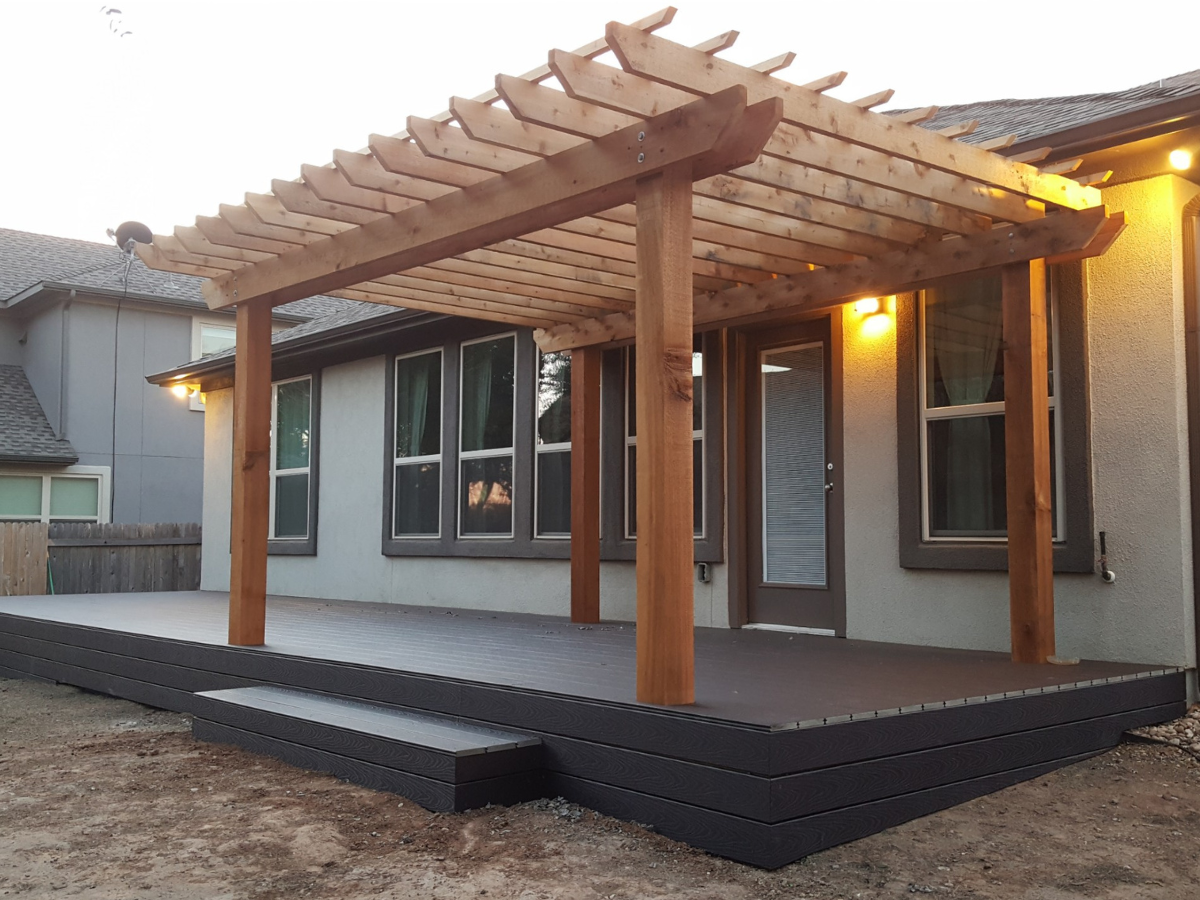
Why Pergolas Fade First
A fence gets afternoon shade from the house. A deck spends half its life under furniture and feet. A pergola’s rafters take direct UV all day on every face, and their tops — the faces you never see — weather hardest of all. Unfinished cedar and pine up there turn silver, then dry, then begin checking along the grain. Because nobody inspects a pergola at eye level, the damage usually runs a season or two ahead of when it gets noticed. Penetrating stain stops the cycle: pigment absorbs the UV on every face, including the ones only the sun sees, and the sealed wood stops drinking rain.
Our Pergola Staining Process
Overhead staining is detail work, and the process respects that. We start with a proper pergola washing to clear dust, pollen, and mildew shadow, then let the structure dry through. Application covers every rafter face — tops included — plus posts, braces, and lattice, with drip control protecting the patio, furniture, and plantings below. End grain on rafter tails drinks stain differently than board faces, so it gets its own pass. The color conversation happens up front: pergolas usually look best matched or complementary to the fence line, and if yours needs that too, our fence staining crew can sequence both in one project.
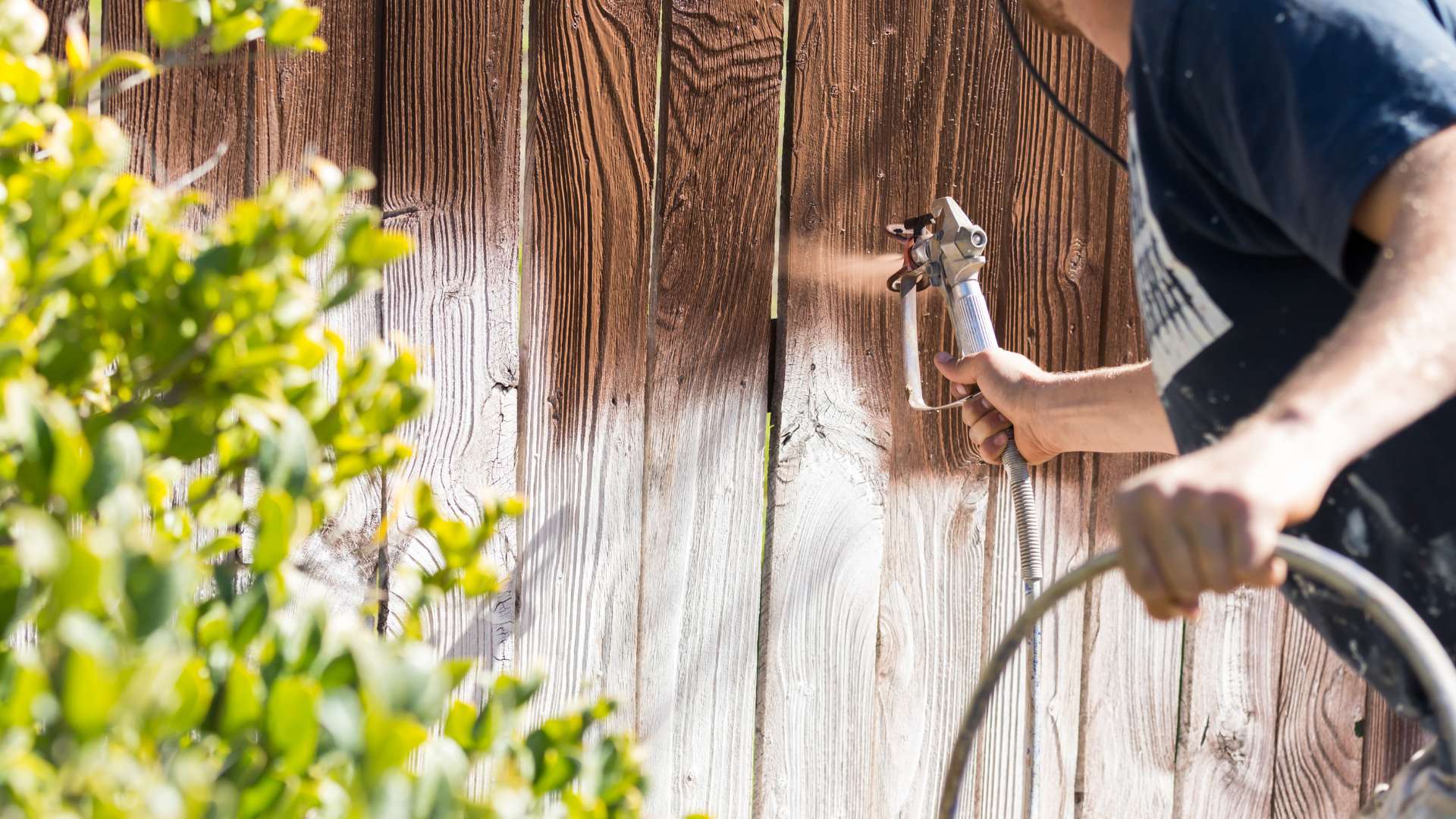
Stain Choices for Pergolas
Pergolas reward the same transparency decision as fences, with one twist: because every face is visible from somewhere — below, beside, above from a second story — evenness matters more than on any other structure. Semi-transparent finishes are the most popular, showing cedar’s grain while carrying enough pigment to fight the constant UV. Solid stains suit older pergolas with weathering history and hold color longest under full sun. Tone-wise, most homeowners match the fence line or go a shade deeper for contrast against the sky. We bring samples, test on an inconspicuous rafter, and let you judge in your own light at the times of day you actually sit out there.
Arbors & Gazebos
The same sun that ages pergolas works on every garden structure. We stain and seal arbors, gazebos, and trellised features with the same overhead discipline: every face, every post, sealed end grain, clean drip control. Smaller structures often ride along with a pergola or fence project at little added scheduling, and they make a surprising difference in how finished a yard reads. [#arbor-gazebo]
For the other wood details that quietly age a property — garage doors, exterior shutters, playsets — see our specialty staining services.
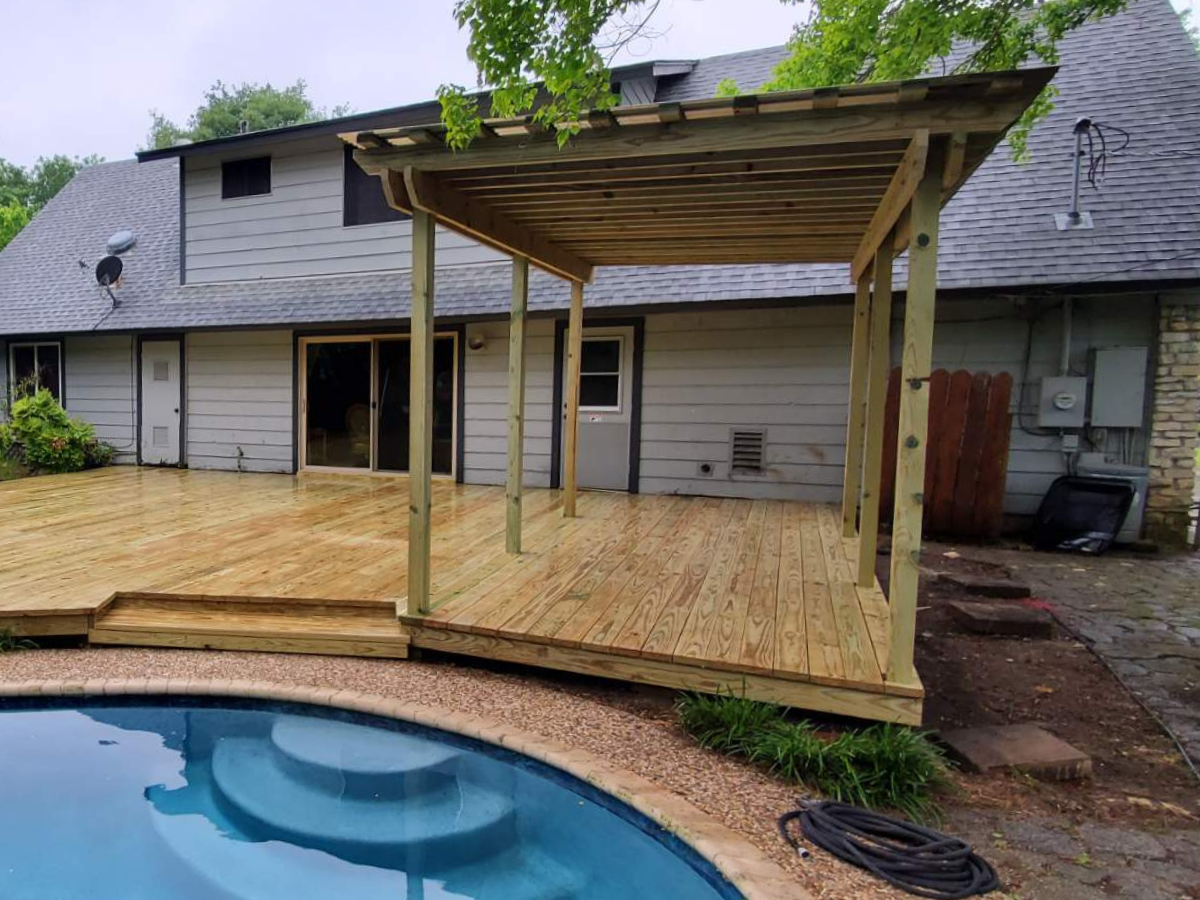
Signs Your Pergola Needs Attention
From the ground: color gone flat or silver on the rafter sides, dark mildew shadow in the joints, and dust that no longer rinses off with a hose. From a ladder, the tops tell the real story — checking cracks along the grain and end-grain tails that look chalky mean the sun has been working unopposed. Because pergola damage runs ahead of what is visible from a patio chair, a quick professional look every couple of seasons is worth more here than on any other structure. We do that look for free, and if the finish has life left, that is exactly what we will say.
Keep It Clean Between Finishes
Between staining cycles, an occasional professional wash keeps mildew from establishing in the shaded joints and keeps the finish breathing properly. It is also the honest first step if you are unsure what your pergola needs: once the buildup is off, the wood’s real condition is visible, and sometimes the answer is that the finish has another season or two left. We will tell you either way.
Pergola Staining FAQs
Every two to four years in full sun, longer in partial shade. Pergolas run on the shorter end of wood maintenance because of their exposure.
Almost always. Washing and brightening restore the surface, and stain locks the color in. Genuine rot on rafter tails is the exception, and we point it out before quoting.
Yes — especially the tops. They face the sun most directly and fail first when skipped. Every face gets coverage.
Protected throughout. Drip cloths and masking cover flooring, furniture, and plantings, and we leave the space clean.
Matched or deliberately complementary both work. We bring samples and test patches so you can see combinations in your own light before deciding.
Yes. Attached structures need careful cut-in lines where wood meets the wall, and masking protects the siding or brick.
Sometimes. If the existing finish is still repelling water, a wash restores the look and buys another season. We check before recommending more.
Most pergolas are a one-day job once the wood is dry: washing one visit, staining the next, or both in sequence when the weather cooperates. Large or attached structures can run longer.
It depends on the structure’s size, height, condition, and how much prep the wood needs. Freestanding backyard pergolas sit at the simpler end; large attached or two-story structures take more time and access work. We quote after seeing it, and the quote holds.
Yes. Canopies, string lights, fans, and hardware get removed or protected as needed, and everything goes back where it was.
Give Your Shade Structure Its Color Back
A pergola should anchor the backyard, not apologize for it. Call (512) 368-2236 or tell us about your pergola and we will take a look, test what the finish has left, and give you a straight answer.