
Deck Staining in Austin, TX
Decks work harder than any other wood on the property: standing water after storms, direct midday sun, furniture, foot traffic, and everything a Texas summer brings. ProTek Fence Staining Austin provides deck staining built for that reality — veteran-owned, fully insured, and obsessive about the preparation and moisture checks that decide how a horizontal surface holds finish. From cleaning and prep through the final coat, the process is designed around one goal: a deck that looks intentional and stays protected.
Request A Quote
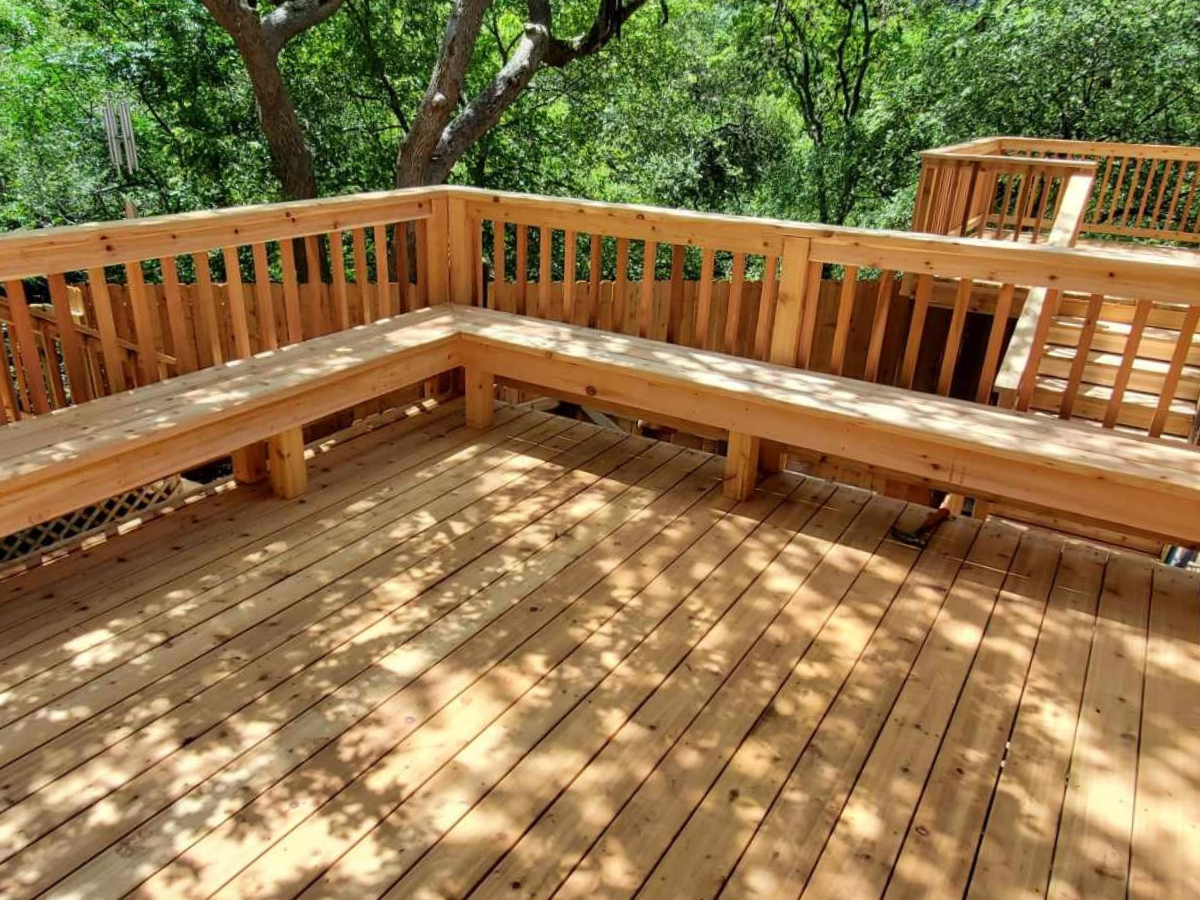
What Austin Weather Does to a Deck
Horizontal surfaces catch everything. Sun hits deck boards at full strength for hours, driving UV damage deeper than fences ever see. Rain pools instead of running off, working moisture into board faces and, worst of all, into end grain and the gaps at stair treads. The result is a cycle: boards gray, crack, cup, and splinter, and each stage accelerates the next. A penetrating deck stain interrupts the cycle from inside the wood — pigment absorbs the UV, the finish repels standing water, and the boards stay dimensionally stable underfoot.
Our Deck Staining Process
Every deck starts with an honest assessment: the wood’s species and age, previous finishes, and how much life the boards have left. Then preparation — washing at deck-safe pressure, brightening where the wood has grayed, and smoothing any raised fibers so the surface takes finish evenly. Before any stain opens, we check moisture content; a deck that reads wet waits, because sealing water into boards is how finishes peel. Application runs board by board with a wet edge, so color lays down without lap marks, and end grain, stair treads, and railings get deliberate extra attention. Badly weathered decks sometimes need more than staining alone — that is what our restoration service is for, and we will tell you plainly which side of the line your deck is on.
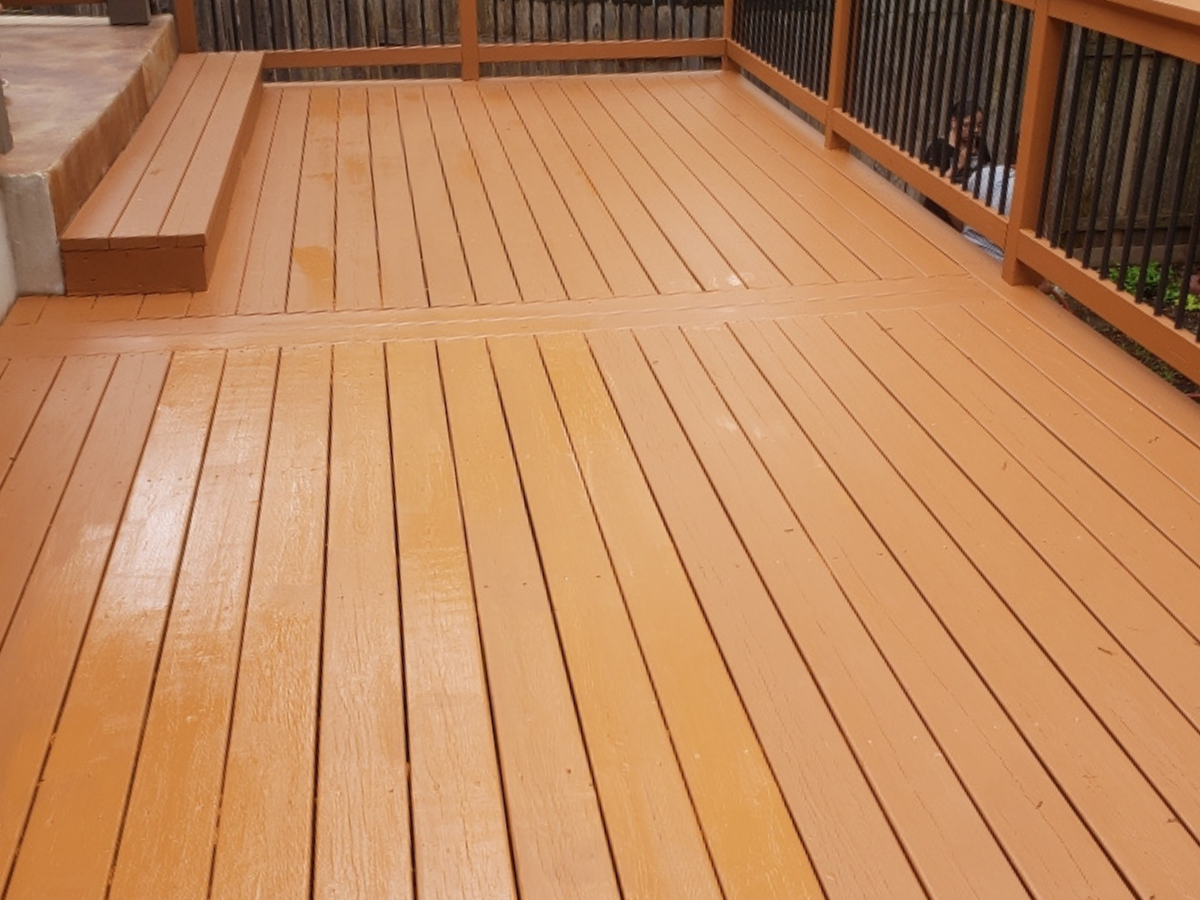
Signs Your Deck Is Ready
Watch for water soaking flat into the boards instead of beading, color gone gray or patchy in the sun-exposed runs, splinters where bare feet used to be safe, and green shadow creeping across the shaded corners. Any one of these means the finish is done protecting and the wood is weathering in real time. The earlier the catch, the lighter the fix: a deck refreshed on schedule needs washing and a coat, while a deck ignored for five summers needs restoration-level prep. Ten minutes with a hose tells you a lot — where water darkens the wood instantly, protection is gone.
Choosing a Deck Stain
Transparency is the main decision. Transparent and semi-transparent finishes show the grain and suit newer decks with wood worth displaying; solid stains carry the most pigment, hide cosmetic history, and last longest on older boards. Oil-based products penetrate deeply and wear gradually; water-based options resist UV fading and clean up easier. There is no single right answer — it depends on your deck’s age, exposure, and how it gets used, and we will walk you through samples on your own boards before anything is final. If you want protection with no color change at all, clear deck sealing is the alternative worth knowing about.
Staining vs. Sealing a Deck
The terms get used interchangeably, but they are different tools. Sealers are clear or lightly tinted moisture barriers; stains add pigment, which is what provides real UV defense. In Austin’s sun, an unpigmented deck still grays — slower, but it grays. Our honest guidance: seal when you love the current color and accept more frequent maintenance; stain when you want the longest protection per application. Many decks do best with a pigmented stain that seals as it colors, one product doing both jobs.
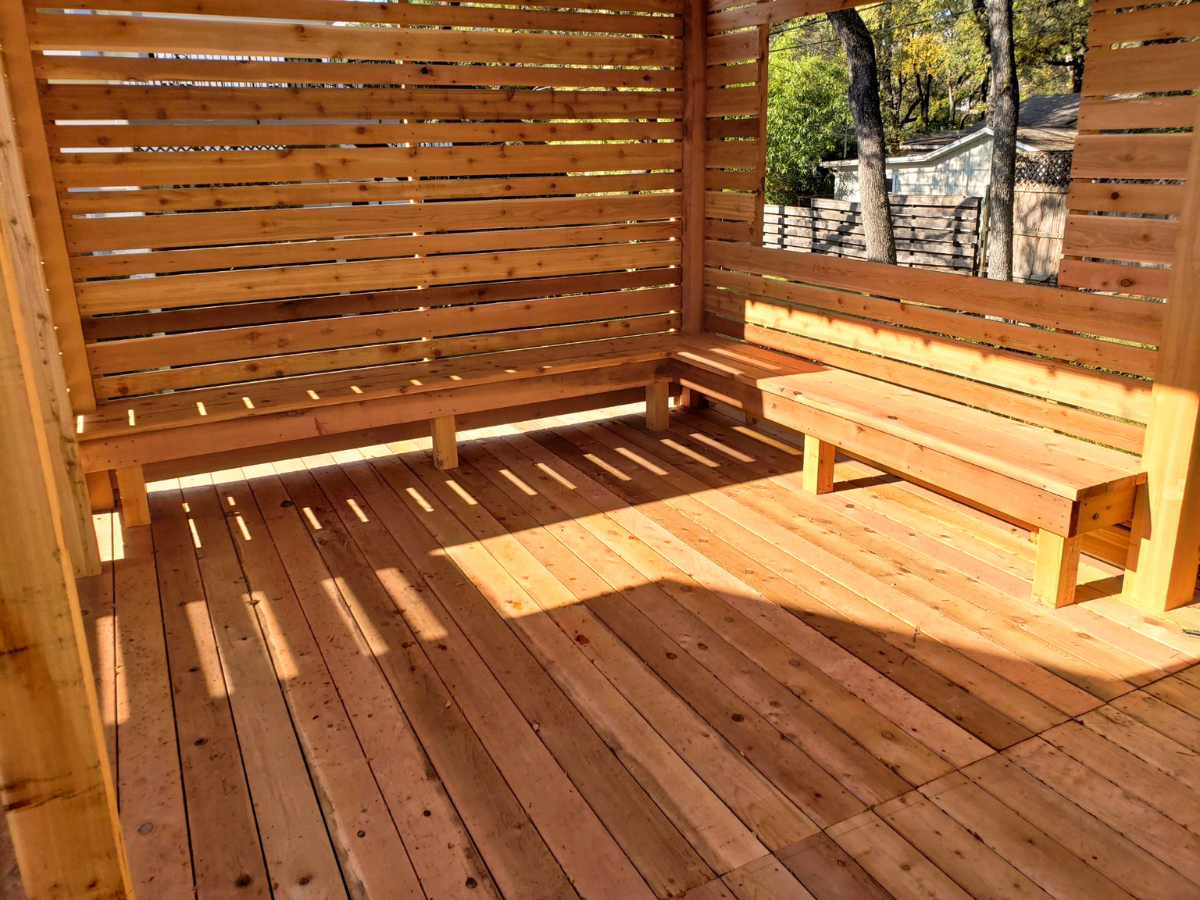
What a Deck Staining Quote Depends On
Square footage sets the baseline, and then condition does the rest: how much washing and brightening the boards need, whether an old failing finish has to come off, railing and stair complexity, and the product tier you choose. Multi-level decks and built-in benches add surface area that is easy to underestimate from above. As with all our work, the quote comes after we have seen the deck, it is itemized so you can see where the number comes from, and it does not move afterward.
When to Schedule Deck Work
Fall leads in Central Texas: warm, drier air, and boards that have fully dried from summer. Spring follows closely. Summer staining happens, but surface temperatures over a hundred degrees flash-dry finish before it penetrates, so those jobs run early mornings and shaded sequencing. The practical rule: two dry days minimum, moderate temperatures, and wood at the right moisture reading. We watch the forecast so you don’t have to. The same timing logic applies to fence staining projects, so pairing both in one visit is common and efficient.
Deck Staining FAQs
Every two to four years for most Austin decks — sooner than fences, because horizontal surfaces wear faster. Solid stains and shaded decks stretch longer.
Usually, yes. Washing and brightening recover more than most homeowners expect. When boards are genuinely rotted or structurally tired, we say so before any work begins.
Typically 24 to 48 hours after the final coat, depending on the product and the weather. We confirm the timeline on your quote and again on completion day.
Always. Railings, balusters, stair treads, and skirting are part of the job, and treads get the most durable treatment because they take the most wear.
Solid stains disguise fine surface checking; no stain repairs structural cracks. We flag boards that should be replaced before finishing — replacements are the one thing we ask you to arrange, since we stain rather than build.
Paint fails fast on horizontal wood — it films over the surface and peels under traffic and pooled water. Penetrating stain wears gradually and recoats cleanly, which is why decks in this climate should almost never be painted.
Yes. New pressure-treated and cedar boards need weeks to a few months to dry to stainable moisture levels, depending on the season. We test rather than guess.
Composite does not take stain, but it does take professional cleaning — we wash composite decking and restore its color that way. If you are unsure what your deck is made of, send a photo and we will tell you.
Usually. Blotchy or lap-marked finishes can often be evened out with washing and a darker or more solid re-coat; the honest limit is that we cannot make a dark stain lighter without heavier stripping. We will tell you which situation you have.
We schedule around dry windows precisely to avoid this, but weather changes. Most products shed light rain within hours of application; a genuine soaking too early can require touch-up, which is on us to make right.
Get Your Deck Ready for Real Use
If your deck looks older than it is, it is asking for attention. Call (512) 368-2236 or start with a quick message and a photo, and we will tell you honestly what it needs — sometimes that is a wash, sometimes a full refinish, always a straight answer.