
Fence Staining in Austin, TX
Your fence is the largest wood surface on your property and the first thing the Texas sun goes to work on. ProTek Fence Staining Austin provides professional fence staining across Austin and its surrounding communities: veteran-owned, fully insured, and focused on the preparation that makes a finish last. We stain cedar and pine fences with premium penetrating products matched to your wood’s condition, your sun exposure, and the look you want, and we treat gates, posts, and end grain as carefully as the boards everyone sees.
Request A Quote
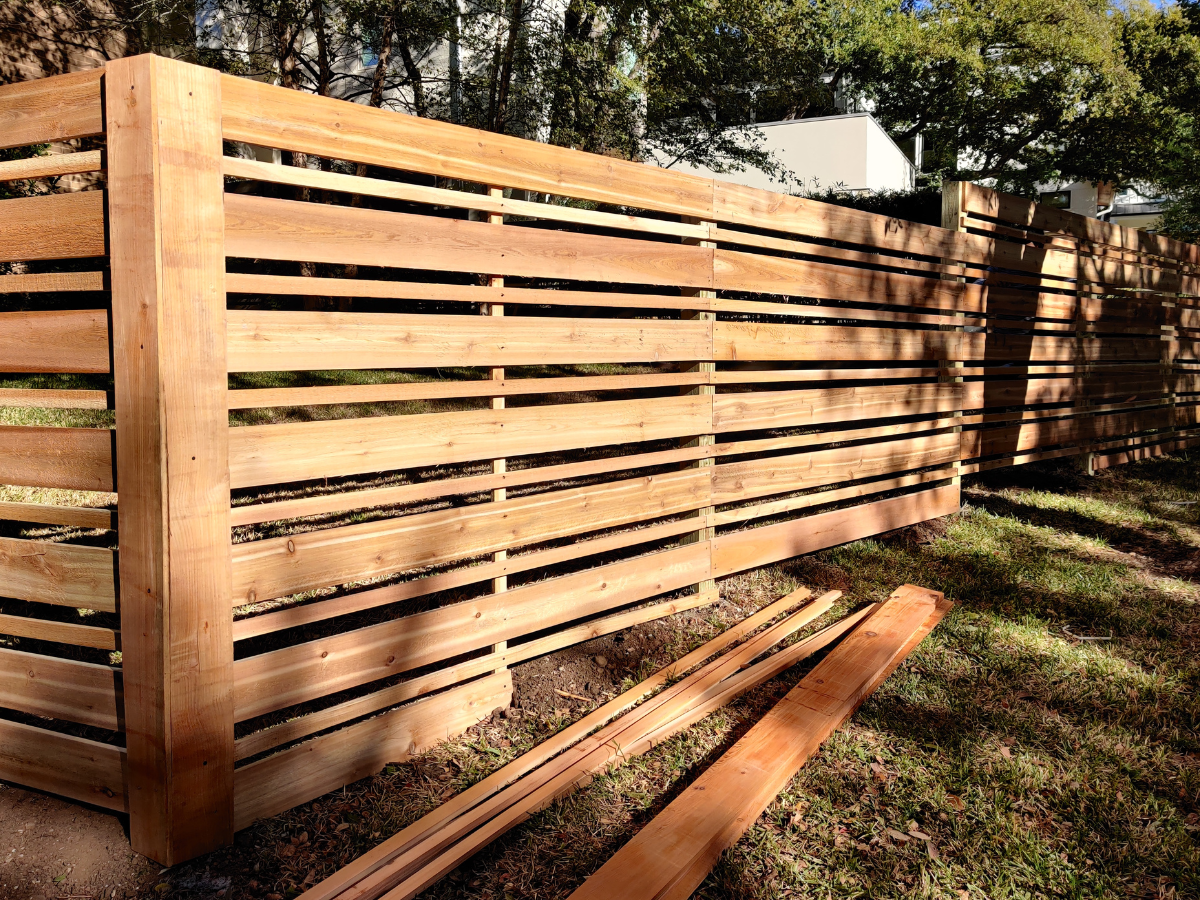
Why Stain Your Fence?
An unstained fence in Central Texas fades to gray within a season or two, and the damage runs deeper than color. UV exposure breaks down wood fibers at the surface, moisture cycles open cracks along the grain, and the freeze-and-swelter swings pull boards away from their fasteners. Penetrating stain interrupts all of it: pigment blocks UV, the carrier repels water, and the wood underneath stays stable. A stained fence lasts years longer than a bare one, and it looks deliberate instead of neglected the entire time. If your fence is already gray, that is rarely a problem — our wood restoration process brings weathered boards back before the stain goes on.
Our Fence Staining Process
Preparation decides how long a stain lasts, so that is where the work starts. First, professional fence washing at wood-safe pressure clears dirt, mildew, and oxidized fiber. Where the wood has grayed, brightening neutralizes the weathering. Then the fence dries to the right moisture level — a step we will not rush, because stain over damp wood fails from underneath. Application is board by board with a wet edge for even color, working stain into edges, end grain, and around hardware, the places water finds first. We finish with a walkthrough so you see exactly what was done and when to plan the next maintenance coat.
Wood Types We Work With
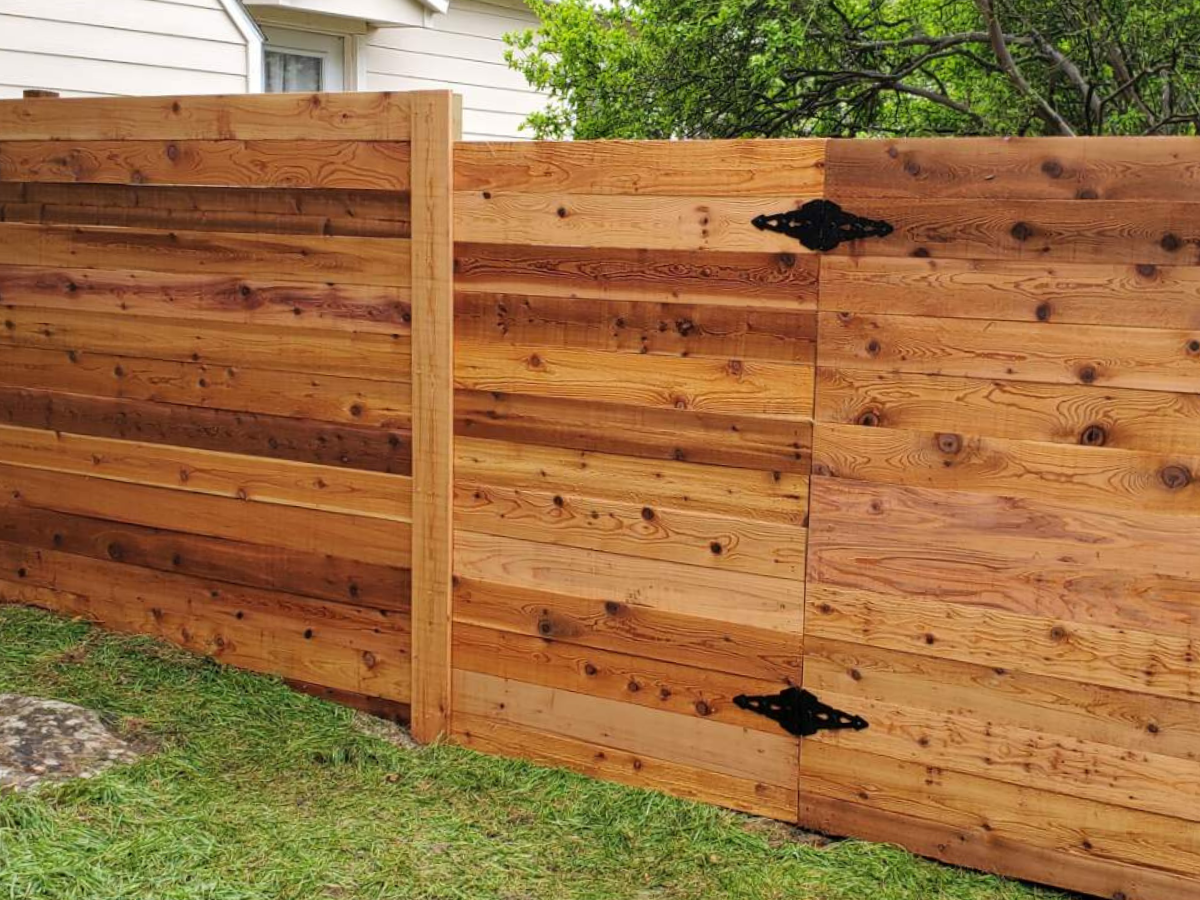
Most Austin fences are cedar or pine, and each behaves differently under stain. Cedar carries natural oils and takes semi-transparent finishes beautifully, though its soft surface demands gentle washing. Pine, including pressure-treated pickets, is more absorbent and often benefits from a stain with more body; new pressure-treated wood also needs real drying time before it will accept finish at all. Older mixed fences, where repairs added new boards over the years, take the most judgment — different woods and ages drink stain at different rates, and evening that out is exactly the kind of problem we enjoy solving. If you are not sure what your fence is made of, we will identify it on the spot and recommend accordingly.
Fence Staining Options
Every fence and every homeowner is different, and the options below cover the range. Each is a variation of the same disciplined process, adapted to the wood and the goal.
Cedar’s grain and natural tone deserve finishes that show them off. We use transparent and semi-transparent stains that deepen cedar’s character while blocking the UV that turns it silver. [#cedar]
Tall cedar and pine privacy panels are Austin’s standard backyard frame. Full coverage across rails and pickets, with even color and sealed board edges on both faces where access allows. [#privacy]
The middle path: visible grain with meaningful pigment protection. The most popular choice for fences in good condition. [#semi-transparent]
Full, uniform coverage that hides weathering, mismatched boards, and old repairs behind a durable finish that still lets wood breathe. The right call for older fences with cosmetic history. [#solid-color]
Previously stained fences need different prep: washing back the worn coat, evaluating what remains, and matching or updating the color. Re-staining on the right schedule is the cheapest way to keep a fence protected for decades. [#re-staining]
Gates take the most handling and the most wear, so hinges, latches, edges, and end grain get extra attention, finished to match the fence line. [#gate]
Home projects run on household-friendly scheduling with a clean job site and careful color consultation, because you live with the result every day. For offices, retail, and multi-unit properties, see our commercial fence staining service. [#residential]
Choosing is easier when you see it on your own wood. We match existing finishes and apply sample patches so you can compare tones in your yard’s light before committing. [#color-matching]
What a Fence Staining Quote Depends On
Every quote is built from the same handful of factors: total linear footage and fence height, the wood’s current condition and how much preparation it needs, whether an old finish must be washed back, the product type you choose, and access along the fence line. A maintained fence on its regular re-coat cycle sits at the light end; a decade-gray fence needing full restoration prep sits at the heavy end. What never changes: we quote after seeing the fence, the quote is itemized, and the number we give is the number you pay.
Signs Your Fence Is Ready
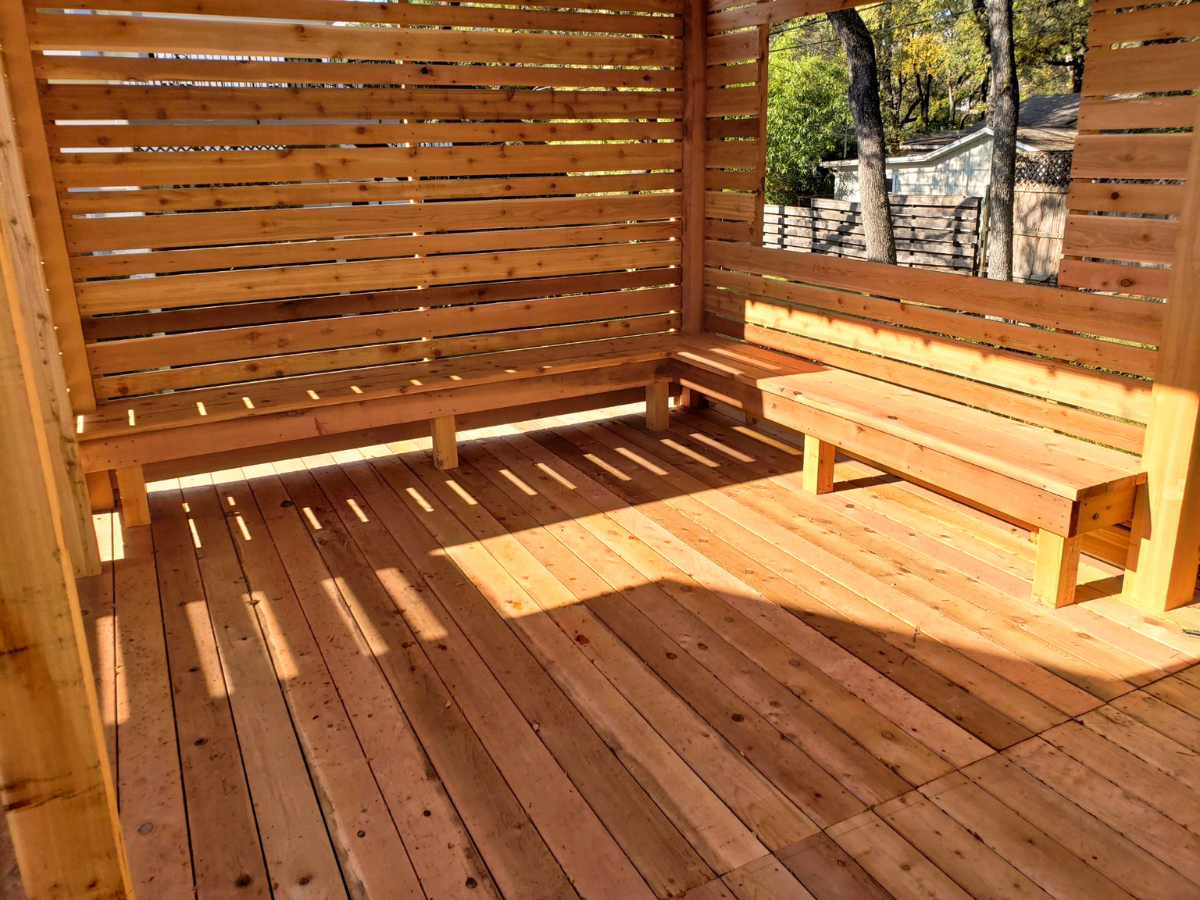
Water no longer beads on the surface. Color has flattened in the sunniest sections. Boards feel dry and rough where they used to feel finished. Any of these means the protection is thinning and the wood is absorbing weather again. Caught early, the fix is light; ignored for a few seasons, it becomes restoration work. Fences are not the only structures that show these signs — our deck staining and pergola projects follow the same logic on the wood above and underfoot.
Fence Staining Across the Austin Area
Our crews stain fences throughout Austin’s neighborhoods and the surrounding communities, from central Austin out to Round Rock, Cedar Park, Georgetown, Lakeway, Buda, and the cities between. Wherever you are in the metro, request a fence staining quote and we will take a look.
Fence Staining FAQs
It depends on the fence’s length, height, condition, and the finish you choose — a weathered fence needing restoration costs more to prepare than one maintained on schedule. We quote after seeing the fence, and the quote is the price.
Most residential fences run one to two days: washing and drying first, then staining once the wood reaches the right moisture level. Larger properties and restoration-level prep add time.
Three to five years for most finishes in our climate, longer for solid stains and shaded exposures. Maintenance re-coats on that rhythm keep protection continuous.
Paint has to come off first, which is a different and heavier preparation. We will assess it honestly; sometimes a solid stain over proper prep is the practical route, and sometimes paint remains the only option.
We stain every side you own and can access. Shared fences depend on neighbor arrangements, and we are happy to work with both households.
Spot restoration is possible, though color-matching aged stain takes skill and honest expectations. We blend repairs as closely as the existing finish allows and tell you upfront how visible the transition will be.
Fall is ideal in Central Texas, spring close behind. Summer works with careful scheduling around heat. What matters most is dry wood and a dry forecast window.
Against rot meaningfully, yes — sealed wood sheds the moisture rot needs. Insect resistance depends on the product; some stains include repellents, and cedar carries natural resistance of its own. We will match the product to the concern.
Once the wood dries to the right moisture level — a few weeks for most cedar, longer for pressure-treated pine. Staining too early is the most common new-fence mistake, and waiting costs nothing.
Just clear what you can from the fence line: planters, hoses, furniture, and anything leaning on the boards. We handle protection for plantings that stay.
Get Your Fence Staining Quote
If your fence has gone gray, flat, or thirsty, we would like to see it. Call (512) 368-2236 or send us a message with a photo and rough length if you have them, and we will come take a look and give you a straight answer.