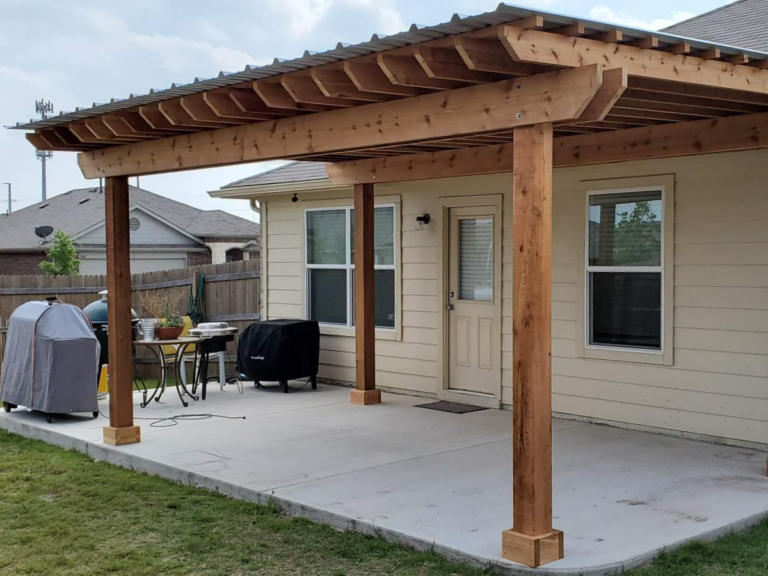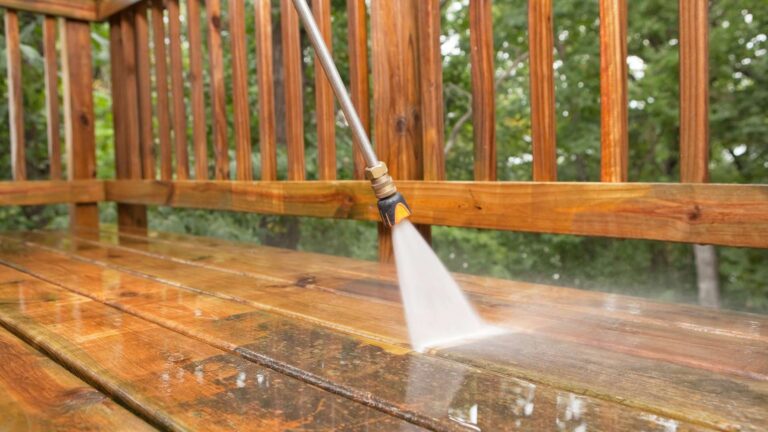
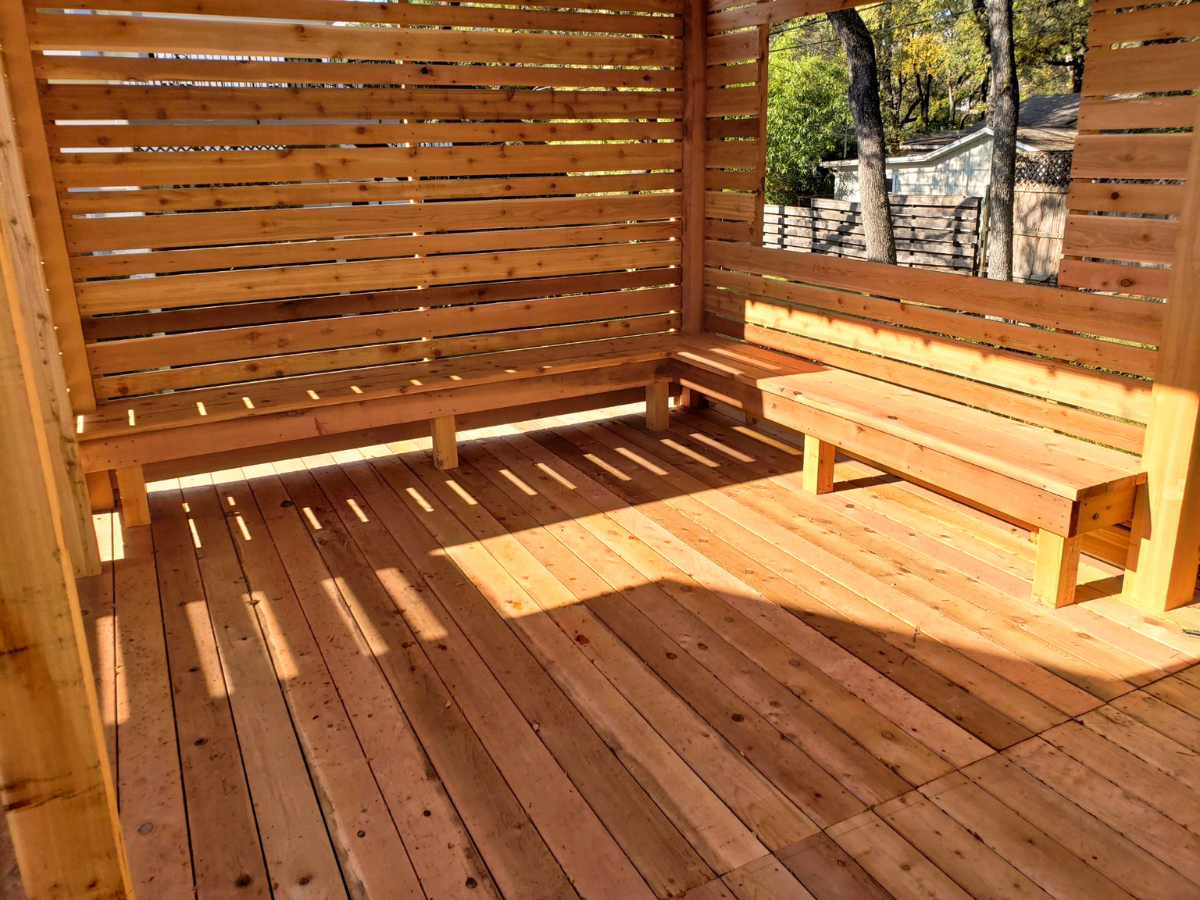
First-Year Care Guide for a New Cedar Pergola
A new cedar pergola is the most photographed structure in a backyard and the most neglected in its first year — largely because nothing appears to need doing. The boards look perfect, the color is beautiful, and the natural assumption is that maintenance starts sometime later. In reality the first twelve months set the structure’s entire trajectory, and the decisions made in them are worth more than any amount of catching up afterward.
Months One and Two: Let It Dry, Watch It Settle
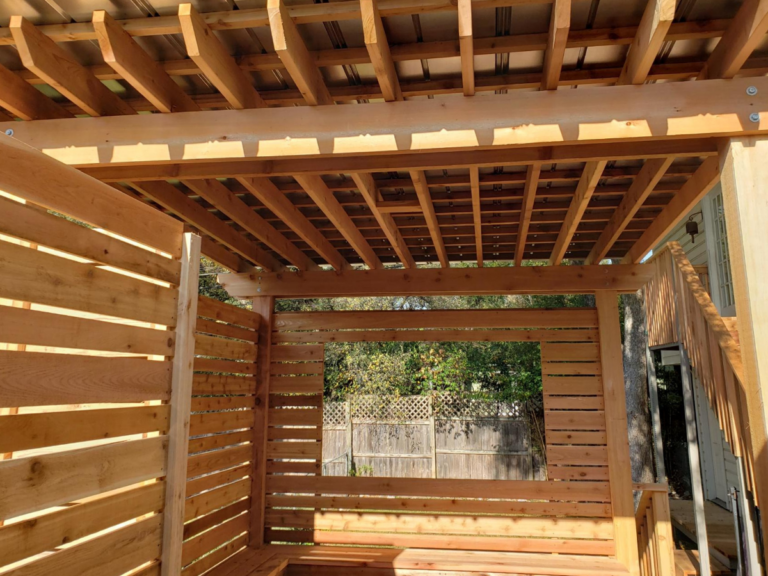
New cedar arrives carrying moisture, and a pergola’s first job is losing it. During this stretch the structure will do things that alarm owners who were not warned: small checks — surface cracks along the grain — will open, especially on beam faces and post tops; boards may cup slightly; the color will begin shifting from fresh-cut pink-tan toward warmer tones. Nearly all of this is normal cedar behavior, not defect. What to actually do: keep sprinklers off the structure, avoid hanging heavy loads while joints settle, and resist finishing early. The wood needs its moisture to leave before anything can go on.
Testing for Finish Readiness
Cedar typically reaches finish-readiness in three to eight weeks of Texas weather, faster in hot dry stretches. The test is the same one used everywhere on this site: sprinkle water on several surfaces — a post, a beam side, a rafter top — and watch. Beading means still shedding; absorbing within a few minutes means the grain has opened. Pergolas dry unevenly by nature: rafter tops in full sun reach readiness well ahead of shaded post bases, so test broadly and let the slowest important surface set the date. A moisture meter settles ambiguous cases, and this is one structure where borrowing precision is worth it — overhead finishing is not work anyone wants to redo.
The First Finish: The Most Valuable Coat It Will Ever Get
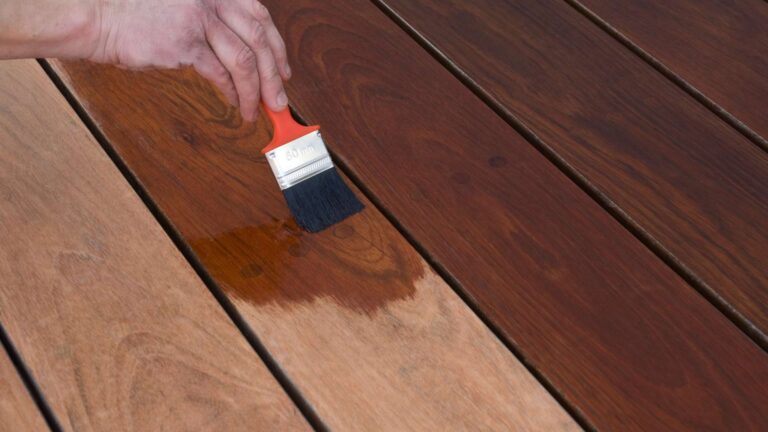
This application matters more than any that follows, because a deep, well-timed first finish establishes the protection every later coat merely tops up. Rushed first finishes underperform permanently. Two structural facts shape the choice: pergola rafter tops take near-perpendicular sun all day — the property’s harshest exposure — and overhead surfaces are applied partially blind, where lap marks and thin spots hide until the light angles wrong. Both argue for real pigment (clear finishes on pergola tops are a short-cycle commitment) and for careful application technique. Professional pergola staining exists largely because this specific coat, on this specific geometry, rewards experience disproportionately.
What to Expect Through the First Summer
The debut summer is the structure’s hardest test, and knowing the normal signs prevents unnecessary worry. Checking continues and may deepen slightly — cosmetic on properly built cedar and not a structural concern. The finish’s color may lighten a shade on the top surfaces while the undersides stay richer; that split is exposure, not product failure, and it is the first hint that pergola tops will always run their own maintenance clock. Some resin bleed from knots is normal on cedar. What is not normal and worth a look: standing water pooling anywhere on horizontal members, boards moving at their fasteners, or finish peeling in sheets, which points to application over damp wood. Heat is the other summer variable worth understanding: rafters in full sun reach surface temperatures far above the air reading, which is why any touch-up work through these months happens in early morning and why the structure’s tops will always dictate the maintenance calendar. A palm pressed flat against a rafter at the hour you intend to work answers the question no forecast can.
Fall of Year One: Establish the Rhythm
The first autumn is when a pergola’s long-term maintenance habits get set. Run the bead test on the rafter tops specifically — they are the structure’s clock, and they will fail first by a wide margin. Clear the debris that accumulates on top surfaces and in joints, especially under trees, where it holds moisture against the wood. This is also the natural moment to book the structure into whatever annual rhythm the rest of the property follows, so the pergola stops being the thing nobody looks at. Understanding why pergolas gray faster than the fence beside them is what makes owners keep that habit rather than assume the structures age alike.
Coordinating With the Rest of the Property
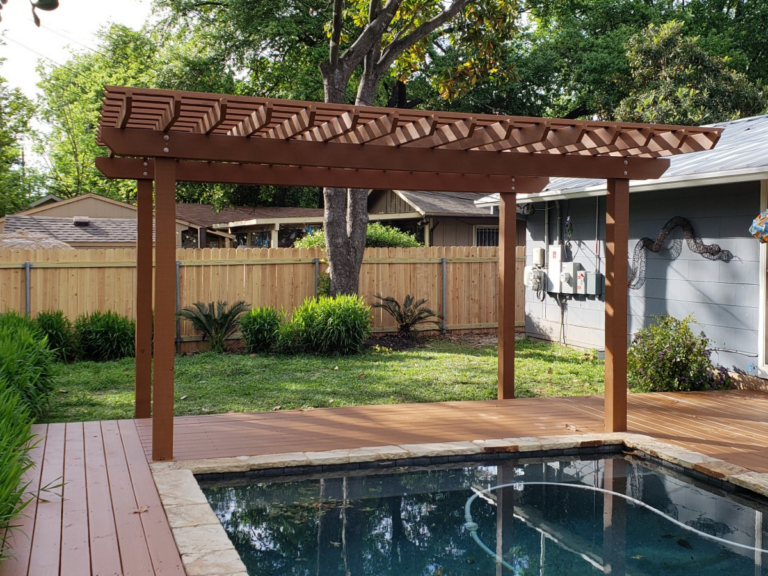
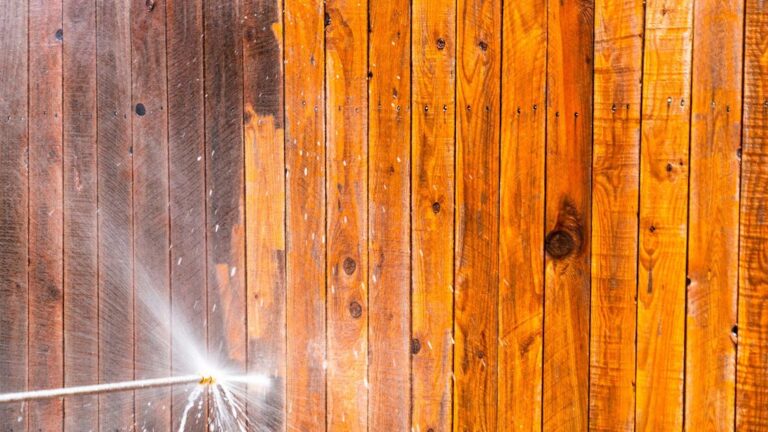
A pergola rarely stands alone, and treating it as part of the property’s wood program rather than a separate structure simplifies everything. Where a deck sits beneath it, the two share a maintenance visit naturally — wash the pergola first so its runoff lands on a deck about to be cleaned, and finish the overhead work before the surface underneath. Where a fence runs nearby, coordinate color decisions early even if the finishing dates differ, since mismatched wood tones in one sightline read as accident rather than choice. And where the property is on an annual wash rhythm, the pergola belongs in that visit permanently, because it is the structure nobody inspects between appointments. The scheduling principle worth adopting: pergolas lead on finishing (their tops fail first) and ride along on washing (the mobilization is already there).
The Habits That Pay for Decades
Four small disciplines separate the pergolas that look intentional at year fifteen from the ones that look tired at year six. Keep water off it where you control the water — sprinkler heads redirected, planters not draining onto posts. Keep the tops clear — an annual clearing of leaves, catkins, and debris from horizontal surfaces and joints. Look up on purpose — twice a year, deliberately inspect the surfaces nobody sees from patio level, since pergola damage runs ahead of what casual eyes catch. And treat the rafter tops as their own maintenance zone, finishing them on their faster clock rather than waiting for the whole structure to need work. None of it is difficult; all of it is easy to skip on a structure that lives above eye level. The first year is where each of those habits is cheapest to establish, because nothing has gone wrong yet and every task is trivially small. A pergola whose owner clears its tops and checks its beading from year one essentially never enters restoration territory; one whose owner starts paying attention in year five usually does. The structure’s whole maintenance biography is written in the habits of its first twelve months.
FAQs
My new pergola is cracking. Is it defective?
Almost certainly not — surface checking as cedar dries is normal and expected, particularly on beams and post tops. Structural concern begins with movement at joints or splits running through a member, not surface checks.
Can I finish it right after installation to protect it?
No — wet wood cannot absorb finish, and the shallow coat that results fails early. The three-to-eight-week drying window is the protection at that stage.
Does the underside need finishing too?
Yes, and it is commonly skipped. Undersides see reflected UV and moisture, and unfinished faces let the wood take on moisture unevenly, which encourages cupping.
What if my pergola is attached to the house?
Attached structures hold radiated house heat longer into the evening and need extra attention where the ledger meets the wall — that junction is the moisture point to inspect each year.
How often will a pergola need re-finishing?
The rafter tops typically want attention on a shorter cycle than the fence — plan on the tops leading the schedule, with the full structure following on its own bead-test evidence.
Should I stain it the same color as my fence?
Coordinated, not necessarily identical — pergolas read against the sky and often carry a shade deeper handsomely. Sample on the actual rafters before committing.
What is the single most important first-year decision?
Timing the first finish to actual readiness rather than the calendar. Every year afterward inherits the quality of that coat.