Why Decks Splinter (and How Finishing Prevents It)
A deck that was smooth underfoot for years turns rough, then hostile — and the household stops going barefoot on it. Splintering feels like the wood going bad, but it is a specific, well-understood surface process with a specific fix. Understanding the mechanism explains both why it happened and why the solution is not sanding alone.
The Mechanism: Raised Grain
Wood is built of fibers bound by lignin. When UV degrades that lignin at the surface — the same process that produces graying — the fibers lose their binding and begin to separate. Moisture cycling accelerates the separation: boards swell when wet and shrink when dry, and each cycle lifts loosened fibers slightly further from the surface. Over enough cycles those raised fibers stand proud of the board, dry brittle, and break off under foot traffic. That is a splinter. It is not decay, it is not defective lumber, and it is not a sign the deck is failing — it is unprotected surface fiber doing exactly what unprotected surface fiber does.
Why Decks Get It Worse Than Fences
Horizontal geometry stacks every disadvantage. Deck boards take near-perpendicular sun through the strongest hours, so the UV dose driving lignin breakdown is at maximum. Water pools on them rather than running off, extending the wet portion of every moisture cycle. And unlike a fence, a deck is walked on, which means mechanical abrasion is constantly working at fibers that UV has already loosened — and it is the surface where splinters actually matter, because feet and hands contact it directly. A fence can be rough with no consequence; a rough deck is out of service.
What Makes It Worse Faster
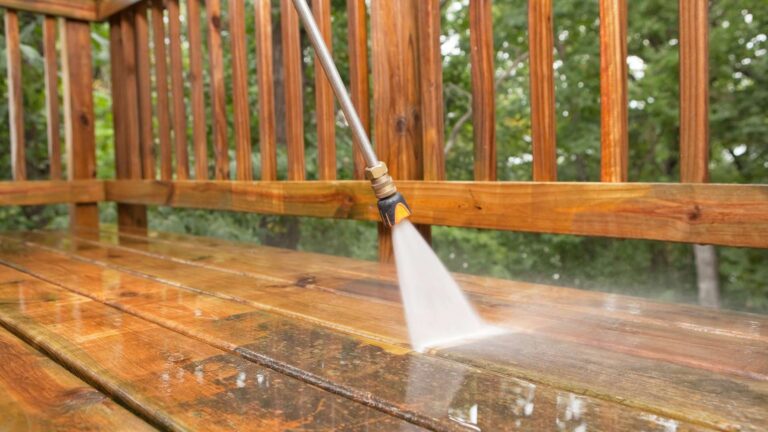
Several conditions accelerate the timeline. No finish at all is the largest factor, since nothing is intercepting UV. Clear sealers help less than owners expect, because clear finishes carry almost no pigment and pigment is what blocks UV. Aggressive pressure washing is a major and underappreciated cause: excessive force blasts out soft springwood and raises grain directly, creating in an afternoon what weathering takes years to do. Softer woods splinter more readily than dense ones. And traffic patterns concentrate the wear, which is why the path from the door to the grill roughens before the deck’s quiet corners.
Fixing a Deck That’s Already Rough
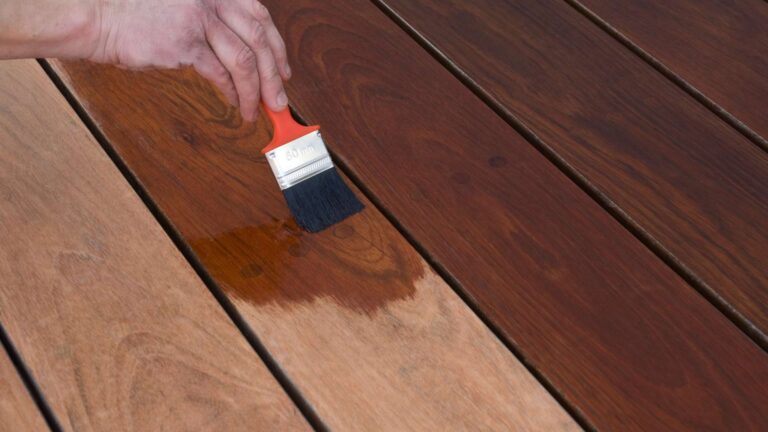
The repair sequence is specific, and order matters. Wash first at wood-safe calibration, removing dirt, growth, and the loosest degraded fiber — never at pressure high enough to raise more grain, which is the classic self-inflicted setback here. Brighten if gray has established, reversing the oxidation and readying the surface. Dry completely to a verified moisture reading. Then sand the raised grain: this is the one step where mechanical work genuinely belongs, focused on traffic lanes, stair treads, and railings at moderate grit, always with the grain. Then finish. Sanding without the wash-and-dry that precedes it grinds dirt into the wood and clogs paper immediately; finishing without the sanding locks the raised fibers in place under a coat.
Why Sanding Alone Is a Temporary Fix
Homeowners frequently sand a rough deck, enjoy a smooth season, and find it rough again the following year — then conclude sanding does not work. Sanding works fine; it just removes the symptom while leaving the cause in place. A sanded but unfinished deck is freshly exposed bare wood in full Texas sun, and the lignin breakdown restarts immediately on the new surface. The finish is what interrupts the cycle, and pigmented finish is what interrupts it durably. Sanding is a step within the repair, not the repair itself — which is the single most useful thing to know about splintery decks.
Reading a Deck’s Roughness Honestly
Not all rough decks are at the same stage, and the distinction changes the scope. Light roughness — a slightly dry, textured feel with no visible fiber standing up — is early-stage grain raising, and washing plus a maintenance coat often handles it with minimal sanding. Visible fuzz, where fibers are clearly lifted and catch a cloth dragged across the board, is mid-stage: the full wash-brighten-dry-sand-finish sequence is warranted. Actual splinters breaking loose underfoot, with slivers detaching in the traffic lanes, is late-stage surface degradation and typically means a thorough sanding pass plus a genuine restoration. And boards that feel soft rather than rough are a different problem entirely — that is moisture and decay, not splintering, and it calls for probing and replacement rather than any amount of surface work. Diagnosing which of the four you have before booking anything prevents both over-scoping a simple refresh and under-scoping a real restoration.
Prevention, Which Is Much Cheaper
The preventive version costs a fraction of the repair. Keep a pigmented finish current, using the bead test rather than the calendar to know when — decks in sun run shorter intervals than fences. Wash annually at gentle calibration, since buildup holds moisture against boards and worsens the cycling. Watch the traffic lanes specifically and spot-refresh them between full re-coats, because they wear years ahead of the field boards. And keep water moving: clear debris out of board gaps so trapped organic matter is not holding moisture against the wood indefinitely. A deck kept on that rhythm essentially never reaches the splinter stage. The cost comparison is stark enough to be worth stating: maintaining a smooth deck is a wash and a periodic coat, while recovering a splintered one adds brightening, a full sanding pass, and heavier product consumption on thirsty wood.
Stair Treads, Railings, and Where Splinters Actually Hurt
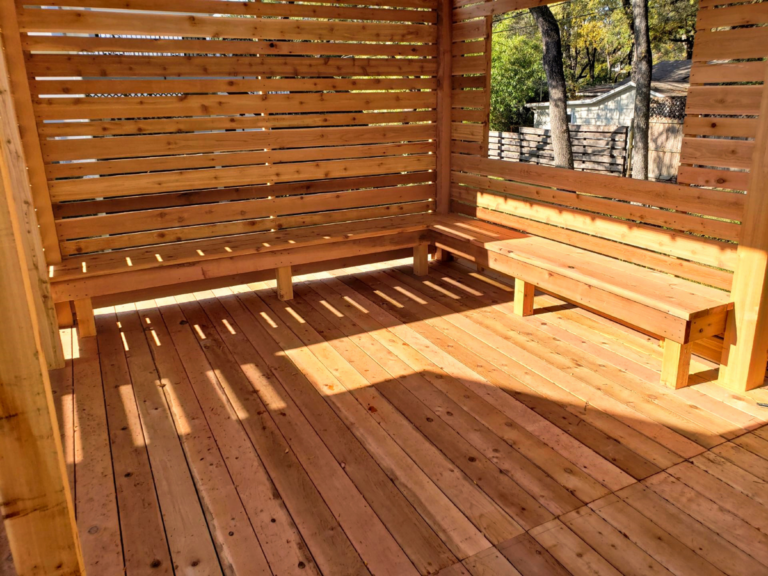
Worth naming the high-contact zones, because they justify disproportionate attention. Stair treads take foot traffic plus full weather plus the highest safety stakes on the structure. Railings and cap rails meet hands constantly, including children’s, and a rough cap rail is the splinter people actually get. Bench seating and any built-in furniture surfaces contact skin directly. And board ends and edges around the perimeter roughen early because end grain degrades fastest. On any deck refresh, these surfaces earn extra sanding and an extra pass of finish — the field boards can be adequate, but the touch surfaces should be genuinely smooth. A practical way to prioritize: walk the deck barefoot and run a hand along every railing before scoping any work. The surfaces that make you flinch are the ones that matter, and they are rarely the ones a visual inspection alone would have flagged.
FAQs
Does splintering mean my deck needs replacing?
Almost never. Splintering is a surface condition on structurally sound wood — probe for softness to confirm, but the fix is a refresh, not a rebuild.
Can I just sand it and skip the finish?
You can, and it will be smooth for a season. Bare wood in Texas sun restarts the process immediately; the finish is what makes the sanding last.
What grit should I use?
Moderate grits, working with the grain — aggressive grits close the wood’s pores and hurt absorption, while very fine polishing does the same. The goal is knocking down raised fiber, not furniture finishing.
Does pressure washing cause splinters?
At excessive pressure, absolutely — it is one of the fastest ways to create them. Wood-safe calibration cleans without raising grain.
Will composite decking splinter?
Not in the wood sense, though composites can crack, chip, and fade. Different material, different failure modes.
How soon after finishing can we go barefoot?
After the product’s full cure, not just dry-to-touch — typically a few days depending on finish and weather.
Are some woods less splinter-prone?
Denser hardwoods resist longer than softwoods like cedar and pine. All of them splinter eventually if left unprotected in this climate.