Composite Deck Care: What It Needs Instead of Stain
Composite decking is sold on freedom from the staining cycle, and that claim is broadly true — these boards genuinely do not need refinishing. What they do need is a different maintenance conversation entirely, one most owners never receive at purchase. Here is what composite actually requires, what harms it, and where the wood-care instincts transfer and where they mislead.
What Composite Is, and Why That Matters
Composite decking is a manufactured blend, typically wood flour and plastic, either uncapped or — in most modern products — capped with a protective polymer shell on the exposed faces. That construction is why it resists rot, insects, and the UV-driven graying that governs wood care: there is no exposed lignin to degrade. It is also why finishing products largely do not work on it, since penetrating stains require porous wood fiber to soak into and composite offers a sealed plastic surface instead. Understanding the material explains every maintenance rule that follows.
What It Actually Needs: Cleaning
The real maintenance requirement is washing, and it matters more than owners expect. Composite surfaces collect the same dirt, pollen, and organic debris as wood, and that layer feeds mold and mildew — which grow on the surface film of grime rather than on the board itself, but look and feel just as unpleasant. Austin’s oak pollen load and humid stretches make this a genuine annual issue. Regular cleaning with soap and water or a composite-appropriate cleaner, plus attention to the gaps between boards where debris packs down and holds moisture, is essentially the entire maintenance program. Skipping it produces the mold-streaked composite decks that give the material an undeserved reputation.
Pressure Washing: Allowed, With Real Limits
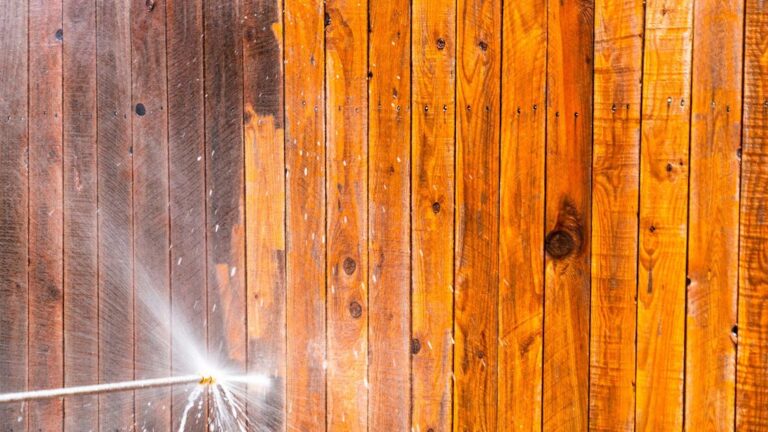
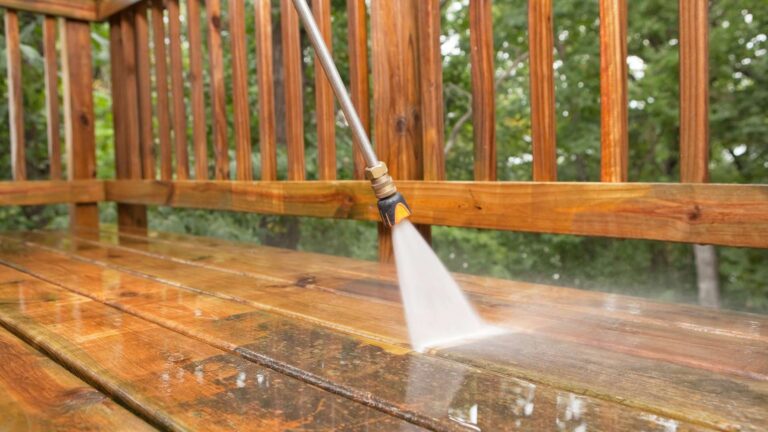
Composite can be pressure washed, and manufacturers generally permit it within specified limits — but the caution is different from wood’s. Excess pressure does not raise grain here; it can strip or damage the protective cap, gouge the surface, and void warranties, which is a more expensive mistake than fuzzing a cedar board. The safe approach mirrors wood-safe technique anyway: wide fan tip, generous distance, moderate settings, cleaning solution doing the real work. Check the manufacturer’s stated maximum, because it varies by product and exceeding it is a documented warranty issue rather than a judgment call.
What Actually Damages Composite
The failure modes differ from wood’s and are worth knowing. Heat: dark composite boards get genuinely hot in Texas sun, and reflected light from low-E windows has been documented to warp and melt composite surfaces in extreme cases. Scratching: composite scratches more readily than many owners expect, and unlike wood, scratches cannot be sanded out — the cap is the finish. Staining from grease, tannins from leaves left sitting, and rust from metal furniture feet can all mark the surface permanently if left. Structural sagging where joist spacing was inadequate for the product. And fading, which is normal and mild on quality capped boards but real over many years.
Where Wood Instincts Mislead
Several habits that serve wood decks do not transfer. Do not stain or seal composite — penetrating products cannot penetrate, sit on the surface, and create a peeling mess that is difficult to remove. Do not sand it, since sanding removes the cap that constitutes the product’s protection. Do not use harsh solvents or undiluted bleach, which can damage the polymer. Do not assume gray means the same thing it does on wood — mild composite fading is normal and does not indicate lost protection. And do not skip the gaps, because on composite as on wood, trapped debris holding moisture is the source of most surface problems.
The Wood Parts of a Composite Deck
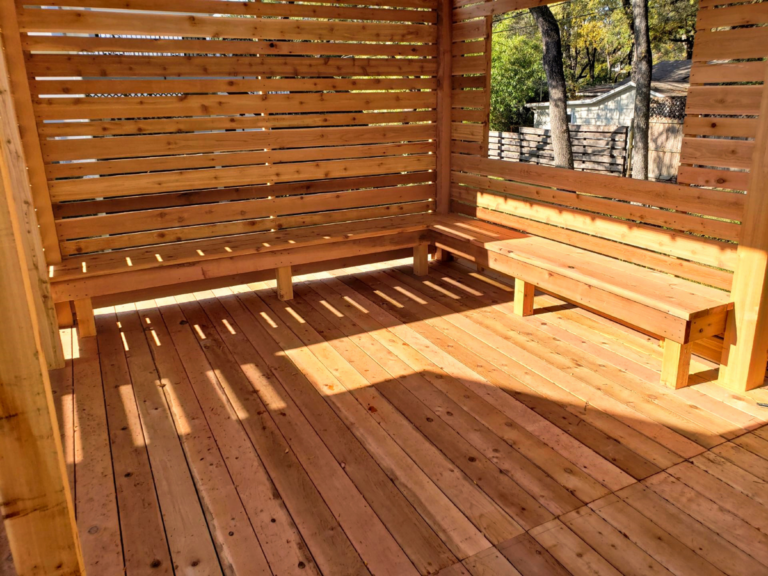
Here is the detail nearly every composite owner overlooks: most composite decks are not entirely composite. The substructure — joists, beams, posts — is typically pressure-treated lumber, and on many builds the railings, stair stringers, or privacy screens are real wood as well. Those components follow every ordinary wood rule: they weather, they need inspection, and the visible wood elements benefit from finishing on the standard cycle. It is common to see a pristine composite deck surface surrounded by graying wood railings, which is entirely fixable and frequently unnoticed until someone points at it. Any honest assessment of a composite deck looks under and around the boards, not just at them.
The Annual Composite Checklist
The whole program fits on a short list, run once a year with a mid-season glance. Wash the surface with soap and water or a composite-appropriate cleaner, working with a soft brush on any mold streaking. Clear the gaps between boards, where leaves and debris pack down and hold moisture — the most-skipped item and the source of most composite mold complaints. Inspect the wood substructure: probe joists and posts at accessible points, especially where the deck meets the house and anywhere near grade, since the composite surface can look perfect over framing that is failing. Check fasteners and hidden clips for movement. Look at the railings and stairs, which are often real wood and often overdue. Clean up any grease, rust marks, or leaf tannin staining before it sets. And note the board temperature situation in summer, since a deck that becomes unusable in afternoon heat may want shade rather than maintenance. Twenty minutes, once a year, and composite genuinely does deliver on most of what it promised.
Composite Next to Wood
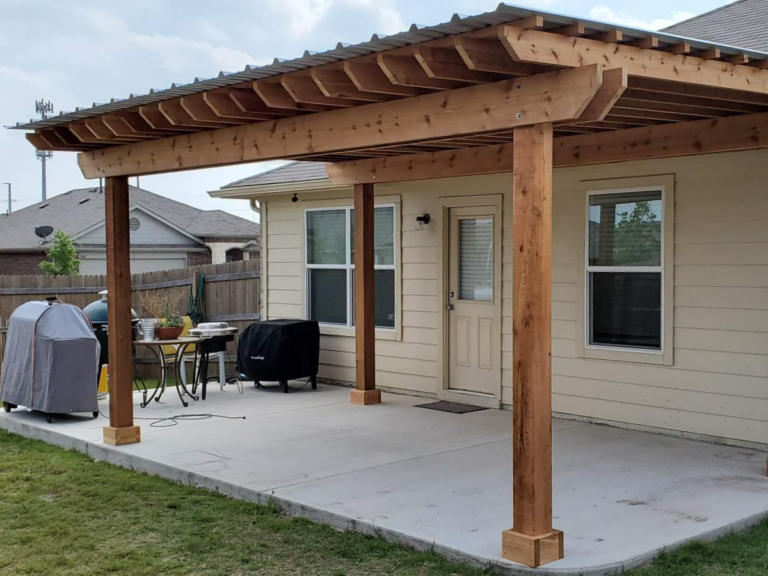
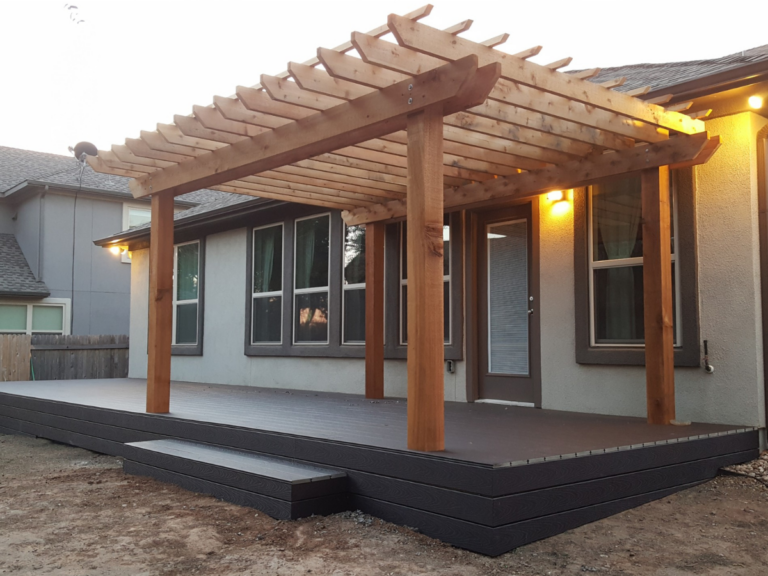
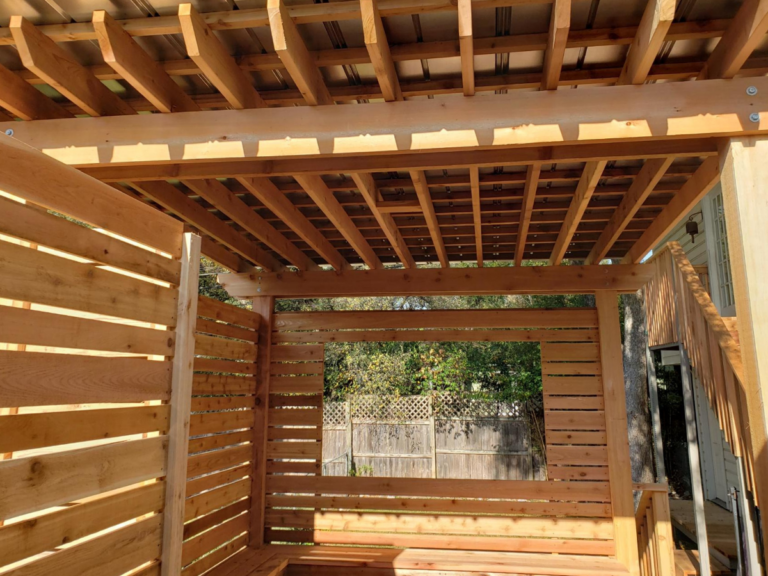
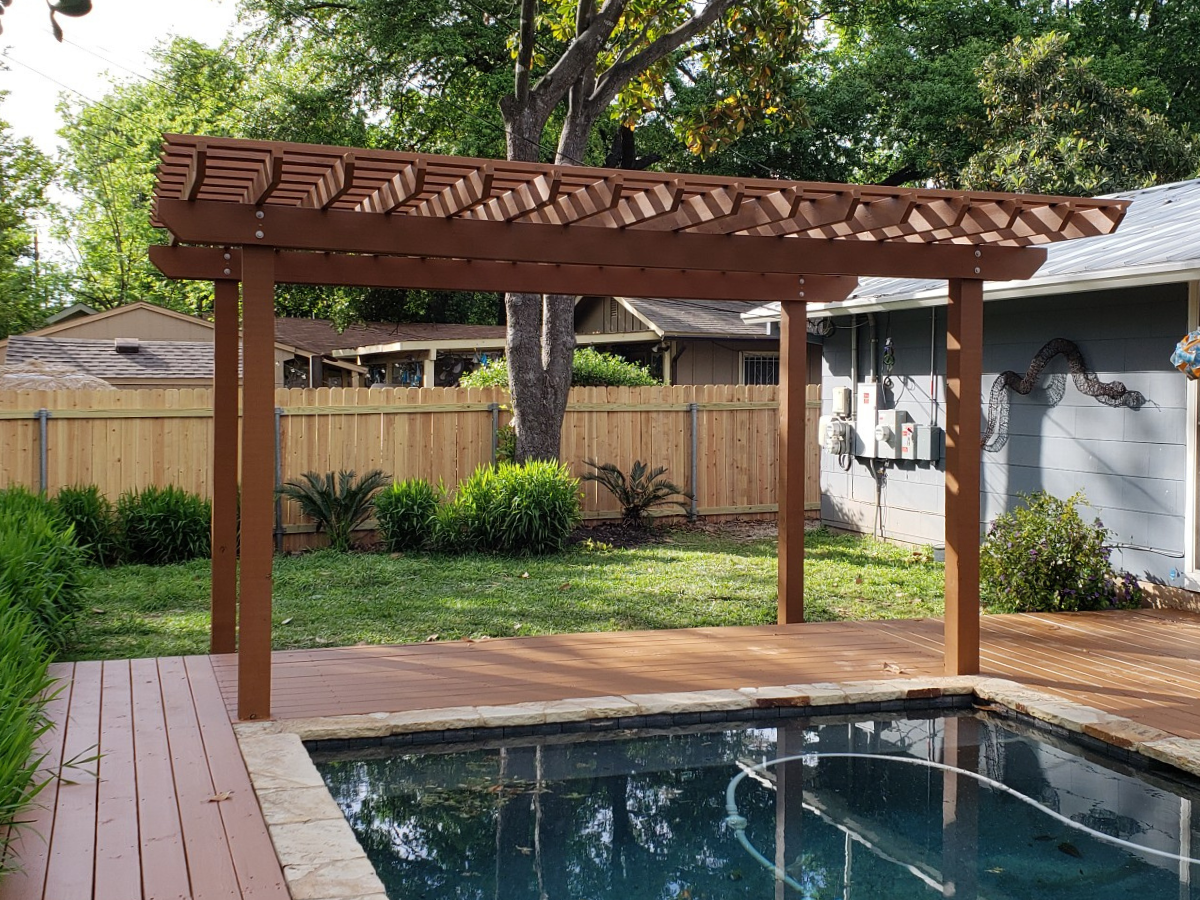
Many Austin properties run composite decking alongside genuine wood elsewhere — a composite deck with a cedar pergola overhead, a wood fence enclosing the yard, or wood privacy screens at the deck’s edge. That combination benefits from coordinated planning: the composite gets its annual wash while the wood structures get their own finishing rhythm, ideally in the same visits so the property is maintained as one system. Color coordination matters too, since a composite board’s fixed factory tone cannot be adjusted later — the wood elements around it are where any tonal harmonizing has to happen, which makes sampling against the composite worth doing before finishing adjacent structures. The reverse mistake is equally common: choosing a composite board color without considering the cedar fence and pergola it will live beside, then discovering the two fight each other. Where both are being decided at once, settle the composite first, since its color is permanent and the wood’s is not.
FAQs
Can composite decking be stained or painted?
Staining, effectively no — there is nothing for penetrating products to enter. Specialty composite paints exist but are generally a last resort with real downsides; they are not standard maintenance.
Why does my composite deck have mold on it?
Mold grows on the organic film of pollen and dirt sitting on the surface, not on the board itself. Regular washing removes the food source.
How often should composite be cleaned?
At least annually in Austin, more if it sits under trees. Spring, after the pollen drop, is the natural slot.
Does composite fade?
Quality capped products fade mildly over many years — normal and cosmetic, not a protection issue as it would be on wood.
Can scratches be repaired?
Generally not by sanding, which would remove the cap. Minor marks sometimes ease with manufacturer-recommended methods; deep scratches usually mean board replacement.
Is composite actually maintenance-free?
No — it is refinishing-free, which is a meaningful difference. Cleaning, gap clearing, and inspection of the wood substructure all still apply.
Do my wood railings need different care than the composite boards?
Yes, entirely — they follow standard wood rules including finishing on a normal cycle. Mixed decks need both programs running side by side.