Safe Pressure for Washing Wood: What the Numbers Mean
Search this topic and you will find confident PSI numbers contradicting each other on every result. The reason is that pressure alone is the wrong variable: the same machine setting that cleans one fence safely will carve its neighbor, because what the wood experiences depends on the tip, the distance, the wood, and the hand holding the wand. Here is the full picture — the numbers, and everything the numbers leave out.
What PSI Actually Measures — and What Wood Feels
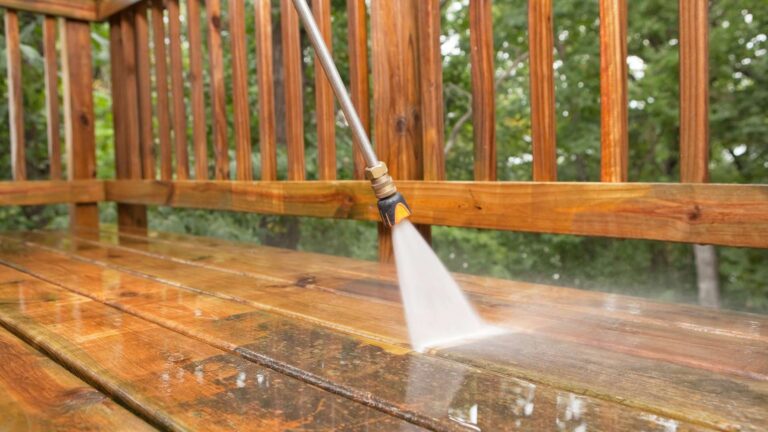
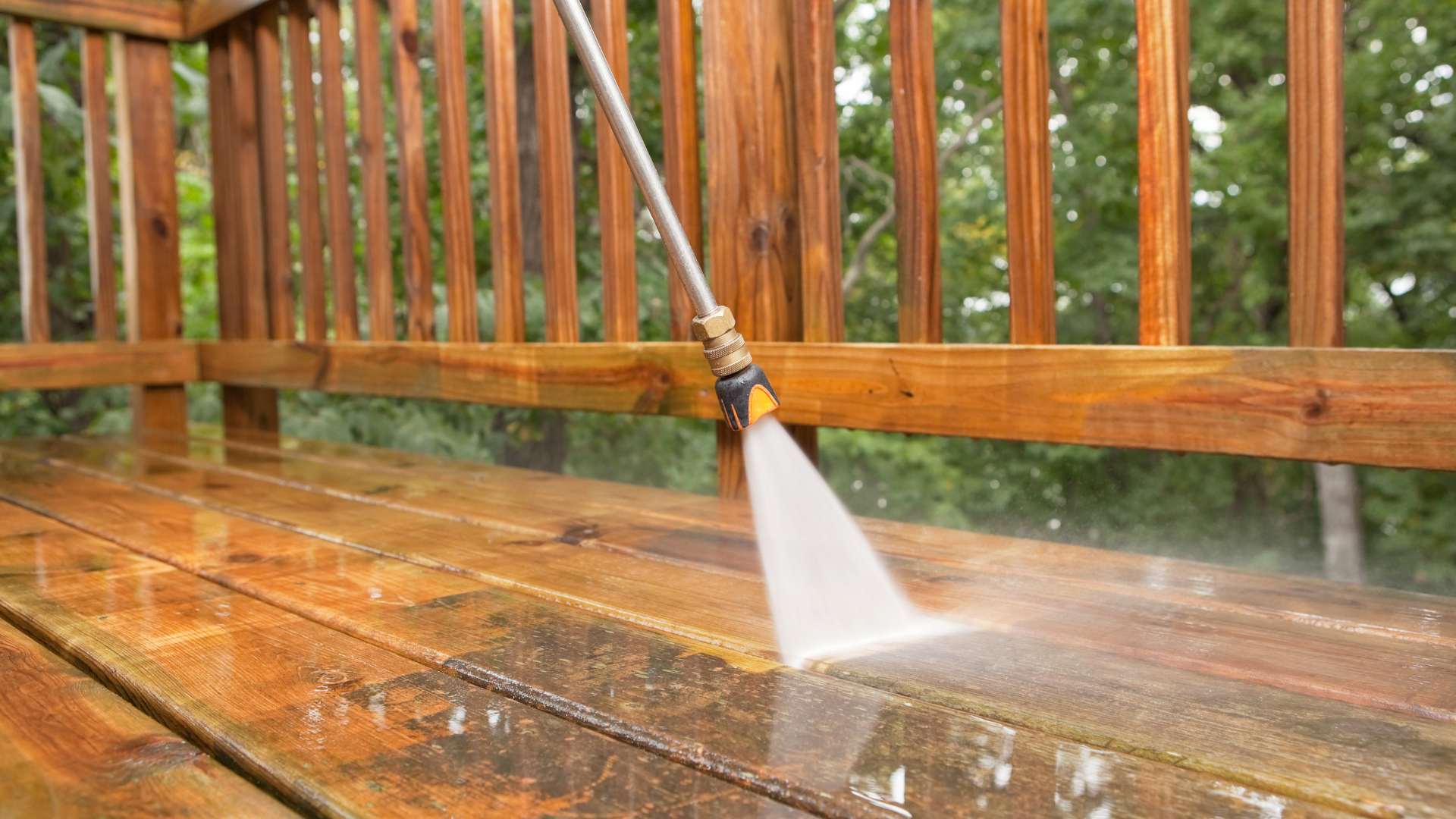
PSI rates the machine’s output at the pump, but wood never feels the pump — it feels the water’s force spread over the spray pattern’s footprint at whatever distance the wand sits. A narrow tip concentrates the entire rating onto a stripe the width of a pencil; a wide fan tip spreads it across a hand-span; a foot of extra distance diffuses it dramatically. This is why quoting bare PSI numbers misleads: a modest machine with a zero-degree tip held close will gouge oak, while a strong machine with a wide fan at proper distance washes cedar gently. The working concept professionals actually use is impact force at the surface — a product of pressure, tip, and distance — managed continuously rather than set once.
The Working Ranges, Honestly Stated
With that caveat planted, the ranges that serve as starting points: softwood fences and decks — cedar, pine, pressure-treated — want low-to-moderate machine settings in roughly the five-hundred-to-twelve-hundred PSI neighborhood, always through a wide fan tip (forty-degree or wider) at a foot or more of distance, moving with the grain. Dense hardwood decking tolerates somewhat more. Anything above the mid-teens-hundreds on softwood is asking the machine to do work that chemistry should be doing, and the common rental-store default of two-thousand-plus with whatever tip is on the wand is how fences get furred. The number to internalize is less a setting than a posture: start gentler than seems productive, at more distance than seems useful, and close in only as the wood proves it tolerates more.
Why Tips and Distance Outrank the Dial
Two adjustments change surface force more than the machine’s dial does. Tips first: the angle stamped on the nozzle is the spray’s spread, and each step wider roughly halves the punch — zero- and fifteen-degree tips have no business near wood at all; twenty-five is a cautious spot-tool; forty-plus is the wood-washing workhorse. Distance second: force falls off steeply with every inch of standoff, which turns the wand angle and your stance into live pressure controls. The professional habit that follows: set the machine moderate and leave it, then modulate entirely with tip choice, distance, and speed of pass — a control scheme that adjusts board by board, which is exactly what wood’s variability demands.
The Damage Over-Pressure Leaves
Knowing the failure modes makes the caution concrete. Furring: high force blasts out soft springwood between the harder grain lines, raising a fuzzy pile that dulls the clean look within weeks and ruins finish adhesion. Wand lines: stripes of etched wood tracking every pass, permanent and visible through any future stain. Blown edges: splintered board corners and shredded end grain where concentrated spray caught them. Driven moisture: water forced deep into boards and joints, stretching drying times and risking trapped-moisture finish failures later. Every one of these is irreversible by any means short of sanding or replacement — the reason wood-safe washing is defined by restraint, and why the impressive-looking full-power rinse is the most expensive clean a fence can receive.
Chemistry: The Pressure You Don’t Need
The honest secret of professional washing is that pressure is the junior partner. Wood cleaners — typically sodium-percarbonate based — dissolve the grime bond; mildewcides kill the growth so it rinses instead of smearing; dwell time lets both work. With chemistry carrying the load, the water’s job shrinks to transport: moderate force moving the dissolved buildup off and away. This is why a proper wash at gentle settings outperforms a violent plain-water blast every time, and why the fix for stubborn buildup is more dwell or a second solution pass — never a tighter tip. The equipment-store instinct says turn it up; the wood-preservation answer is almost always let it soak. The sequencing that follows from chemistry-first is worth spelling out: pre-wet the wood, apply solution from the bottom up to prevent streaking, let it dwell without drying (mist to keep it live on hot days), then rinse top-down at wood-safe force. Most of that sequence involves no trigger-pulling at all, which is exactly the point.
Reading the Wood as You Work
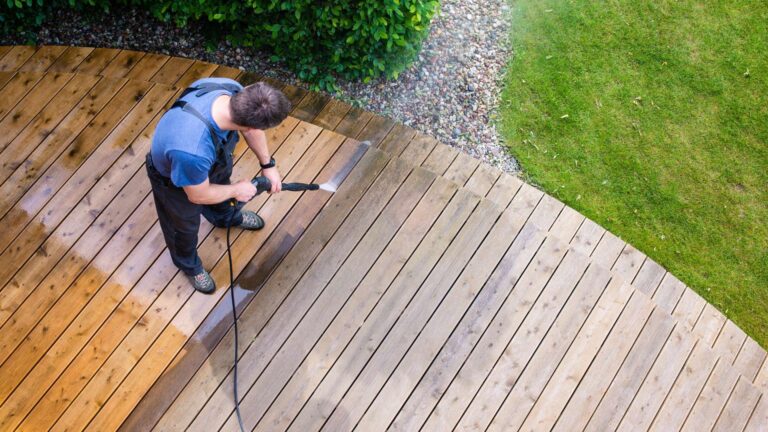
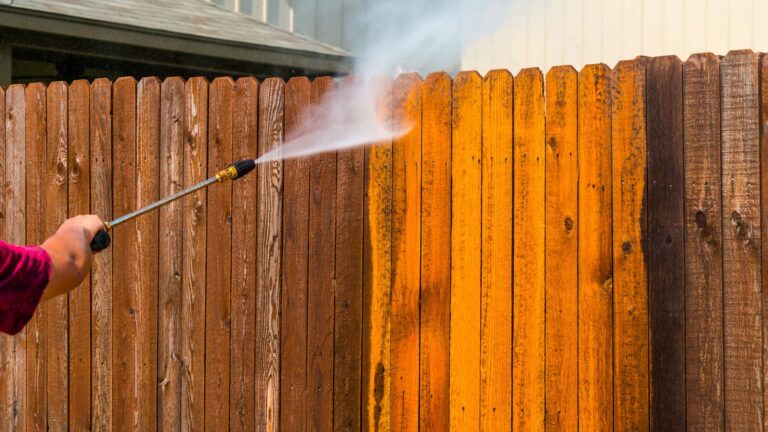
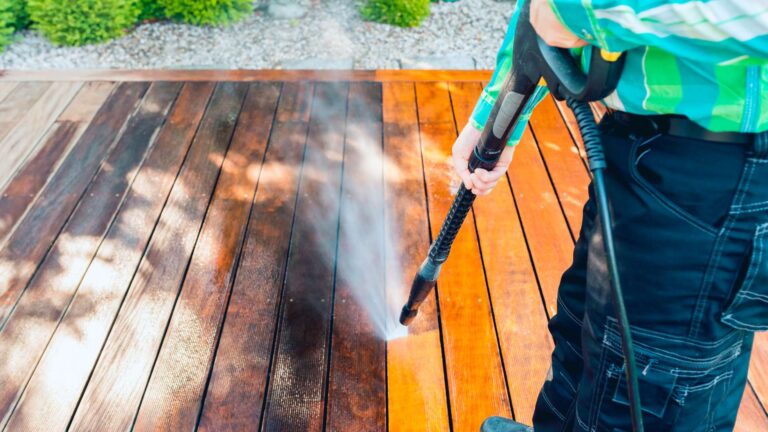
Safe washing is a feedback loop, not a setting. Watch the surface immediately behind the spray: clean wood emerging with its texture intact means the calibration is right; any hint of fuzz rising, fibers lifting, or a lightened stripe tracking the pass means back off — wider tip, more distance, slower approach. Old, sun-dried boards forgive less than young ones; edges and end grain forgive least of all and deserve deliberate gentleness; previously finished surfaces telegraph their coating’s condition as you go, with sound finish shrugging off maintenance-level washing and failing finish lifting, which is information rather than a problem. Ten attentive seconds at the start of every fence answer the pressure question better than any chart, including this one. Two habits make the feedback loop reliable: test in the least visible spot first — behind the gate, the fence’s alley face — so the calibration conversation happens where mistakes are cheap, and recheck whenever the wood changes character mid-run, because a fence that crosses from sun to deep shade changes hardness, moisture, and tolerance in a single panel.
When to Put the Wand Down Entirely
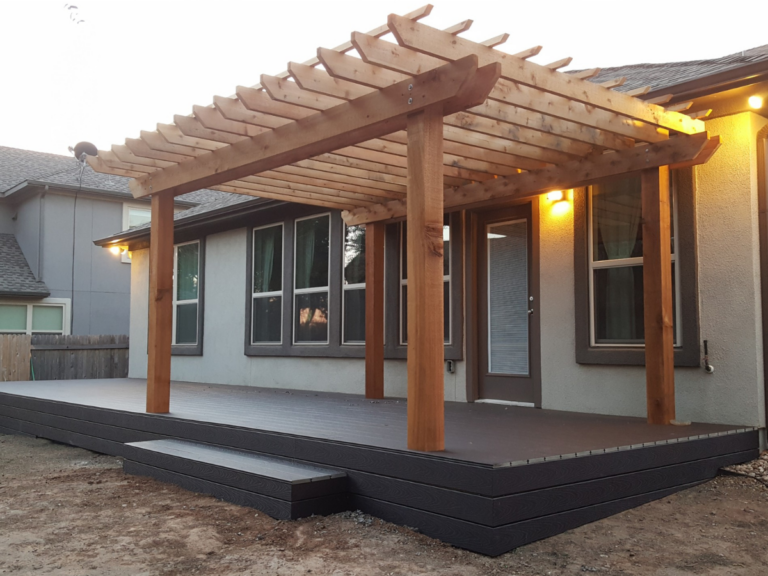
Some situations disqualify pressure altogether. Wood soft enough to dent with a thumbnail — probe-failing, rot-suspect boards — will not survive washing and needs assessment, not cleaning. Very old, historic, or loose-jointed structures want hand-scale methods. Lead-painted surfaces on older properties must never be blasted into airborne chips. And washing overhead structures from ladders combines a recoil-generating tool with balance in a way worth respecting — pergola work is done from stable footing with technique adapted for it, which is a fair share of why overhead washing sits in the professional column even for committed DIY households. Restraint has a final tier, and it is choosing a different method altogether.
FAQs
What PSI setting should I rent for my fence?
Rent for control, not power: any mid-range machine works if it runs a forty-degree fan tip at moderate settings. The tip selection in the box matters more than the PSI on the sticker.
Can I pressure wash a stained fence without stripping it?
Yes — maintenance washing at gentle, wood-safe calibration preserves sound finishes. A finish that lifts under gentle washing was already failing, and the wash just delivered the news early.
Is a garden hose with a jet nozzle safer?
Safer and mostly ineffective — it removes loose debris and nothing embedded. The answer to fear of pressure is chemistry plus modest pressure, not surrender to the hose.
Do electric pressure washers work for fences?
Often ideally: their moderate output through a fan tip sits naturally in wood-safe territory, and their limits are a feature rather than a flaw for this task.
How close should the wand get to the boards?
Start beyond a foot and let results argue you closer. If you are inside six inches on softwood, something about tip or technique is wrong.
Why did my deck turn fuzzy after washing?
Raised grain from excess force — the classic signature. Light sanding once fully dry knocks it down, and the next wash runs wider, farther, and gentler.
Does new pressure-treated wood need different care?
Gentler still: young treated lumber is wet, soft, and easily marked. It mostly needs drying time, not aggressive cleaning, before its first finish.
What about washing composite decking — same rules?
Gentler rules, same logic: composite tolerates moderate fan-tip washing well and is damaged by concentrated tips like any surface. Follow the manufacturer’s guidance where it exists; the wide-tip-and-distance posture satisfies nearly all of them.