Why Pressure Washing Comes Before Deck Staining
Here is the uncomfortable truth about deck stain: the product in the can matters less than the surface it lands on. Premium stain over a dirty deck fails early; modest stain over properly prepared wood outlasts it. Washing is not the chore before the real work — it is the step that decides how the real work performs.
What Is Actually on an Unwashed Deck
Three layers sit between stain and wood on a typical Austin deck: embedded dirt and pollen, biological growth — the algae and mildew that make boards slick — and oxidized fiber, the layer of dead gray cells UV creates at the surface. Stain applied over that stack bonds to the stack, not the wood. It looks fine for a season, then peels, flakes, or wears through wherever the buildup was thickest, because it was never attached to anything solid.
The Bond, Explained Simply
Penetrating stain works by capillary action: liquid drawn into the wood’s open cell structure, carrying pigment and resins that anchor below the surface. Every layer of buildup interrupts that draw. Dirt fills the capillaries; algae coats them with a biological film; oxidized gray fiber is itself dead material with nothing sound to anchor into. Stain applied over that stack does the only thing it can — bonds shallowly to the top layer — and the finish’s fate is then tied to material that was already loose. This is why failed finishes peel in sheets that carry gray fuzz on their undersides: the stain kept its grip, but its grip was on debris. Washing is not cleaning for appearance’s sake; it is excavating down to sound wood so the chemistry has something real to hold.
What Washing Changes
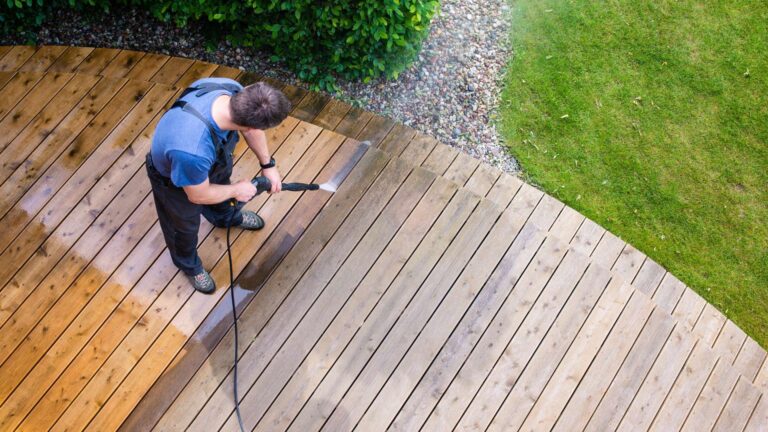
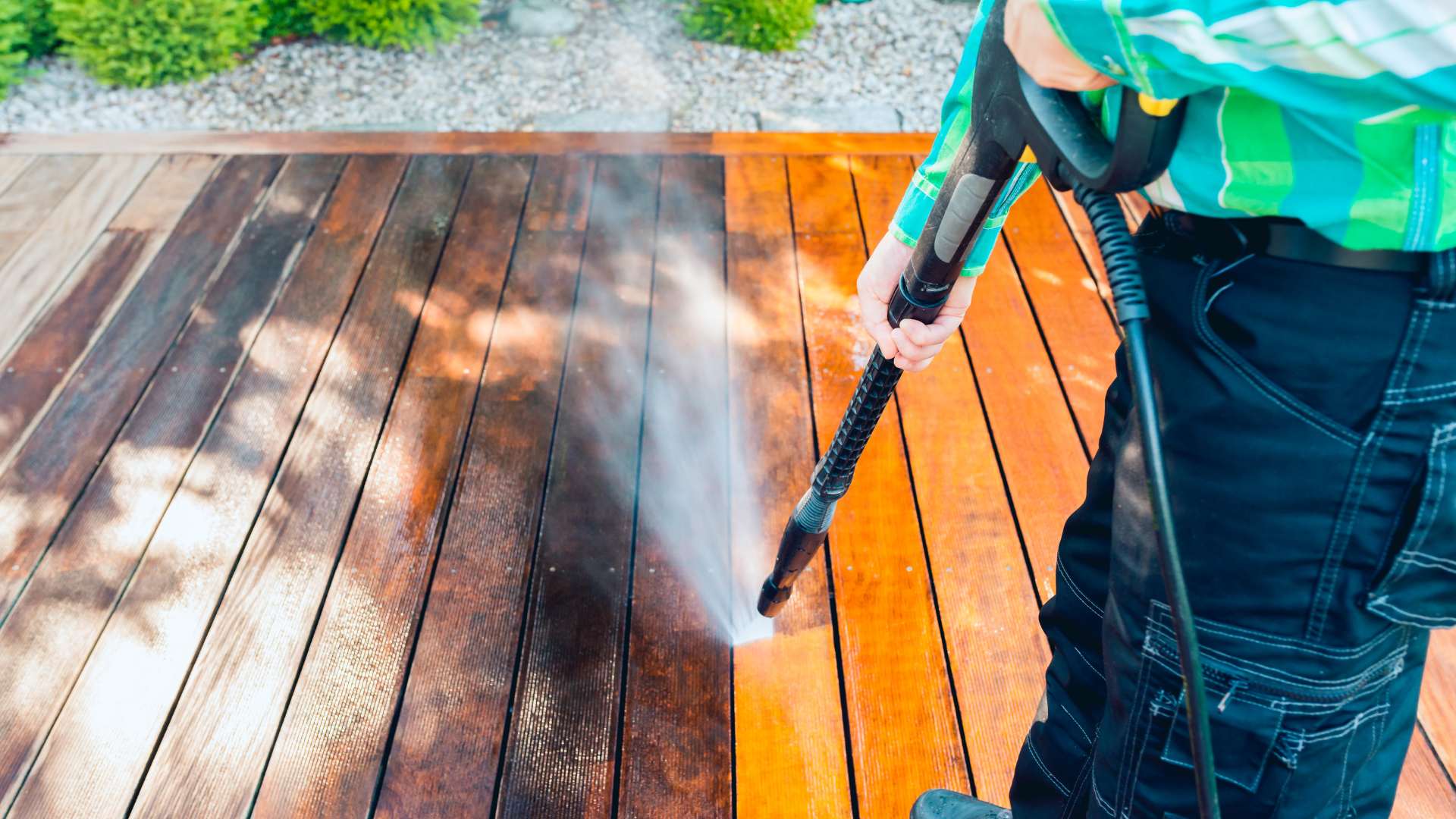
A proper wash clears all three layers and opens the wood’s grain, which is the whole game for a penetrating product: open grain lets stain soak deep, carrying pigment and repellency into the fibers where protection actually lives. Washed wood also shows its true condition — sometimes revealing a deck that needs brightening or board replacement before finishing, which is far better discovered before the stain goes on than after.
Why Pressure Alone Isn’t the Method
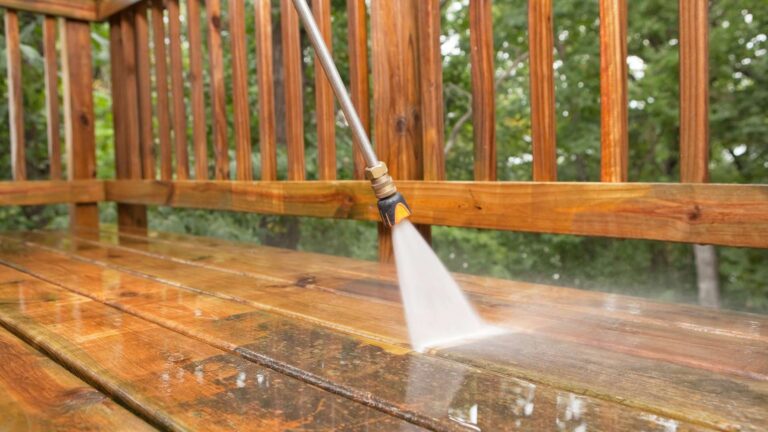
The machine is a tool, not the technique. Excessive pressure gouges softwood, raises fuzzy grain that ruins finish adhesion, and drives water deep into boards — extending drying time and risking trapped moisture. Deck-safe washing pairs moderate, fanned pressure with wood cleaners that do the chemical lifting, working with the grain in overlapping passes. Clean and smooth, not clean and carved. One more calibration note: pressure needs also vary board to board. Dense heartwood tolerates more than sappy edge boards, ten-year-old pickets tolerate less than five-year-old ones, and the wash adjusts continuously rather than running one setting across the structure. That responsiveness is most of what separates a professional wash from a rented afternoon.
What Skipping the Wash Looks Like a Year Later
The failure signature is distinctive, and we see it on service calls constantly: finish flaking in patches that map exactly to where buildup was heaviest — under tree drip lines, along shaded board edges, around planter rings — while the sections that happened to be cleaner still hold. The stain did not fail randomly; it failed precisely where it was bonded to grime instead of grain. By then the fix costs more than the wash would have: the failed finish has to be washed back anyway, plus the patchy remainder evened out, plus the refinish itself. Prep skipped is never prep avoided — it is prep postponed to a worse price.
The Drying Window Nobody Respects
Between washing and staining lives the step that separates lasting finishes from failed ones: drying. Washed boards hold water, and stain over damp wood seals that water in — the finish then fails from underneath, through no fault of the product. Two to three rain-free days minimum, a moisture meter if you have one, and a forecast check before the can opens. The staining itself is almost the easy part once the prep is honest.
Fences and Pergolas: Same Rule, Adjusted Touch
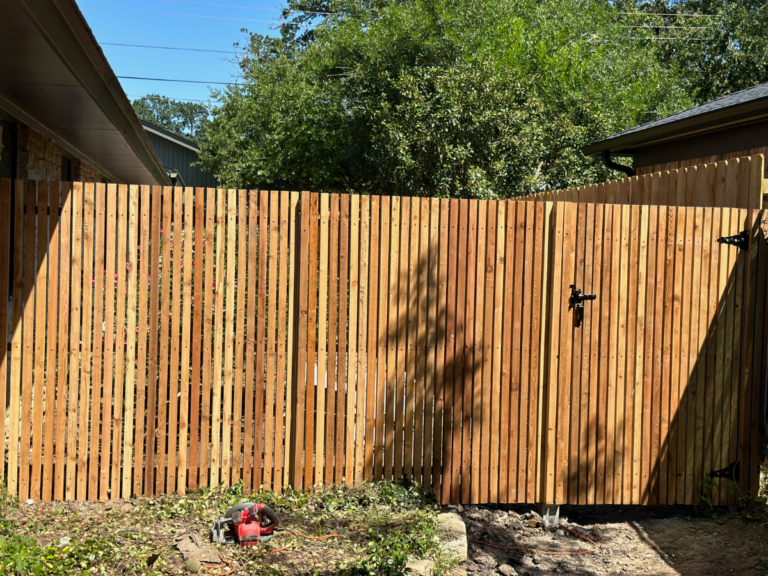
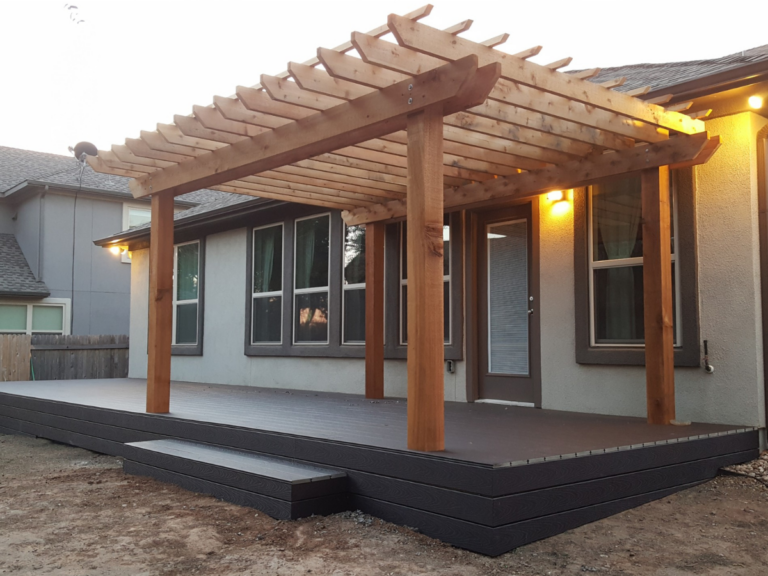
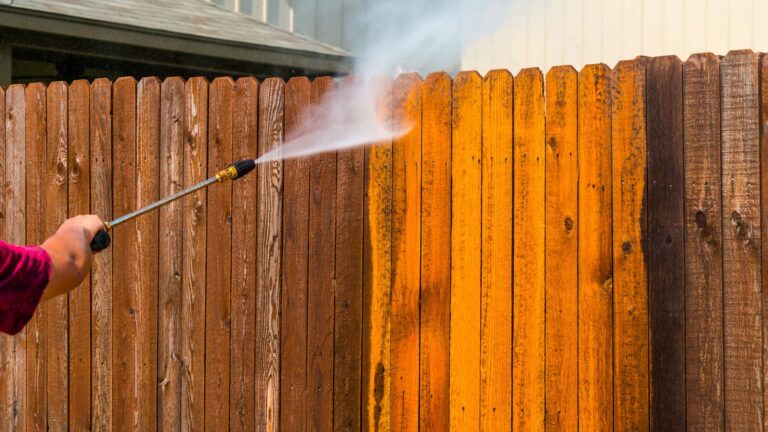
The wash-first law is universal; the technique flexes by structure. Fence boards are thinner than deck lumber and forgive less pressure — same principle, lighter hand, and extra respect for aged pickets that summer has dried brittle. Pergolas move the work overhead, where drip control and sequencing matter as much as pressure: rafter tops carry the heaviest buildup and the least visibility, which makes them both the most important surfaces to wash and the easiest to skip unnoticed. Gates and small structures wash by hand-scale methods entirely. What never changes across any of them: the cleaning happens before the finish, the drying happens before the staining, and the structure that skipped its wash announces it within a year.
The Order of Operations, Compressed
Wash at deck-safe pressure. Brighten if gray remains. Dry to the right reading. Then — and only then — stain. Every shortcut in that sequence gets repaid with interest at recoat time.
What Professional Prep Adds
The honest version of the DIY-versus-pro question: the sequence is the same, and the difference lives in calibration and judgment. Professionals bring pressure dialed for softwood, cleaners matched to what is actually on the boards, brightening where the wash reveals gray, moisture metering instead of guessing, and a read on whether any boards should be replaced before finish money gets spent. None of that is magic; all of it is the accumulated cost of learning on other people’s decks so it does not have to be learned on yours.
Timing the Wash Within the Project
Where the wash sits in the calendar matters almost as much as whether it happens. The ideal sequence runs wash, dry, finish inside the same weather window — one to two weeks end to end — so the cleaned surface never has time to re-collect buildup or re-gray in the sun. Washing in April for a stain planned in September buys nothing; by finishing day the deck has re-acquired a summer of pollen and UV exposure and needs washing again. The practical scheduling rule: do not book the wash until the finish is also on the calendar, then watch the forecast for the dry corridor that fits both. This is also the honest efficiency argument for having one crew run the whole sequence — the wash, the moisture call, and the finish coordinate themselves instead of coordinating three calendars.
FAQs
How long after washing can I stain?
Typically two to three dry days, weather depending. The moisture reading, not the calendar, gives the real answer.
Can I stain a deck that was washed months ago?
If it has sat through weather since, it has collected buildup again — a fresh wash is cheap insurance under a finish you want to last years.
Does a garden hose count as washing?
It rinses loose debris and nothing else. The embedded dirt, growth, and oxidized fiber that sabotage stain need cleaning solution and calibrated pressure.
Will washing remove my old stain?
A sound existing finish survives maintenance washing; a failing one partially lifts — useful information that tells you how much prep the recoat truly needs.
Is this the same for fences and pergolas?
Same principle, adjusted technique — thinner fence boards and overhead pergola work each want their own pressure and approach, but wash-dry-finish is universal.
My deck looks clean. Can I skip straight to staining?
Run two tests first: wipe a board with a dark cloth, and splash water on the sunniest section. A clean cloth and darkening water (open grain) earn a light rinse and a go; anything else earns the full wash.
Does new lumber need washing before its first stain?
A light clean for construction dust, yes — but new wood’s real gate is drying to a stainable moisture level, which matters more than any scrubbing.