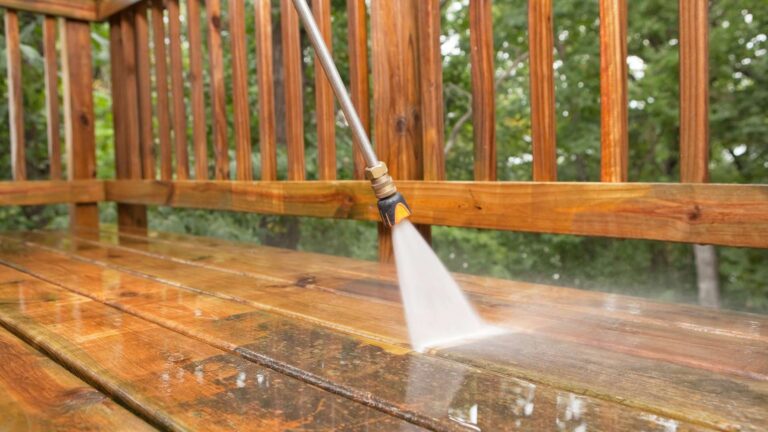

What Is Soft Washing? When Gentle Beats Pressure
Somewhere between the garden hose that does nothing and the rented pressure washer that does too much lives the actual answer for cleaning delicate exterior surfaces: soft washing. The concept is simple — let chemistry do the work force cannot do safely — and understanding it explains a lot about how wood should and should not be cleaned.
The Method, Defined
Soft washing pairs low pressure — closer to a strong rinse than a cutting jet — with cleaning solutions matched to what is being removed: algaecides for green growth, mildewcides for black spotting, surfactants that lift embedded grime. The solution dwells, breaks down the buildup at its roots, and gentle water volume carries it away. Where pressure washing removes buildup by force, soft washing removes it by dissolving its grip — which is why it kills organic growth instead of smearing spores around.
The Chemistry, Plainly
No mystique required: soft-wash solutions are three jobs in one tank. A biocide — most often sodium hypochlorite at managed dilution — kills algae, mildew, and their spores rather than just dislodging the visible growth, which is the entire difference between cleaning that lasts a week and cleaning that lasts a season. A surfactant makes water wetter: it breaks surface tension so the solution sheets into pores and clings to vertical faces long enough to dwell instead of running off. And the dwell itself is the third ingredient — time doing work that pressure would otherwise do violently. The rinse then carries everything away at garden-hose intensities. Professional practice is mostly about ratios and protection: dilution matched to the surface and the growth load, plantings pre-wetted and rinsed, runoff managed. The chemistry is simple; the judgment is knowing how much of it a given surface needs.
Where It Shines
Soft washing exists for surfaces force would destroy: aged and delicate materials, painted finishes that pressure would strip, and anywhere organic growth is the main enemy — because killing algae and mildew chemically prevents the fast regrowth that pressure-only cleaning invites. The principle scales: the more fragile the surface or the more biological the problem, the more the balance shifts from force toward chemistry. It is also the method of choice wherever water intrusion is the risk: around fixtures, vents, and seams, where high pressure drives water into places it was never meant to reach, low-pressure dwelling chemistry cleans without turning the cleaning into a leak.
What This Means for Wood
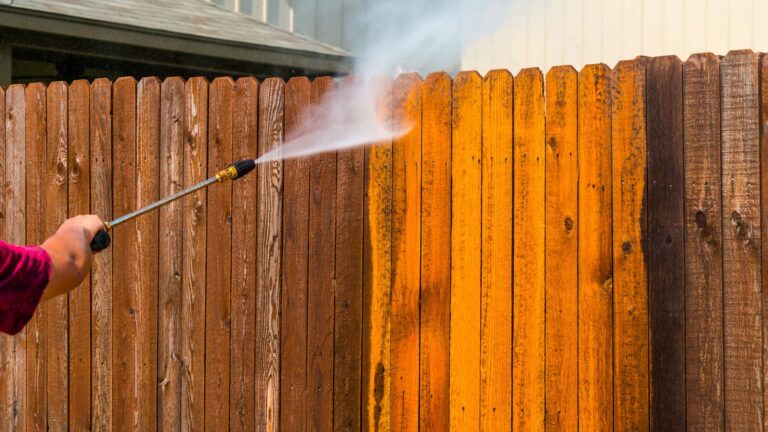
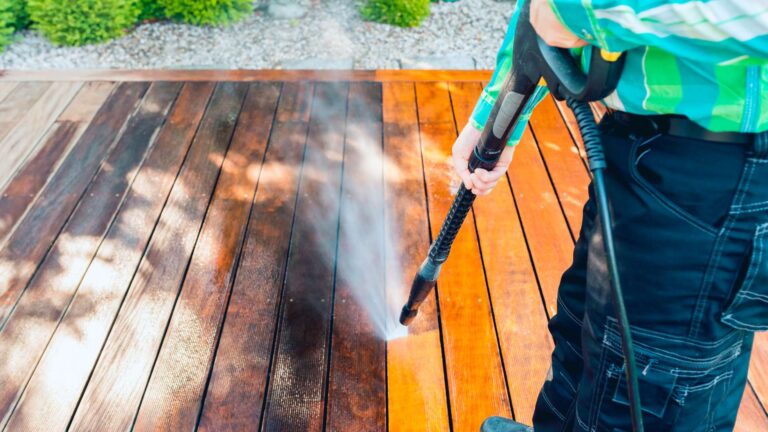
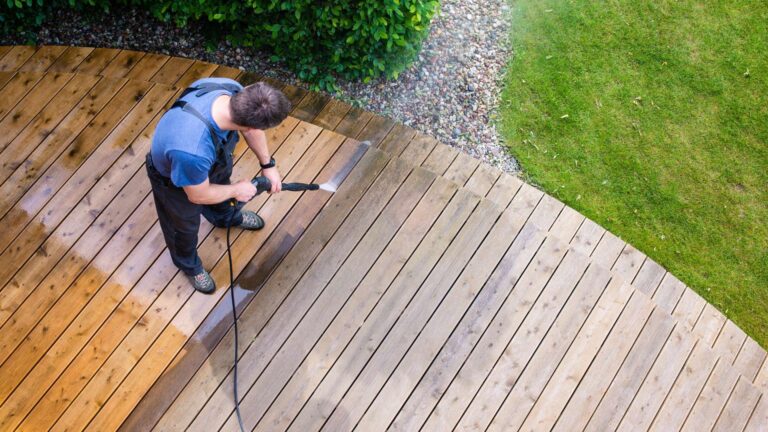
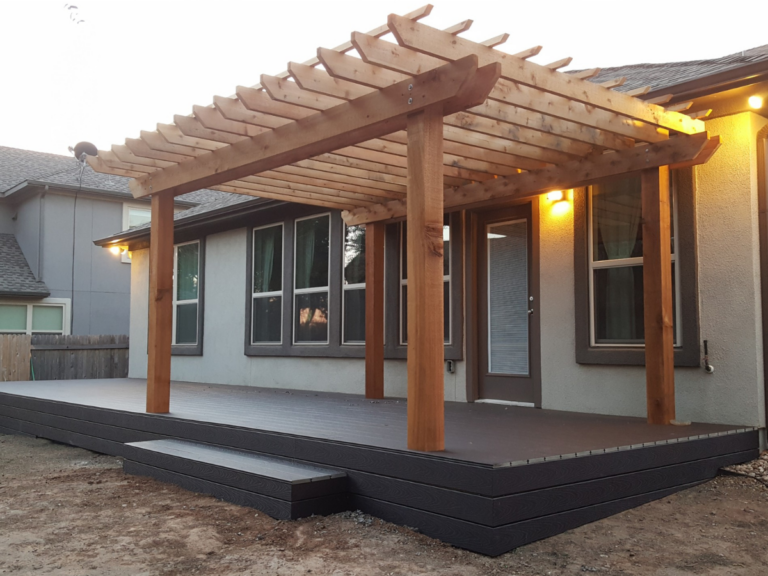
Wood sits in the middle of the spectrum, and the best wood cleaning borrows from both schools. Fence boards and deck lumber tolerate — and often need — more than a soft-wash rinse to clear embedded dirt and oxidized fiber, but far less pressure than the rental machine defaults to. That hybrid is exactly how wood-safe fence washing works: cleaning solutions and mildew treatment doing the chemical work soft washing teaches, moderate fanned pressure doing what chemistry alone cannot, and technique keeping the force below what the boards can be hurt by. Overhead structures push further toward the gentle end — pergola cleaning runs the lightest calibrated touch on the property.
What It Costs and What Determines It
Soft washing prices by area, growth load, and access rather than by drama. Light annual maintenance on a surface that never fully greened runs at the gentle end; a first-time treatment of years of established growth takes more solution, more dwell cycles, and more time. Multi-story or awkward-access work adds equipment and care. Two honest notes for budgeting: soft washing bundled with other exterior work — a wood-washing visit, a pre-finish prep — costs meaningfully less than a standalone mobilization, and the maintenance rhythm is the real economy, because keeping growth from establishing costs a fraction of evicting it once it has. As with everything else on the property, the expensive version of cleaning is the postponed version.
A Homeowner’s Decision Tree
Sorting any exterior cleaning job takes three questions. First: what is the surface? Delicate, painted, or aged materials push toward soft washing; sound wood tolerates calibrated pressure; hard masonry tolerates the most force. Second: what is the problem? Organic growth — anything green or black that spreads — wants chemistry that kills it, whatever the surface; embedded grime wants agitation chemistry cannot fully replace. Third: what happens to this surface next? Wood headed for stain needs its grain opened, which is pressure’s job done gently; surfaces just being refreshed need only the buildup gone. Run those three questions and the method chooses itself — and when two answers conflict, the surface’s fragility wins the argument every time.
The Damage Force Leaves Behind
It is worth being specific about what over-pressure does, because the damage outlives the clean. On wood: wand lines etched into boards, raised fuzzy grain that ruins finish adhesion, and soft spring growth blown out of cedar entirely. On painted surfaces: stripped patches that now need repainting. On aging materials: erosion that lets water in permanently. The cruel part is that everything looks impressively clean while it is happening — the damage shows later, when finishes fail early on the carved surfaces. Force is not thoroughness; it just photographs like it.
The Takeaway
The soft-versus-pressure debate resolves into one principle: match the method to the surface, and let chemistry carry every load it can. On wood, that means wood-safe pressure, real cleaning solutions, and growth killed rather than smeared — the difference between a wash that lasts a week and one that lasts a season.
Frequency: Keeping Surfaces Ahead of the Growth
The rhythm question has a climate answer. In Central Texas, shaded and north-facing surfaces want attention roughly annually — that is how long established spore populations take to recolonize treated surfaces through humid stretches. Full-sun surfaces stretch longer; the same UV that punishes wood finishes suppresses growth. The practical calendar: treat and clean in spring after pollen drop, inspect in fall, and spot-treat the chronic corners — fence runs under trees, the pergola’s sheltered joints, anything near irrigation — before winter damp sets in. Surfaces kept on that rhythm never develop the heavy colonization that requires aggressive cleaning, which is the quiet point of the whole method: the gentlest cleaning program is the one that never lets the problem earn a harder one.
FAQs
Is soft washing safe for plants and pets?
Professionally managed, yes — plantings get pre-wetted and rinsed, solutions are applied at controlled concentrations, and pets sit inside during the work.
Can I soft wash a wood fence myself?
The chemistry half, cautiously — a wood cleaner and a low-pressure rinse handle light buildup. Embedded grime and gray oxidation need the calibrated-pressure half done right.
How is this different from just using bleach?
Straight bleach is a blunt instrument that can damage wood fibers and kill plantings. Proper solutions are buffered, surface-matched, and rinsed thoroughly.
Does soft washing remove gray from weathered wood?
No — gray oxidation is a wood-surface condition needing brightening, a different chemistry that follows cleaning in a proper restoration.
Which does my fence actually need?
Usually the hybrid: solution-led cleaning with wood-safe pressure. If a hand across a board comes back dusty or the shade side shows green, it needs the real thing, not the hose.
Will soft washing alone prepare wood for staining?
Usually not — stain wants opened grain and cleared dead fiber, which calibrated pressure provides. Soft-wash chemistry handles the growth; the mechanical half still matters on wood.
How long do soft-wash results last compared to pressure-only cleaning?
Longer where growth was the problem, because treated growth is killed rather than smeared. Pressure-only cleaning of algae often greens again within a season; treated surfaces stay clear far longer.