How Long Does Clear Wood Sealer Last Outdoors?
Clear sealer’s appeal is obvious: the wood looks like wood, protected but unchanged. The question everyone asks second is how long that lasts, and the honest Texas answer is shorter than most product labels imply — commonly one to three years depending on exposure, versus the three-to-five-year range pigmented finishes reach. Understanding why the gap exists makes clear sealing a reasonable choice rather than a disappointing one.
Why Clear Runs Shorter Than Pigmented
The mechanism is simple and it has nothing to do with product quality. Pigment is what absorbs ultraviolet light before it reaches the wood, and clear sealers, by definition, contain almost none. So a clear finish handles water beautifully — repelling rain, sprinkler spray, and spills exactly as a stain does — while allowing UV through to degrade the lignin at the wood surface underneath. The finish is doing half its potential job well and the other half barely at all. In a climate with modest sun that trade is minor; in Central Texas, where UV load is the dominant stressor, it is the difference between a short cycle and a standard one.
The Real Ranges by Exposure
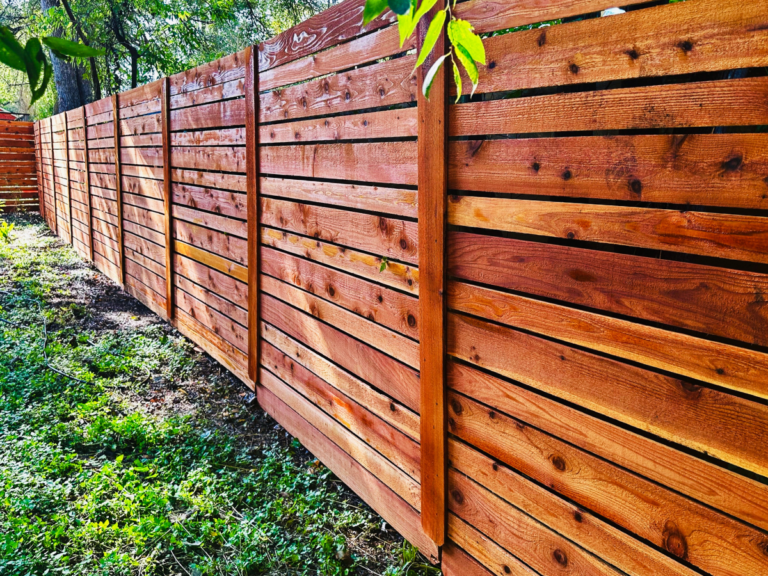
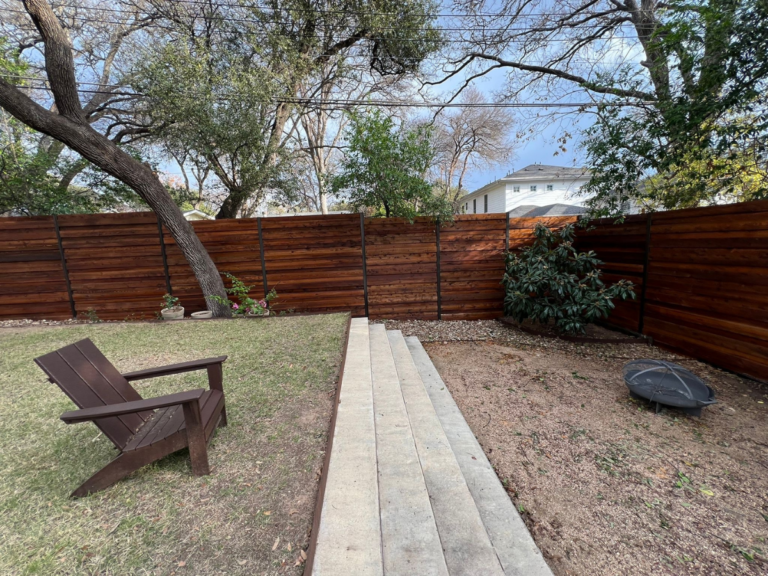
Location within the property matters more than the label. Full-sun horizontal surfaces — deck boards, pergola rafter tops — burn through clear sealer fastest, often wanting attention within a year in Austin. Full-sun vertical surfaces such as west-facing fence runs sit in the one-to-two-year range. Partially shaded verticals stretch toward two years or a bit more. Deep-shade surfaces under mature canopy, where UV is genuinely low and moisture is the main enemy, can reach three years or beyond — this is the scenario where clear sealing performs closest to its promise. The same product on one property can therefore need three different schedules, which is why exposure mapping matters more here than with pigmented finishes.
UV-Inhibited Clears: A Real but Partial Upgrade
Better clear products include UV inhibitors and absorbers — additives that intercept some ultraviolet without adding visible color. They help genuinely, extending life beyond basic clear sealers, and they are worth the price difference for anyone committed to a clear look. What they cannot do is match pigment, because the additives break down under the very light they are absorbing and their concentration is limited by the requirement to stay invisible. Treat UV-inhibited clear as the best version of a short-cycle choice rather than as a way to get pigmented longevity without pigment. Some products also add a whisper of tone — the ‘natural’ and ‘clear-toned’ category — which measurably outperforms true clear while still reading as bare wood. For most Austin properties committed to the natural look, that lightly-toned category is the practical sweet spot: it adds enough pigment to buy meaningful UV life while remaining indistinguishable from bare wood at conversational distance, which is the only distance most people ever evaluate a fence from.
Knowing When It’s Done
Clear finishes give no color warning, which is their most practical drawback. A pigmented stain announces depletion by fading; a clear sealer looks identical the day it stops working. That makes the water-bead test not merely useful but essential on clear-sealed wood — it is the only reliable signal available. Run it seasonally on the most exposed section: beading means the barrier holds, water darkening the wood on contact means it is spent. The secondary signal is the first hint of graying, but by the time gray shows, the finish has been gone for a while and UV has already begun its surface work. On clear-sealed surfaces, the hose is the maintenance calendar.
When Clear Sealing Is Genuinely the Right Choice
It earns its place in specific situations, and the case is honest. New wood in its first year or two, where owners want the fresh-milled look and accept a short interval to keep it. Deep-shade structures where the UV argument largely evaporates. Freshly restored wood whose recovered natural tone was the entire point of the project. Species with beautiful natural color that pigment would mask. And transitional periods — a season of clear protection while color decisions get made. In each case the contract is the same: real moisture protection, minimal UV protection, and a maintenance rhythm roughly double the frequency of a pigmented finish. Chosen with eyes open, it is a legitimate trade; chosen by accident, it is the source of most ‘my sealer failed’ complaints.
Clear on Horizontal Surfaces: The Hardest Case
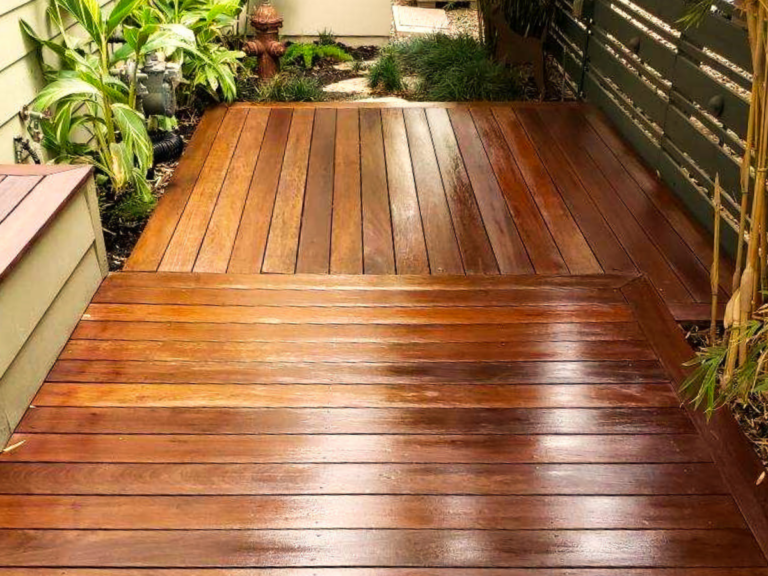
Decks and pergola tops deserve their own warning, because they combine every disadvantage clear sealer has. Perpendicular sun delivers the maximum UV dose to a finish with no pigment to intercept it. Standing water sits on the surface instead of running off, testing the moisture protection continuously. Foot traffic abrades the finish mechanically on decks. And the graying, when it arrives, is highly visible because horizontal surfaces are what people look at. The consequence is that clear-sealed decks in Austin sun frequently want attention inside a single year, and clear-sealed pergola rafter tops can fail faster still. None of that makes clear sealing wrong for a shaded deck or a homeowner who genuinely prefers the natural look and will maintain it — but on a full-sun horizontal surface, choosing clear is choosing an annual appointment, and it is far better to make that choice knowingly than to discover it the following summer.
The Maintenance Rhythm It Requires
Clear-sealed wood asks for a tighter loop than anything else on the property. Seasonal bead testing on exposed surfaces rather than annual. Re-application at the first failure, before graying starts, because clear finishes have no visual buffer — the gap between protection ending and weathering beginning is short. The good news is that maintenance re-coats on clear-sealed wood that has been kept current are the easiest applications in the trade: wash, dry, apply, done, with no color matching, no lap-mark anxiety, and no stripping. Owners who genuinely enjoy the natural-wood look and stay on the rhythm get exactly what they wanted for years. Owners who apply clear sealer and check on it in three years get a gray fence and a restoration. The honest summary for anyone weighing it: clear sealer is not a lesser product, it is a different contract — full moisture protection, minimal UV protection, and roughly double the maintenance frequency. Signed knowingly by someone who loves natural wood, it delivers exactly what it promises for as long as the rhythm holds.
FAQs
Can I switch from clear sealer to a stain later?
Easily, and many people do — once the sealer has weathered enough to absorb, a cleaning and the standard drying gate is usually all that stands between clear and pigmented.
Does clear sealer prevent graying at all?
Slightly, by keeping the surface cleaner and drier, but not meaningfully — UV passes through it. Slowing gray requires pigment.
Why did my sealer last one year when the can said five?
Label ranges rarely assume Texas UV on a sun-facing surface. Match expectations to exposure, and treat published ranges as best-case shade figures.
Is sealer worth it at all if it runs so short?
Absolutely, for moisture — sealed wood resists the swelling, cupping, and mildew that unprotected wood suffers. It is genuine protection with a known limitation.
How do I test whether it’s still working?
Splash water on the most exposed section. Beading means yes; darkening wood means no. Ten seconds, seasonally.
Does clear sealer need the same prep as stain?
Yes — clean, brightened if gray, and dry to a verified moisture reading. Clear products are actually less forgiving of prep flaws, since nothing hides underneath.
Will a second coat make it last longer?
Modestly, with penetrating products — beyond saturation, extra material sits on the surface and wears rather than protects. Two thin coats beat one thick one; three does not beat two.