Safe Finishes for Wooden Playsets
A wooden playset is the one structure in the yard that children put their hands, knees, and faces on directly — which makes finishing it a safety question as much as a maintenance one. The good news is that the safe options are also the effective ones, and the main risk of leaving a playset unfinished is the very thing parents worry about most: splinters.
Why Unfinished Playsets Are the Real Hazard
There is a persistent instinct to leave playsets bare on the theory that no finish means nothing to worry about. In Austin, that instinct produces the outcome parents least want. Unprotected wood weathers fast here — UV degrades the surface within a season or two — and weathered softwood raises grain and produces splinters exactly where small hands grip: rails, ladder rungs, platform edges, swing supports. Unprotected wood also checks and cracks as it cycles through drought and downpour, and cracks catch skin. A properly finished, cured playset is smoother and safer than a bare one, not less so.
What to Look For in a Product
Three criteria narrow the field appropriately. Low or zero VOC content, which most modern water-based exterior stains and sealers now offer — this addresses the fumes question during application and cure. Products explicitly labeled safe for use on children’s play equipment or exterior residential surfaces once cured, since manufacturers who intend that use say so. And penetrating rather than film-forming chemistry, because films crack and peel under the abrasion playsets receive, and peeling flakes are their own problem. Beyond those, the ordinary logic applies: pigment buys UV life, and playsets sit in full sun more often than not.
Cure Time Is the Real Safety Variable
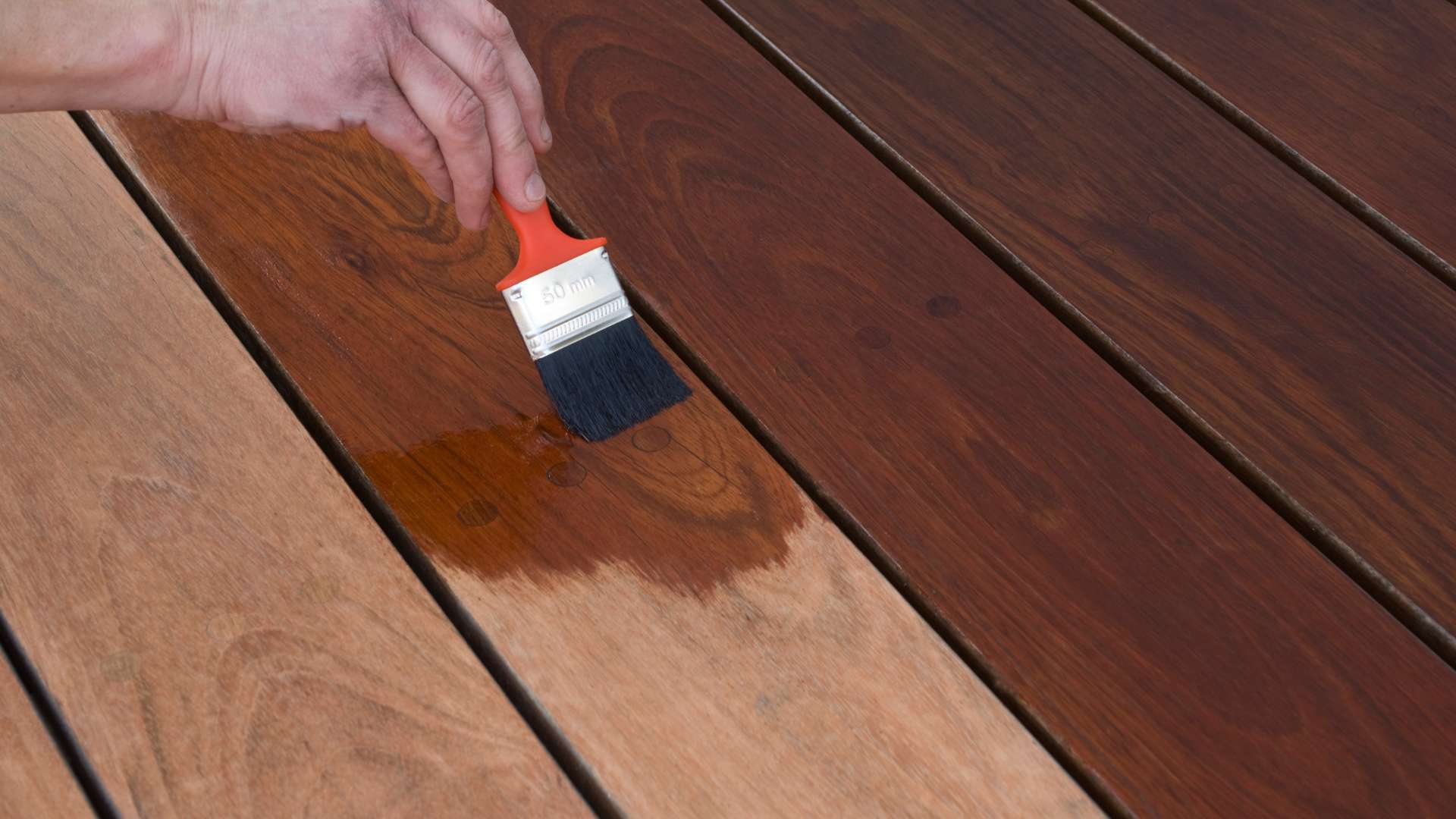
This is the point that matters most and gets the least attention. Nearly all exterior finishes are inert once fully cured; the exposure window is during application and cure, not afterward. So the safety protocol is straightforward: apply when children can stay off the structure for the full cure period — not the dry-to-touch time, which is much shorter and misleading, but the manufacturer’s stated cure. Water-based products generally cure faster and with far less odor than oil-based, which is the practical reason they dominate playset work. Plan the project around a stretch when the structure can genuinely be out of service, and resist the urge to declare it ready because the surface feels dry.
Prep Without Creating New Hazards
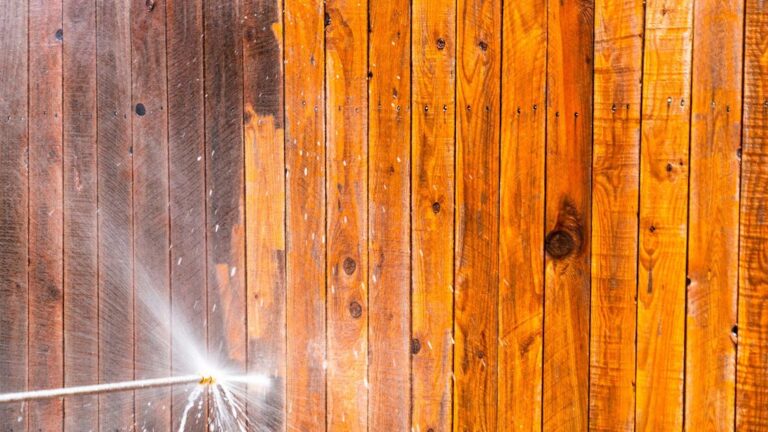
Playset prep has a specific priority that fence prep does not: leaving the surface smooth. Washing at gentle, wood-safe calibration is essential, because aggressive pressure raises grain and fuzz on softwood — creating splinters in the act of cleaning, which defeats the purpose entirely. After cleaning and drying, light sanding of high-touch surfaces is genuinely worthwhile: rails, rungs, grips, platform edges, and any spot where a hand naturally lands. Then check the hardware while everything is accessible — bolts backing out, hardware corroding, swing hangers wearing — since a finishing visit is the natural moment to catch mechanical issues that matter far more than cosmetics.
Where Playsets Wear Fastest
Knowing the high-wear zones focuses both the finishing and the inspection. Handrails and ladder rungs take constant hand abrasion and lose finish first. Platform decking takes foot traffic plus perpendicular sun, aging like a small deck. Swing beam and support posts see the structure’s highest stress loads and deserve inspection independent of their finish condition. Ground-contact points at post bases are the rot risk, especially where mulch or soil has piled against them. And any horizontal surface — platform tops, beam tops, the roof if there is one — takes the pergola treatment, since horizontal wood grays fastest for the same geometric reasons.
New Playsets and Kits: Timing the First Finish
Playsets bought as kits or newly built follow the same new-wood rules as any other structure, with one addition worth knowing. Most kit lumber is pressure-treated pine, which arrives saturated and typically needs one to three months of drying before it can accept finish — longer than cedar, and the reason so many playsets end up never getting finished at all: the window arrives months after the excitement of assembly has passed, and nobody sets a reminder. The fix is calendar discipline, set on assembly day: note a date roughly two months out to run the sprinkle test, and book the work when the wood passes. Kit lumber also often carries mill glaze on smooth-planed components, so a wood-cleaner wash is part of prep even on brand-new wood. Get that first finish on within the first season and the structure never enters the weathering cycle at all — which, on the one structure children physically handle, is the whole objective. The same logic applies to secondhand playsets, which arrive with unknown maintenance histories and often several unprotected years already behind them. Treat those as restoration projects rather than new-wood projects: wash gently, sand every high-touch surface honestly, check every bolt and hanger, and then finish. The structure that comes back is frequently smoother than it was when the previous family bought it.
Keeping It Sound Over the Years
A playset’s maintenance rhythm is the property’s standard one with a shorter fuse on the high-touch surfaces. An annual wash removes the buildup and the mildew that shaded sections collect, and doubles as the inspection that catches hardware issues. The bead test runs on the platform and rails. Re-coating happens when the test fails or when any surface begins feeling rough to a palm — a lower threshold than a fence would justify, because roughness on a playset is a splinter forecast. And because playsets often sit near fences and decks, folding them into the property’s specialty wood visit keeps them from becoming the structure that gets remembered only when someone gets a splinter. Two habits keep that from happening. Run a palm along the rails and rungs whenever you are already in the yard — it takes seconds and it is the most sensitive test available for the condition that actually matters. And put the playset on the same annual calendar as the fence and deck rather than treating it as an occasional project, since the structure children use hardest is the one least likely to get attention on its own schedule.
FAQs
Is stain safe for children once dry?
Once fully cured, standard exterior finishes are inert. The precaution is keeping children off during application and the full cure period, not afterward.
What is the safest type of product to use?
Low-VOC water-based penetrating stains and sealers are the practical choice — faster cure, minimal odor, no film to peel, and widely used for exactly this application.
Should I use a clear sealer instead of stain to avoid pigment?
Pigment is not a safety concern once cured, and clear finishes on a sunny playset run very short cycles. Pigmented products give better UV protection and longer intervals.
How long should kids stay off after finishing?
Through the manufacturer’s full cure time, which is longer than dry-to-touch — often a day or more, weather depending. Plan the project for a window when that is realistic.
Can I pressure wash a playset?
Only at gentle, wood-safe calibration. Aggressive pressure raises grain and creates the splinters you are trying to prevent.
What about the plastic slides and hardware?
They get masked and left alone. The finishing work is for the wood; the visit is a good moment to check hardware tightness separately.
How often do playsets need refinishing?
Watch the high-touch surfaces rather than the calendar — when rails and rungs feel rough or the bead test fails on the platform, it is time. That is typically a shorter interval than the fence nearby.