Getting Your Wood Through an Austin Summer
Austin summer is the season that decides how your exterior wood looks for the next several years. Three to four months of maximum UV, hundred-degree surface temperatures, and the drought-deluge swings that follow every heat wave — it is the year’s stress test, and wood that enters it protected comes out the other side largely unchanged. Wood that enters unprotected does not. Here is the full playbook, front to back.
May: The Preparation Window
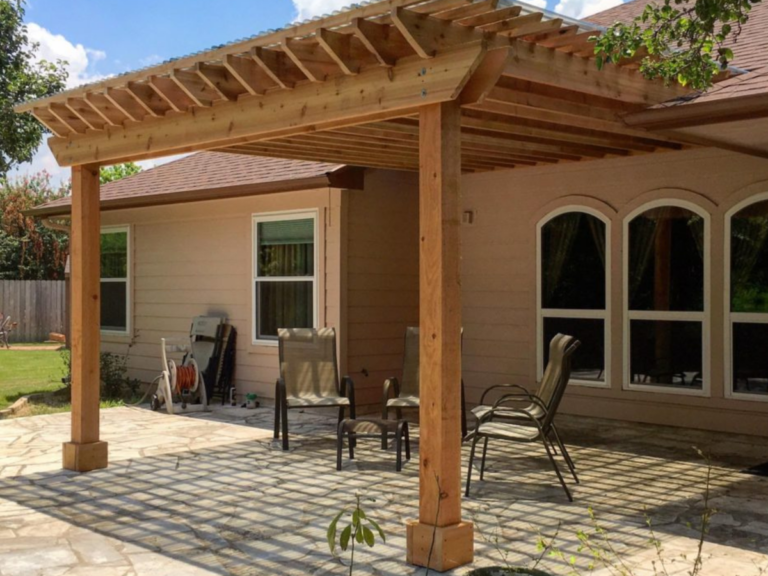
Everything that helps most happens before the heat arrives. Run the water-bead test on the sun-facing sections of every wood surface — fence, deck, pergola tops, gate — because those are the surfaces summer will target. Anything failing gets its maintenance coat now, in May’s workable conditions, so the wood enters June sealed. May is also the honest deadline for any restoration work you want done before the heat: the full sequence needs consecutive dry days and moderate temperatures, and by June the finishing half of it has to wait for fall regardless of how urgent it looked in April. Wash off the spring pollen load before it bakes into surfaces for three months. Redirect any sprinkler head that mists the fence line, since daily irrigation plus daily heat is the worst combination available. And clear debris off pergola tops and out of deck board gaps, where trapped organic material holds moisture through every summer storm.
What the Heat Actually Does, June Through August
Understanding the mechanisms makes the watchlist obvious. Surface temperatures on sun-facing wood run far above the air reading — dark finishes and horizontal surfaces hottest of all — which accelerates finish depletion and drives residual moisture out of boards unevenly. Prolonged dry stretches shrink wood, opening checks and gaps and working fasteners loose. Then a genuine downpour arrives, and dried-out boards absorb hard through every opened check, swelling fast. That amplitude, repeated across a summer, is what cups boards and splits them at fastener points. Meanwhile UV works steadily on any surface whose pigment protection has thinned.
The Summer Watchlist
Four signals are worth checking monthly through the hot months, and all take seconds. Color flattening on the west and south faces, which is pigment depletion announcing itself. Surface texture turning dry and rough underfoot or under a palm, the precursor to graying. Gaps widening noticeably between boards as they shrink — normal to a point, informative past it. And, after the first real rainstorm of the season, whether water still beads on the exposed faces or soaks straight in. Any of these mean the surface is spending its protection faster than expected, which is useful to know in July when the fall finishing window is still bookable.
What to Do and Not Do in Peak Heat
Summer work splits cleanly into what the season suits and what it defeats. It suits washing — drying times are the year’s fastest and prep work runs happily all summer, which makes June through August the ideal window to get restoration prep done ahead of fall finishing. It defeats staining on hot surfaces: boards above roughly ninety degrees flash-dry finish before it penetrates, producing thin, lap-marked, early-failing coats. If finishing must happen, it happens early morning, following shade around the structure, with west faces postponed. The full seasonal logic applies, and the honest summary is that summer is prep season and fall is finishing season — splitting projects along that line produces better results than forcing both into either.
Protecting What You Can Control
A few interventions cost nothing and matter more than people expect. Keep irrigation off wood entirely; a misaligned sprinkler head can undo a season of protection on the run it hits. Move planters and furniture periodically rather than letting them sit in one spot for three months, since the shaded footprint underneath ages differently and traps moisture after storms. Keep vegetation trimmed back off fence boards to preserve airflow, which matters even in dry heat because it governs how fast surfaces dry after storms. And rinse grill spatter and spills off deck boards promptly — baked-on contamination through a Texas summer becomes a genuine prep problem by fall.
September: The Assessment That Sets Up Fall
When the heat finally breaks, run the full diagnostic while the year’s best finishing window is opening. Bead test every surface again, comparing against May’s results — the gap between them is exactly what summer cost you. Look for new checking, cupping, or fastener movement. Check the pergola tops specifically, since they took the heaviest dose and nobody looked at them since spring. Then act, because September and October offer the best staining conditions Austin produces: fully dried wood, moderate temperatures, falling humidity. Whatever summer depleted gets restored in the very next window, which is the rhythm that keeps damage from compounding year over year.
A Month-by-Month Summer Plan
Compressed into a schedule anyone can run. May: bead test everything, coat what fails, wash off the pollen, fix the sprinklers, clear the pergola tops. June: first watch — check color on west faces and confirm beading after the first real storm; book any fall work now while calendars are open. July: mid-summer check — palm test the exposed surfaces for roughness, note gap widening, rinse any grill spatter or spills off the deck. This is also the month to schedule restoration prep, since washing performs beautifully in the heat. August: the hardest month — keep off the finishing wand entirely except at dawn, move planters and furniture that have sat in place since spring, and confirm the fall booking is locked. September: full assessment against May’s readings, and execution begins as soon as the heat breaks. The whole program totals perhaps three hours of actual attention across four months, which is a trivial price for the season that does the most damage. Households already running the annual wash and the twice-yearly bead test will notice that most of this plan is those two habits, timed deliberately around the heat rather than added on top of it.
The Difference a Protected Summer Makes
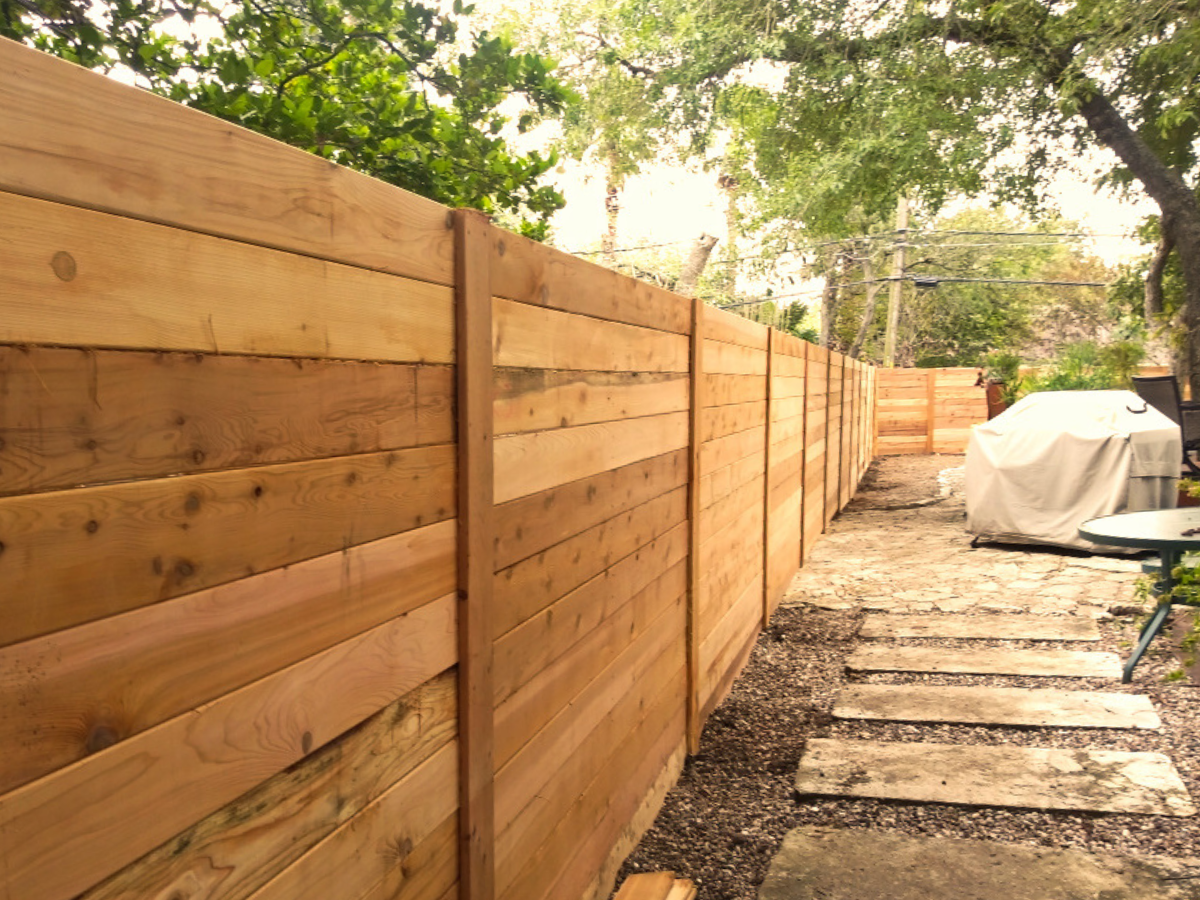
Two identical fences enter June, one with intact finish and one without, and by September they are no longer identical. The protected fence has spent some pigment on the sun faces and is otherwise unchanged — a maintenance coat in October restores it fully. The unprotected fence has grayed on every exposed surface, opened new checks through the drought-deluge cycles, and started the surface roughening that leads to the full restoration sequence. One summer does that. It is the clearest argument available for the May checklist: the work that protects a whole summer takes an afternoon, and the work that recovers from an unprotected one takes a project.
FAQs
Can I stain at all during an Austin summer?
Yes, with discipline — early mornings, shade-following, west faces postponed. But results are consistently better in fall, and summer is better spent on prep.
Should I water my fence during a drought?
No. Deliberately wetting wood invites the swelling-shrinking cycle and mildew. Protection comes from finish, not moisture.
Does a dark stain make summer worse?
Dark surfaces absorb more heat, which matters most on decks and touchable surfaces. On fence pickets the trade favors dark tones, since their extra pigment buys real UV protection.
My fence developed cracks over the summer. Is that damage?
Surface checking is normal cedar behavior in extreme heat, especially on unprotected wood. Deep splits through a board or movement at fasteners deserve a closer look.
Is shade cloth over a deck or pergola worth it?
It meaningfully cuts the UV dose on the surfaces that take the most. Watch for debris and moisture trapped underneath, which trades one issue for a smaller one.
When exactly should I book fall work?
Late summer — August into September. By the first cool front, the good October slots are largely gone.
What if I did nothing all summer and it’s now September?
Assess and act — that is precisely what the fall window is for, and one neglected summer is almost always still a maintenance-tier fix rather than a restoration.