What Texas Sun Actually Does to Wood
Homeowners who move to Austin from milder climates all discover the same thing about exterior wood: it ages faster here than it has any right to. Fences that would look presentable for years elsewhere reach full silver in a season or two, and decks develop character on an accelerated schedule. This is not imagination, and it is not bad lumber. It is a specific combination of stressors that Central Texas delivers with unusual intensity.
The UV Load, Quantified in Effect
Ultraviolet intensity depends on latitude, elevation, and cloud cover, and Austin scores unfavorably on all three relative to most of the country: far enough south for high sun angles, high enough for thinner atmospheric filtering than coastal areas, and blessed with a great many clear days. The practical result is that exterior wood here receives a substantially larger annual UV dose than the same wood in the Midwest or Northeast. Since surface degradation scales with that dose, the timeline compresses proportionally. Nothing about the wood changed; the exposure did.
Heat: The Second Mechanism
UV degrades the surface chemically. Heat attacks differently, and Austin supplies it in quantity. Surface temperatures on sun-facing wood routinely exceed the air temperature by a wide margin — dark-stained boards and horizontal surfaces run hottest — which accelerates the drying of wood cells, drives residual moisture out unevenly, and stresses finishes at the molecular level. Repeated daily heating and cooling cycles expand and contract the wood, working checks wider and finishes looser. Heat also directly limits what can be done about it: staining a surface that is too hot produces flash-dried, shallow finishes, which is why summer finishing runs on morning-only discipline.
The Drought-Deluge Cycle
Central Texas rarely does anything gradually, and our precipitation pattern is unusually hard on wood. Long dry stretches shrink boards, opening gaps and checks and pulling fasteners. Then a genuine downpour arrives, and dried-out wood — especially wood whose finish has depleted — absorbs aggressively through every opened check and exposed end grain, swelling fast. That amplitude, from very dry to saturated and back within days, is more punishing than the steady moisture of humid climates or the steady dryness of arid ones. It is the mechanism behind cupping, warping, and the split boards that show up around fasteners on unprotected Texas fences.
Humidity and Growth, the Overlooked Half
The sun story dominates, but Austin’s humidity deserves its place. Extended humid stretches in spring and fall keep shaded surfaces damp far longer than the region’s dry reputation suggests, and that moisture feeds the algae and mildew that colonize north-facing runs, tree-shaded sections, and irrigation-adjacent boards. The result is a two-front problem unusual in its combination: the sunny faces of a property are degrading from UV and heat while the shaded faces are degrading from moisture and biology, on the same structure, in the same season. Maintenance that addresses only one front leaves half the property unattended. The seasonal rhythm reflects this split: the sunny faces set the finishing calendar, while the shaded faces set the washing calendar, and a property managed on both schedules stays ahead of a climate that is genuinely attacking it from two directions at once.
What the Damage Looks Like, In Order
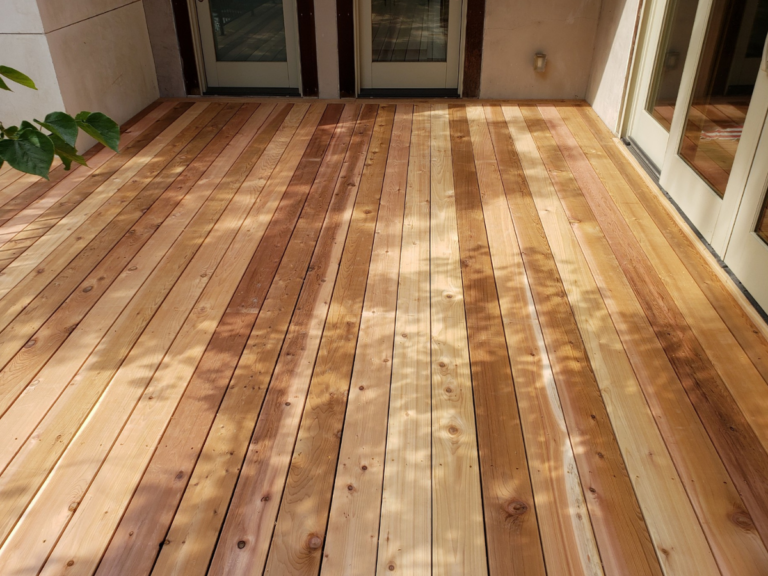
The progression is consistent enough to read like a clock. First, color loss and dulling on the most exposed faces within months. Then graying, uniform on sun-facing surfaces, within the first year or two on unprotected wood. Then surface roughening and the first fine checks as moisture cycling proceeds unrestrained. Then deeper checking, splintering on horizontal surfaces, and cupping or warping in boards with less stability. Finally, on wood left unprotected for many years, genuine physical erosion — board thinning, deep splits, and hardware working loose. Everything up to that last stage is cosmetic and reversible; the last stage is where the sun has finally stopped being a finishing problem and started being a replacement one. The timeline for that final stage is long — many years of genuine neglect on wood that was never finished — which is why the vast majority of frightening-looking Austin fences are still squarely in recoverable territory when someone finally assesses them.
Why Structures Age Differently on One Property
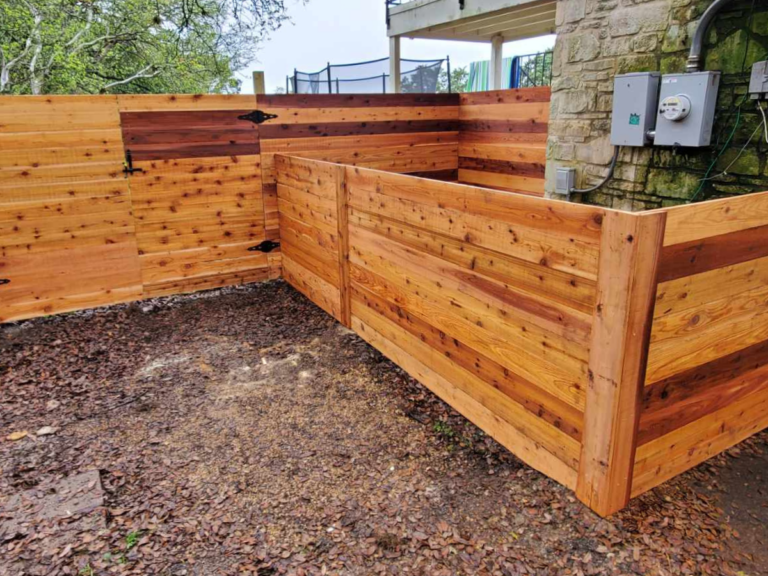
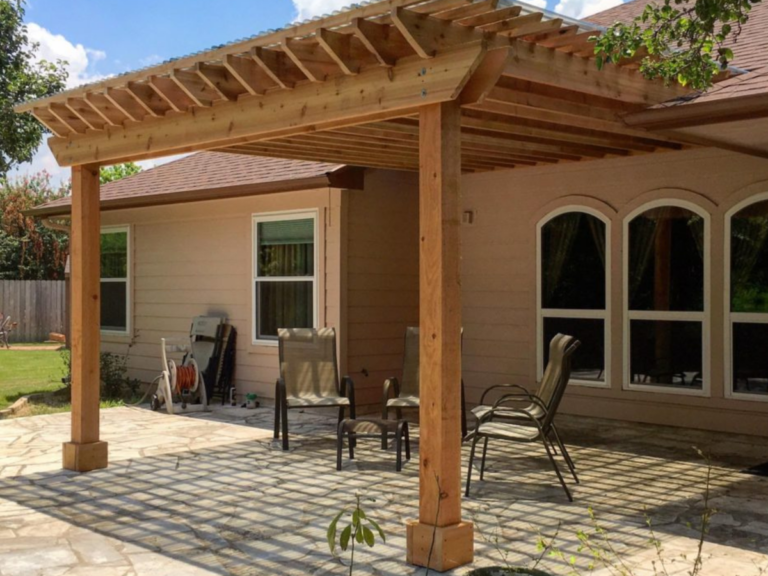
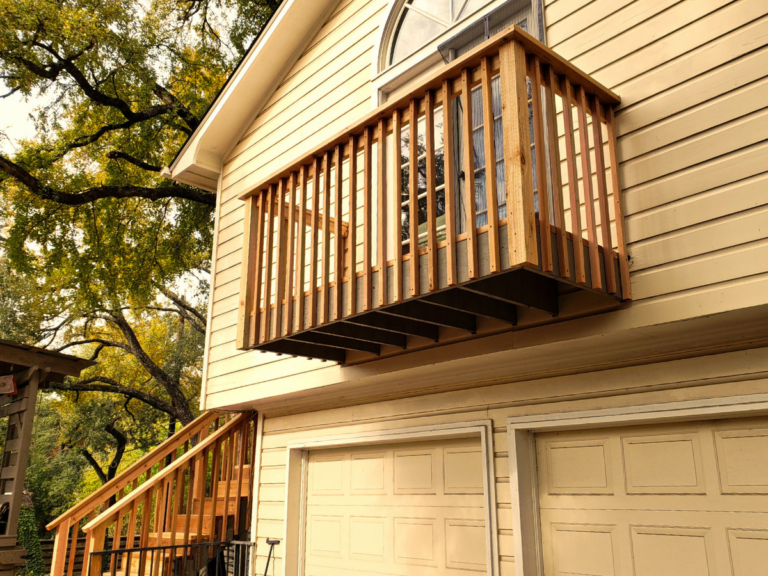
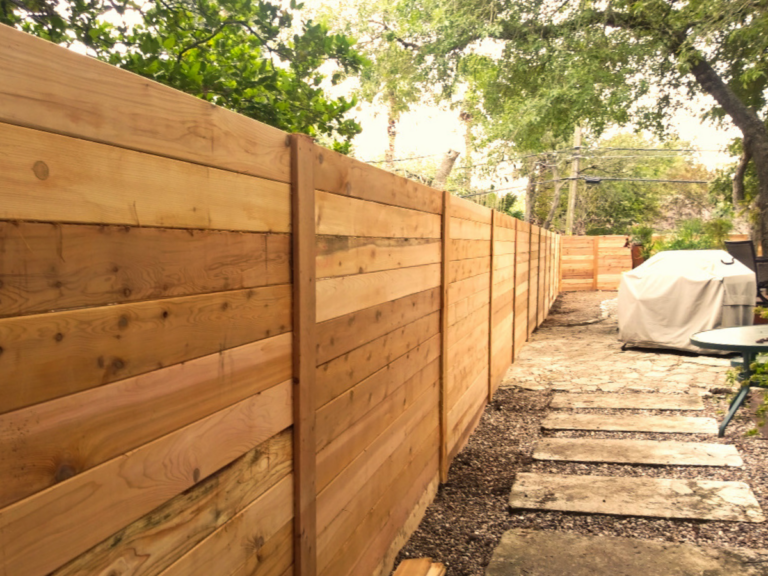
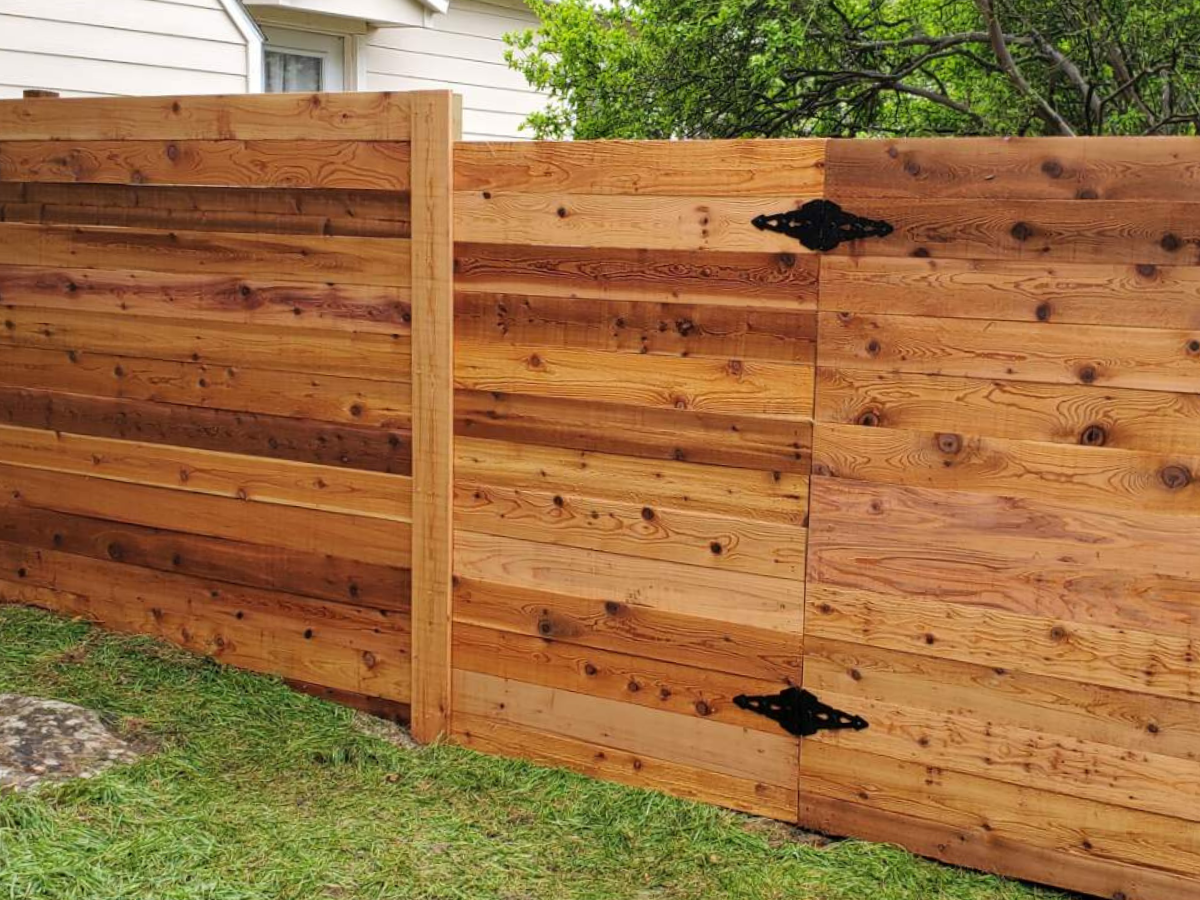
The same climate produces wildly different outcomes across a single yard, and the variation is systematic rather than random. Pergola rafter tops age fastest, taking perpendicular sun and standing water together. Deck boards follow, for the same geometric reason plus foot traffic. West and south-facing fence runs come next, absorbing the afternoon’s worst. North-facing fence runs age slowest by UV and fastest by mildew, aging on an entirely different axis. Garage doors and street-facing wood accents catch reflected heat off driveways and pale masonry, running hotter than their orientation alone suggests. And anything near irrigation lives wetter than the rest of the property regardless of sun. The maintenance implication is the one most owners resist because it sounds like more work but is actually less: treat these as separate zones with separate clocks rather than finishing everything whenever the worst surface demands it. Zone-based maintenance spends material where the sun is spending itself, and it is how properties stay ahead of a climate this uneven.
What Actually Works Against It
The defense is unglamorous and well proven. Pigment addresses UV, because pigment absorbs ultraviolet before it reaches lignin — which is why clear finishes underperform badly here and why heavier-pigment choices run longer intervals in this climate specifically. Penetrating water repellency addresses the drought-deluge cycle by moderating how fast wood takes on and releases moisture. Regular washing addresses the growth half and keeps buildup from holding moisture against the wood. And rhythm addresses all of it, because the finish that gets renewed before it fully depletes never lets the wood enter the weathering stages at all. The Texas climate does not require exotic products; it requires the standard ones applied more attentively than a mild climate would demand. That reframing is the useful takeaway for transplants especially: nothing here is broken and no special product is missing. The same finishes that work elsewhere work here, on a compressed schedule — and the households that adjust their calendar rather than searching for a miracle coating are the ones whose wood looks good at year ten.
FAQs
Is it really worse here than other parts of Texas?
Central Texas combines high UV, extreme summer heat, meaningful humidity, and the drought-deluge pattern. West Texas is drier, the coast is more humid and less intensely sunny — Austin’s particular mix is unusually comprehensive.
Does shade solve the problem?
It trades one problem for another. Shaded wood grays far slower and hosts far more mildew, which is why shaded fence runs need washing more and finishing less.
Why do south and west faces look so much worse?
They receive the highest UV dose and the hottest surface temperatures. Most Austin fences are effectively two fences on different clocks, and the sun-facing one leads.
Do darker stains suffer more from heat?
They absorb more heat, which matters on horizontal and touchable surfaces. On vertical fence pickets the effect is minor, and their extra pigment buys real UV life.
Will a fence last as long here as up north?
Unmaintained, no — the timeline compresses noticeably. Maintained on rhythm, Austin fences reach comparable lifespans; the climate raises the cost of neglect rather than the ceiling on longevity.
Does the sun damage happen mostly in summer?
Summer delivers the heaviest dose, but UV works year-round here, including on mild winter days. The clock never fully stops.
Can anything make wood permanently sun-proof?
No. Every finish is consumable protection that depletes and gets renewed. The realistic goal is a rhythm that keeps protection ahead of the dose, not a permanent solution.