The Fall Staining Window: Why October Beats June
Ask anyone who finishes wood for a living in Central Texas when they would schedule their own fence, and the answer is October. It is not preference or convenience — fall assembles a specific set of conditions that no other season here provides simultaneously, and the difference shows up in how the finish performs years later. Here is the full case, and how to actually get inside the window.
Condition One: The Wood Is at Its Driest
This is the factor most people never consider, and it may be the most important. After a Texas summer, exterior wood has spent months shedding moisture in relentless heat — by late September, boards are at their lowest moisture content of the year. Dry wood means open, thirsty grain, and open grain means the deepest penetration a penetrating finish will ever achieve on that surface. The same product applied in spring, to wood that has absorbed a winter of damp, simply cannot reach as far. Fall finishes go deeper, and depth is what a penetrating stain converts into years of protection.
Condition Two: Temperatures That Let Stain Work
Stain needs to stay workable long enough to soak in before it sets. June and July defeat that — surface temperatures on sun-facing boards run far above the air reading, and finish flash-dries at the surface, producing thin, lap-marked coats that fail early. October’s seventies and eighties keep surfaces in the range where finish flows, penetrates, and cures properly, and they do it for most of the working day rather than for a two-hour morning window. That is why fall projects finish evenly across whole runs instead of section by section around the sun.
Condition Three: Humidity Finally Drops
Stain cures as its carrier leaves the wood, and humid air slows that departure. Austin’s summer humidity stretches cure times and raises the risk of blushing on finishes caught by heavy evening moisture. Fall’s drier air shortens cure, tightens recoat windows, and largely eliminates the dew problem that makes late-afternoon applications risky in warmer months. The practical result is fewer scheduling constraints per working day and a more forgiving margin around the weather.
Condition Four: Weather You Can Actually Forecast
Every finish needs a rain-free window on both sides — dry wood going in, protected hours coming out. Spring in Central Texas delivers genuinely unpredictable convective storms, which turns the two-days-before and twenty-four-hours-after requirement into a scheduling puzzle. Fall’s weather arrives in organized, forecastable systems, so a five-day outlook actually means something. For anyone coordinating prep, drying, and finishing across a week, that predictability is worth as much as the temperature.
The Protective Sequencing Argument
Beyond the chemistry, there is a timing logic. Wood finished in October enters the damp winter months sealed, protected through the season when unfinished boards absorb every cold rain. It then faces the following summer with a finish at nearly full strength rather than one already a year into depletion. Spring-finished wood, by contrast, spends its first months in the year’s harshest UV. Both work; fall simply puts the finish’s strongest period against the wood’s hardest season, which is the sequencing you would design if you were choosing freely. Winter is also when unprotected wood is most vulnerable in a way people underestimate: cold rain sits on surfaces longer, shaded runs stay damp for days, and any water in open grain expands during the freeze events Central Texas reliably produces. A fence that went into winter sealed emerges in March essentially as it entered; one that went in bare emerges with wider checking than it had in November. The full seasonal ranking holds spring as the strong second precisely because it lacks this one advantage.
What Fall Conditions Mean for the Finish’s Life
It is fair to ask whether all of this actually changes anything measurable, and the honest answer is that it changes the starting point rather than performing magic. A finish that penetrates deeply into dry, open grain has more material anchored below the surface than the same product sitting shallowly on wood that could not accept it, and depth is the reserve that gets spent over the following years. A coat that cured evenly, without flash-drying or blushing, has no thin spots to fail from first — and finishes almost always fail from their weakest area rather than uniformly. So the fall advantage compounds quietly: better penetration means more protection to spend, and even application means nothing fails early. Neither effect is dramatic on day one, when a June fence and an October fence look identical. The difference shows up in year three, when one is thinning evenly and the other has patches.
The Catch: Everyone Figures This Out at Once
The window’s only real problem is demand. The first genuine cool front reminds the entire city that its fence exists, and reputable crews’ Octobers fill fast — often before the front arrives. Households that decide in October are frequently scheduling for November or later, sometimes pushing into conditions that are workable but no longer ideal. The fix is unglamorous: book in late summer. August and September inquiries land inside the window comfortably; October inquiries compete for what remains. Anyone who has read this far and intends to use the fall window should treat the booking as the actionable item, not the staining.
Using Summer to Set Up Fall
The efficient version splits the project across seasons, which is how experienced crews handle it anyway. Washing, brightening, board replacement, and any carpentry all perform fine — often better — in summer heat, with the year’s fastest drying times. That prep work done in July or August leaves nothing standing between an October date and the finish itself. It also front-loads the discoveries: a summer wash reveals what condition the wood is actually in, so the fall scope is known rather than estimated. Restoration projects especially benefit from this split, since they need the most consecutive good days and are the hardest to squeeze into a busy fall calendar. There is one more scheduling advantage to the split worth mentioning: prep and finishing done months apart means the wood has a documented condition report before the fall date arrives, so scope, product quantity, and crew time are known rather than estimated. Projects planned that way rarely produce mid-visit surprises, which is most of what makes a fall date run smoothly.
FAQs
How late into fall can staining happen?
Through November in most Austin years, and into December in mild ones — the constraints are overnight temperatures staying above the product’s minimum and the wood remaining dry.
Is spring really that much worse?
Not much worse, just second best — mild conditions and pre-summer protection are real advantages. It loses on wood dryness, pollen, and forecast reliability.
What if my finish fails in the middle of summer?
Wash and prep then, finish in fall. Wood that has already lost its protection will not degrade dramatically in the few remaining months, and forcing a summer application risks a coat that fails early.
When exactly should I book for October?
August into September. By the first cool front, the good slots are largely committed.
Does the fall advantage apply to decks and pergolas too?
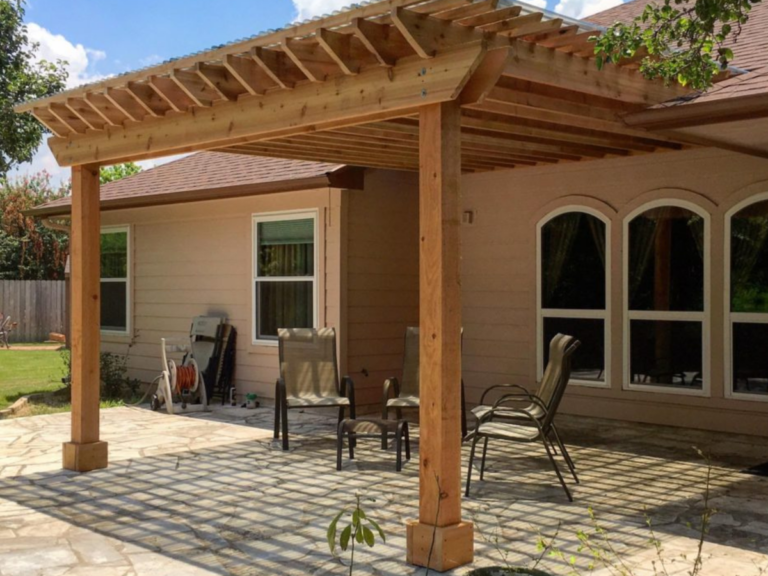
More so — horizontal surfaces suffer most from summer heat during application, so they gain the most from fall conditions.
What about new fences built in summer?
Those run on the wood’s drying clock rather than the seasonal calendar. If readiness lands in fall, excellent; if it lands in August, work early mornings or wait if the timeline allows.
Is there any reason to prefer spring over fall?
One: getting protection on before summer’s UV, which matters if the wood is currently unprotected and the alternative is another bare summer.