Cleaning Oak Pollen, Catkins, and Sap From Wood
Every Austin spring, live oaks blanket the city in yellow-green pollen and drop catkins by the wheelbarrow. It is a local rite of passage, an allergy event, and — less discussed — a genuine maintenance issue for every wood surface on the property. Here is what the annual tree mess actually does to fences, decks, and pergolas, and the right way to deal with it.
What the Oaks Actually Drop
Three distinct nuisances arrive on their own schedules. Pollen, the fine yellow-green dust, coats every horizontal and many vertical surfaces during a few intense weeks in spring, working into grain and settling into any texture the wood has. Catkins — the stringy, worm-like flower clusters — drop in enormous volume, pile in corners and gutters, pack into deck board gaps, and mat on pergola tops. And sap or honeydew, which on live oaks is often not tree sap at all but the sticky excretion of aphids and scale insects feeding above, drips onto whatever sits beneath and dries into a tacky film that collects everything else.
Why It Matters Beyond Appearance
The instinct is to treat this as cosmetic, and left alone through a Texas summer it stops being cosmetic. Pollen and organic debris hold moisture against wood after every rain, extending the damp hours that mildew requires — which is exactly why the shaded, tree-covered runs of a fence are the ones that green up. Baked onto a finish through months of heat, pollen becomes genuinely difficult to remove and can dull the surface permanently until the next refinish. Matted catkins in deck gaps block drainage and hold a wet compress against board edges. And honeydew film is both sticky enough to grab dust and, in quantity, a mildew food source of its own.
Timing: The Single Most Important Decision
There is a right moment for this work and it is narrow. Clean after the drop has substantially finished, not during — washing mid-pollen means doing it twice, and Austin’s heaviest weeks are usually a defined stretch rather than a season-long trickle. But clean before the summer heat sets in, because pollen that bakes onto surfaces through June and July is a different removal problem entirely. That puts most properties in a late-April-to-May window, which conveniently aligns with the spring wash most households should be running anyway. One well-timed cleaning handles the year’s tree mess; two poorly timed ones handle it worse.
Removing Pollen
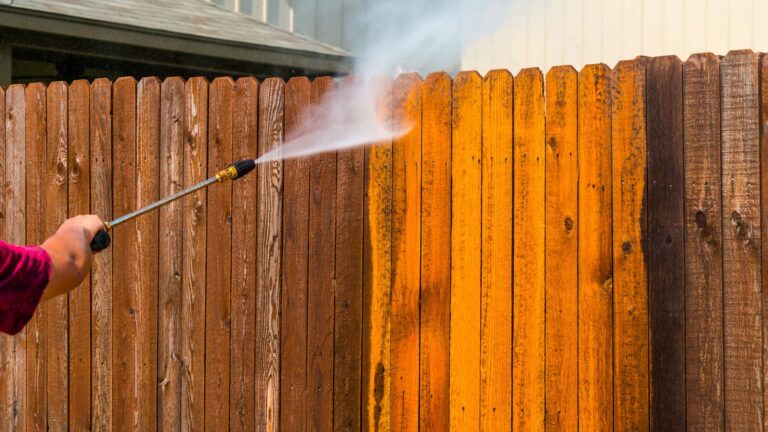
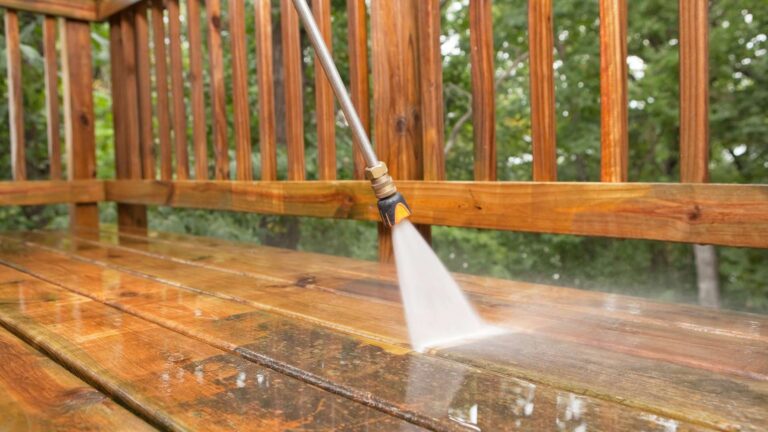
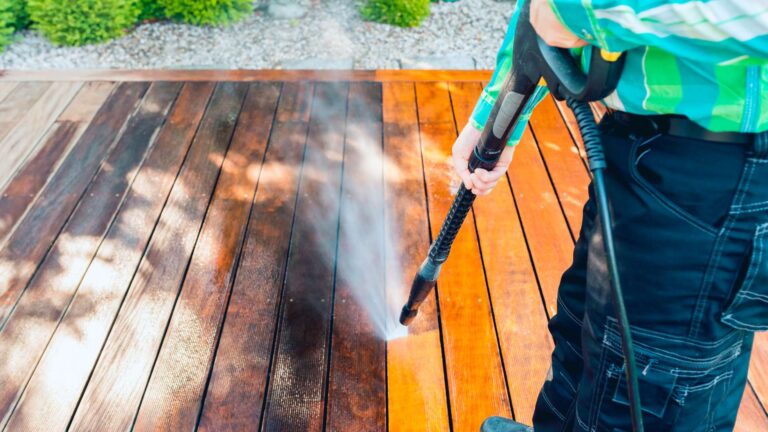
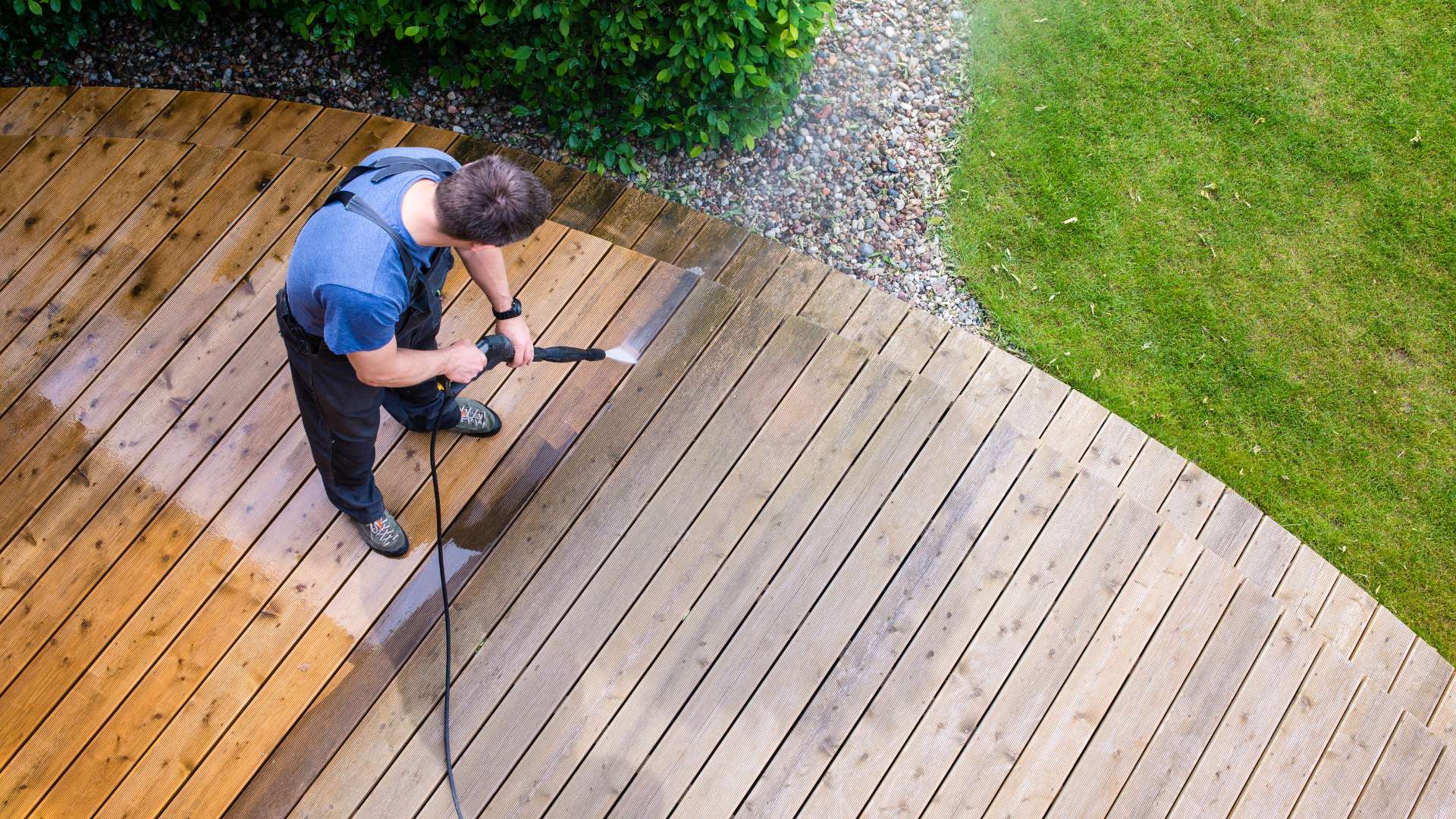
Fresh pollen is easy and old pollen is not, which is the whole argument for timing. Within its season, a thorough rinse plus a wood cleaner removes it readily — surfactants lift it out of grain, and modest pressure carries it away. Working top-down prevents redepositing on cleaned surfaces. Pollen that has sat through heat needs more: longer dwell with cleaning solution, soft brushing on textured surfaces, and occasionally a second pass. What does not work is dry sweeping or blowing, which redistributes rather than removes and drives fines deeper into grain. And plain water alone underperforms, since pollen binds to surfaces in a way that wants a surfactant to release.
Catkins, Gaps, and the Places They Pack
Catkins are a physical removal job before they are a washing job. Clear them by hand or with a soft brush from deck board gaps, pergola tops, joint crevices, and fence rail tops before any water is introduced — wetting a mat of catkins turns it into a sodden clump that is harder to extract and more likely to be pushed further in. Gutters and roof valleys deserve the same attention on the same visit, since what accumulates there eventually drains onto wood below. This is the least glamorous item in the annual routine and one of the most consequential, because packed organic debris in a deck gap is a permanent moisture source until someone removes it.
Dealing With Sticky Honeydew and Sap
The sticky film needs chemistry rather than force. Warm water with a wood-appropriate cleaner and adequate dwell time softens most honeydew; genuine tree sap on the rare occasions it appears may want a dedicated sap remover, applied carefully and rinsed thoroughly, and tested first on an inconspicuous area. Two cautions matter here: harsh solvents can damage existing finishes, and scraping sticky residue off wood raises grain and leaves marks. Where the deposits are heavy and recurring, the durable fix is arboricultural rather than janitorial — persistent honeydew usually means an aphid or scale population overhead, and an arborist can address the source that no amount of washing will.
What Not to Do
A few common responses make things worse. Do not blast pollen off with high pressure — force does not remove what a surfactant does, and it raises grain on wood that then holds the next season’s pollen more readily. Do not leave catkins to decompose in place on the theory that they will break down; they hold moisture the entire time and pack tighter as they degrade. Do not use aggressive solvents on honeydew, since they can damage existing finishes and leave marks worse than the residue. Do not scrape sticky deposits off wood, which lifts grain and creates a rougher surface that grabs more debris next year. And do not schedule staining during or immediately after the drop without a proper wash between — finish applied over a pollen film bonds to the pollen, which is a guaranteed early failure and a genuinely frustrating way to waste a project.
Living Under Live Oaks Long-Term
Properties with mature oak canopy — much of central and west Austin — should simply plan for this as a permanent condition rather than an annual surprise. Practically, that means an annual spring wash treated as non-negotiable, debris clearing from horizontal surfaces and gaps twice a year rather than once, extra attention to the shaded runs where the combination of moisture and organic material produces the mildew and algae these conditions reliably generate, and a mild bias toward keeping finishes current, since a protected surface sheds pollen far more easily than a porous weathered one. The trees are worth every bit of it; they just come with a maintenance clause. It is also worth knowing that the canopy pays some of that clause back: shaded wood receives dramatically less UV, so fences and decks under mature oaks gray far more slowly than their unshaded neighbors. The trade is real but it is a trade, not a penalty — canopy properties spend their maintenance effort on washing and debris rather than on finishing, and their finishes tend to last longer for it.
FAQs
Should I wash off pollen while it’s still falling?
Generally no — you will be doing it again in a week. Wait for the drop to substantially finish, then clean before the heat arrives.
Will pollen permanently stain my fence?
Rarely stains, but baked-on pollen can dull a finish’s appearance until the next refinish. Timely removal avoids the issue entirely.
Can I just blow the pollen off?
Blowing moves the visible layer and drives fines deeper into grain. A rinse with cleaning solution is what actually removes it.
What is the sticky stuff dripping from my oak?
Usually honeydew from aphids or scale insects rather than true sap. Persistent heavy dripping is worth an arborist’s look at the tree.
Does catkin debris really hurt anything?
In deck gaps and pergola joints, yes — it blocks drainage and holds moisture against wood indefinitely. It is the most consequential item on the list.
How does this affect staining schedules?
Never finish over a pollen-coated surface. If staining is planned for spring, wash first and allow the standard drying days before applying anything.
Is one annual cleaning enough under heavy canopy?
One thorough spring wash plus a fall debris clearing suits most tree-heavy properties. Very dense canopy sometimes justifies more.