Best Stain Colors for Cedar Fences in Texas
Cedar is the most flattering wood a stain color can land on, which is exactly why the choice paralyzes people — almost everything looks good on the swatch card. The useful question is not which color is best but which color will still look like the one you picked after two Texas summers, on your boards, in your light. Here is how the main color families actually behave on Austin cedar.
Natural and Clear-Toned: Cedar Being Cedar
The lightest pigmented tones aim to look like nothing was applied — a slight warming of the wood’s own color, grain fully forward, the fence reading as newly milled rather than finished. On fresh cedar in shade, the effect is genuinely beautiful. The honest caveats are two: light pigment means light UV defense, so these tones run the shortest re-coat cycle of any pigmented choice, and on wood that has already started weathering, minimal pigment hides nothing — every tonal variation and repair history reads straight through. Natural tones are for young, even-toned, sheltered cedar with an owner who enjoys the maintenance rhythm.
Honey and Golden Cedar: The Popular Middle
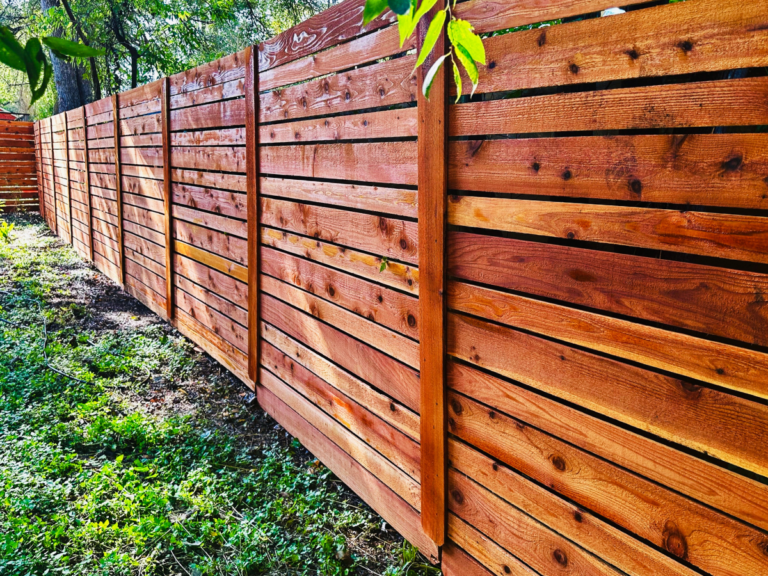
Warm golden tones are the most-requested family in Austin, and for good reason: they read as idealized cedar — the color people believe new cedar is, which is actually cedar caught at its best moment. They carry enough pigment for real UV work, they flatter both cedar and treated pine, and they age gracefully, drifting slightly amber rather than turning odd. Their one behavior to anticipate: on very sun-exposed runs, golden tones can push warmer over time, which most owners like and a few find orange. Sampling on a west-facing board settles that question before it becomes a preference discovered too late.
Chestnut, Cedar-Brown, and the Mid-Browns
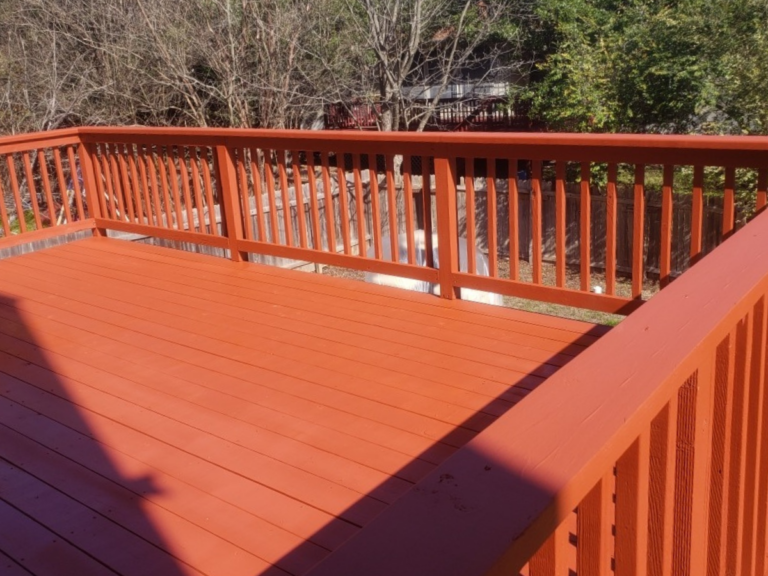
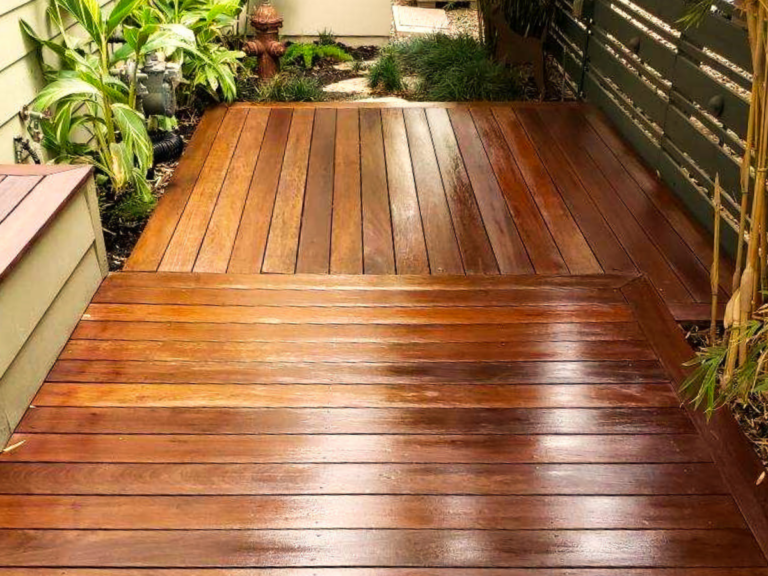
Step up in depth and the mid-brown family delivers the richest wood look available — deep, saturated, grain visible but dramatic, the tones that make a fence look deliberately designed. They carry substantially more pigment than the golden family, which buys longer UV life and a longer re-coat interval, and they cover minor tonal inconsistency, making them the practical answer for fences with some history or scattered board replacements. The trade: darker surfaces absorb more heat, a real consideration on decks and gate hardware if not on fence pickets, and dark tones make future lightening effectively impossible without full restoration.
Deep Browns, Walnut, and Near-Black
At the dark end, stains stop showing wood color and start making a statement — modern, high-contrast fencing that pairs with contemporary architecture and makes greenery pop. Protection is excellent, since pigment is sunscreen and these carry the most of it. The considerations are specific: heat absorption is genuine, fading over years shows more against a dark baseline than a mid-tone, and the aesthetic is committing — a near-black fence is a design decision the whole yard now lives inside. On the right property it is stunning; on the wrong one it reads heavy, which is why dark tones deserve the largest test patches of any family.
Gray and Weathered Tones: Choosing the Look Sun Would Give
The gray family is a modern favorite that solves an old problem: some owners like the driftwood look weathering produces but not the damage weathering causes. Pigmented gray stains deliver the aesthetic with actual UV protection underneath — a fence that looks weathered by choice and is protected by chemistry. They pair well with contemporary and coastal-influenced homes, and they hide dust remarkably well in Austin conditions. The caution: gray tones can read cool against warm brick and limestone, and they make a fence recede visually rather than warm the yard — an effect to confirm against your own house color rather than a catalog photo.
How Austin Exposure Changes Every Color
The same product lands differently across one property, which is why exposure belongs in the color decision. West and south faces take the heaviest UV, running lighter and warmer over time — a golden tone there may end noticeably brighter than the same tone on the north side. Deep-shade runs hold color longest but can read darker and greener, especially under live oak canopy filtering the light itself. Reflected heat from pale limestone or concrete intensifies everything nearby. The practical method: sample on the most exposed section and the most sheltered one, then choose the tone you like at both extremes, because a single fence wears both. Professional color matching is largely this exercise done systematically.
Matching the Fence to the House
A fence color succeeds or fails in relationship to the house behind it, and Austin’s dominant exteriors each have natural partners. Limestone and pale stucco — everywhere in the Hill Country neighborhoods — pair beautifully with warm golden and honey tones, which pick up the stone’s warmth, and handsomely with grays for a cooler, contemporary read. Red and orange brick, common through the older central neighborhoods and much of the north, fights golden tones (too much competing warmth) and settles well against mid-browns and deeper chestnuts that let the brick lead. White and light-painted siding takes almost anything, which is freedom rather than guidance — here the landscaping and the yard’s light should decide. Dark-painted modern exteriors pair naturally with grays and near-blacks for a monolithic effect, or with warm mid-tones for deliberate contrast. The test that outranks all of this: hold the sample board against the house in afternoon light, not in the garage.
Sampling: The Step That Prevents Regret
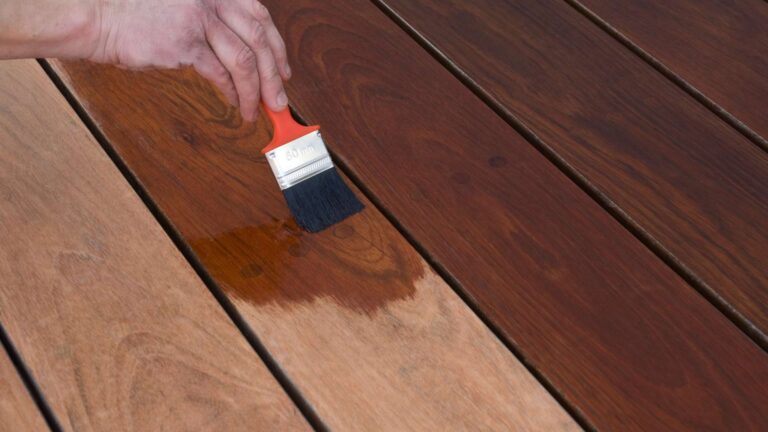
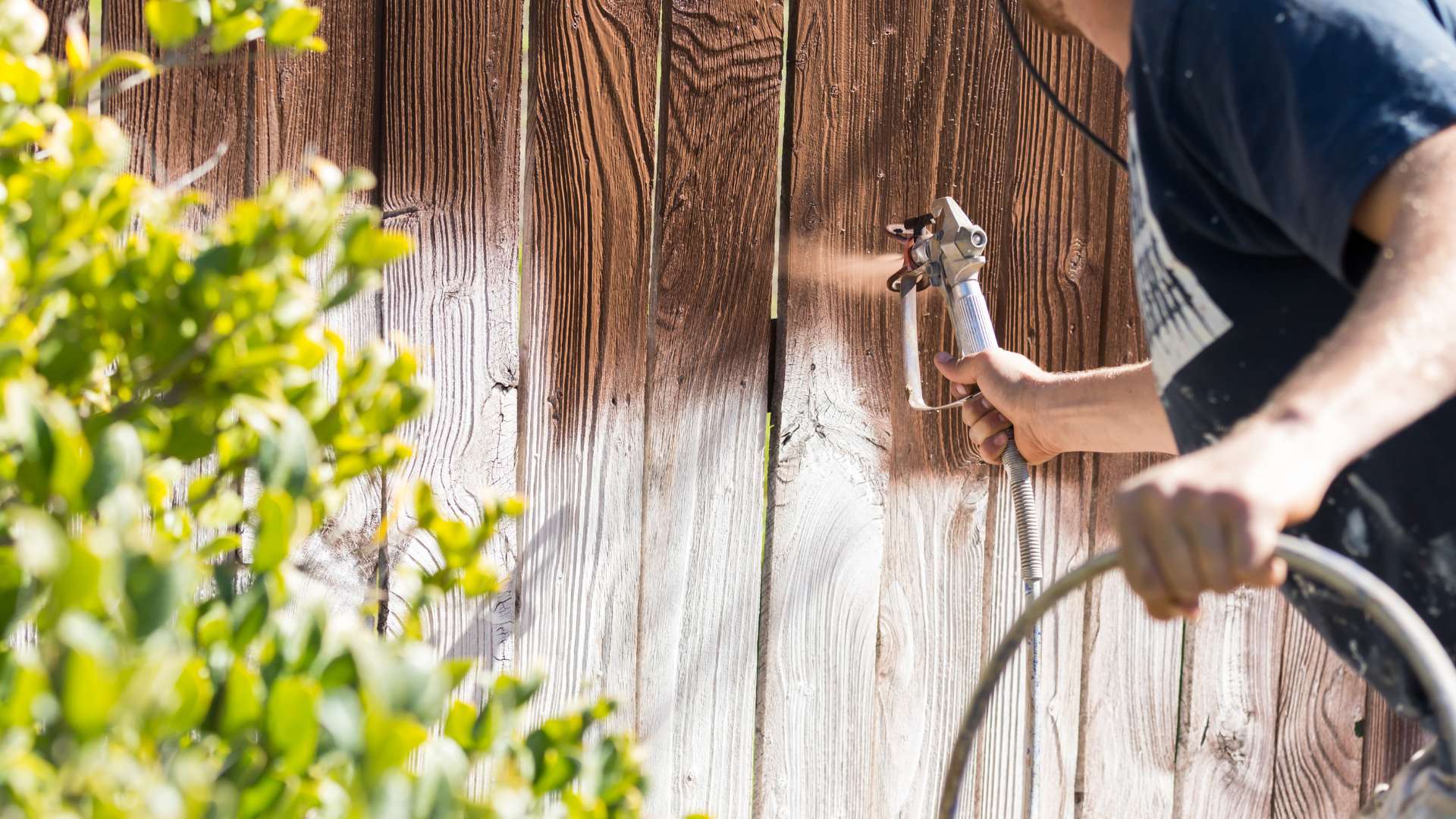
No swatch card predicts a fence. Pigment sits differently in cedar than pine, in weathered grain than fresh, in morning light than evening — and wet stain reads two shades darker and one step more opaque than the cured result, which is how fences end up lighter than intended. The reliable method: apply candidate tones to prepared boards on the actual fence, at least a square foot each, and judge them fully dry at the hours you actually see the fence — morning coffee, evening arrival. Photograph each. Live with them a few days. It is the cheapest insurance in the project, and it converts a preference into a decision. Transparency is a separate axis chosen alongside color, and samples settle both at once.
How Color Ages, and Planning for It
Every color on this list is a starting point rather than a permanent state, and knowing each family’s drift makes the choice easier. Natural and light tones thin toward bare wood, greeting gray earliest — they fade rather than change character. Golden tones warm and deepen slightly, which most owners read as improvement, before eventually thinning on the sun faces. Mid-browns hold their character longest at semi-transparent, softening gradually and evenly. Dark tones lose depth rather than hue, gaining a chalky cast at the surface in the hardest exposures before their re-coat. Grays are the most stable-looking as they age, since their destination and their weathering direction point the same way. Two planning implications follow: pick a color you will still like one shade lighter and slightly warmer, and let exposure-heavy fences run a half-step deeper than your instinct, since the sun will meet you in the middle.
FAQs
Which stain color lasts longest on a Texas fence?
Darker tones, generally — more pigment means more UV absorption before the wood takes it. Within a transparency class, the color gap is modest; transparency itself matters more than shade.
Will a light color make my fence look bigger or brighter?
Light tones do open a yard visually and reflect more heat; dark tones frame and recede. On small lots, lighter or mid-tones usually feel less enclosing.
Can I match my fence stain to my house or deck?
Often closely, sometimes not exactly — different woods take the same pigment differently. Bring the target color and sample on the actual wood; near-matches usually read as intentional coordination.
My fence has replaced boards in a different shade. Which colors hide that?
Mid-browns and deeper tones blend mismatches best at semi-transparent; solid stains erase them entirely. Light and natural tones will show the patchwork for a season or two until weathering converges.
Do gray stains actually protect, or just look weathered?
They protect fully — pigmented gray is a normal stain whose color happens to imitate weathering. The look is chosen; the protection is real.
How do HOA color requirements usually work?
Most specify an approved palette, often in solid or semi-solid tones. Bring physical samples to the committee rather than product names; approvals move faster with something to hold.
Will the color I choose look the same in five years?
It will drift — warmer for golden tones, softer for darks, thinner for light ones — and a maintenance coat resets it. Planning for graceful drift is more realistic than expecting stasis.