Why Homes Benefit From a Yearly Exterior Wash
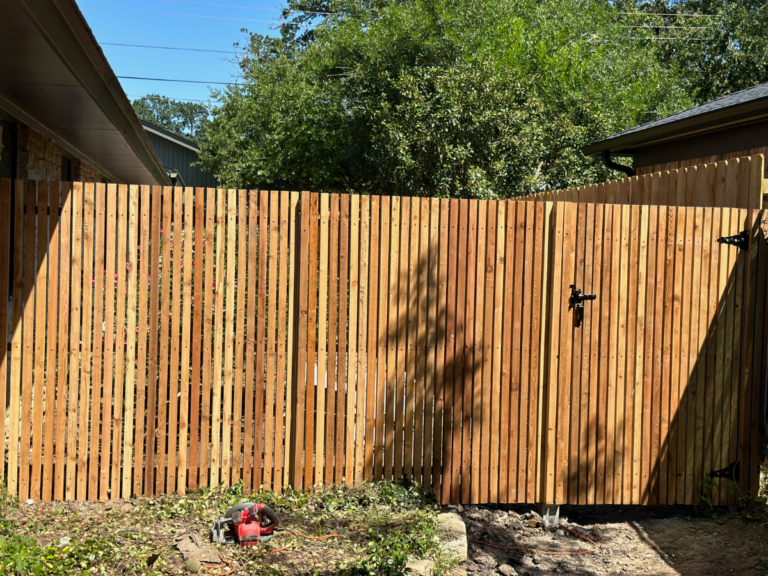
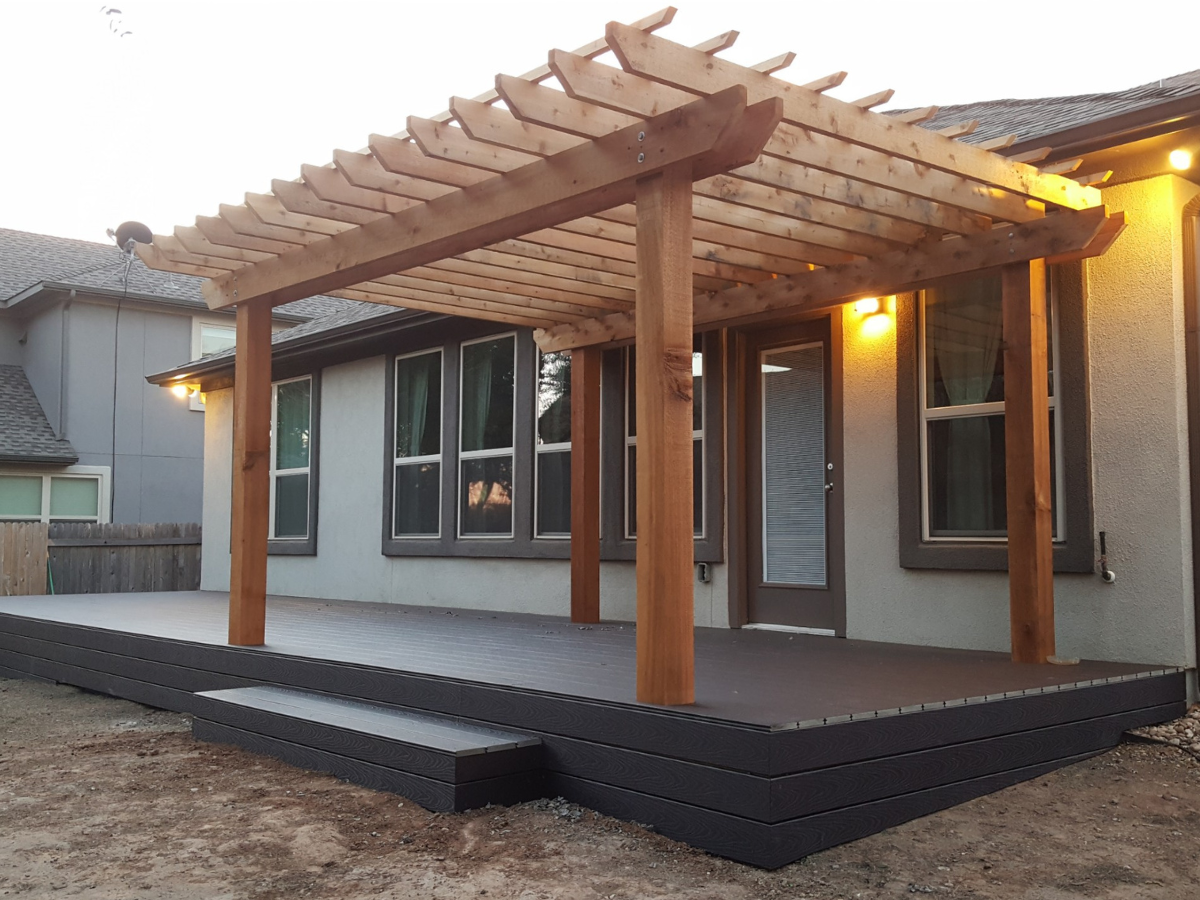
An annual professional wash is the cheapest maintenance a property’s wood ever gets. Austin loads fences, decks, and pergolas with a year of dust, pollen, and mildew — and one calibrated, wood-safe washing clears it before buildup becomes damage, keeping finishes breathing, boards drying properly, and the whole yard reading maintained.
What a Year in Austin Deposits
The inventory is predictable by season: spring’s oak pollen coats every horizontal surface and bakes on through the heat; summer’s dust loads the grain and dulls finishes; fall and winter’s damp stretches feed the algae and mildew that establish in shaded runs and joints. None of it is dramatic in any single month — which is exactly why it accumulates. By the anniversary, the wood is wearing a full year of it, and most owners have stopped noticing because the change came gradually. That gradualness is worth respecting as the real adversary here. Nobody skips maintenance on a surface that looks bad; surfaces get skipped precisely because they still look acceptable to eyes that recalibrate daily. The annual appointment exists to overrule that recalibration with a calendar — the one observer that never adjusts.
Why Buildup Is a Wood Problem, Not Just a Looks Problem
The layer is not passive. Dust and pollen hold moisture against boards after every rain, extending the damp hours that mildew needs. Organic growth roots into finishes and pries at them. And a coated surface cannot dry at the rate wood wants to, which is how surface conditions graduate into finish failures and, eventually, wood problems. The annual wash interrupts the cycle at its cheapest stage — before anything has to be repaired, restored, or refinished ahead of schedule. There is also a compounding cleanliness effect: surfaces washed annually never develop the deeply established colonies and baked-in layers that demand aggressive cleaning, so each year’s visit stays gentle — the maintenance protecting the wood also protects the wood from the maintenance.
What the Annual Visit Looks Like
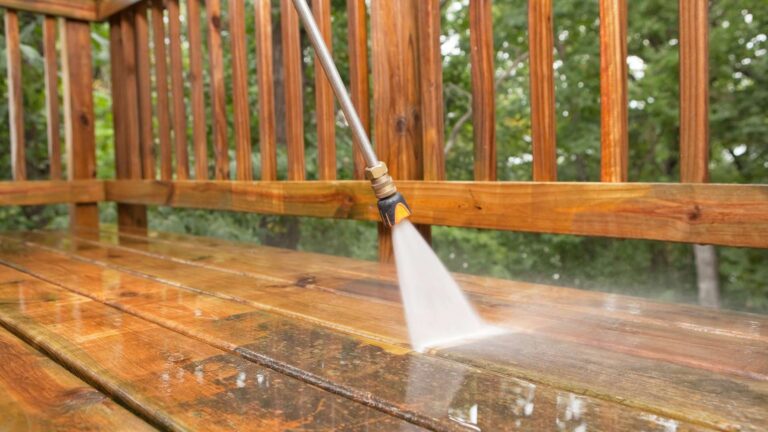
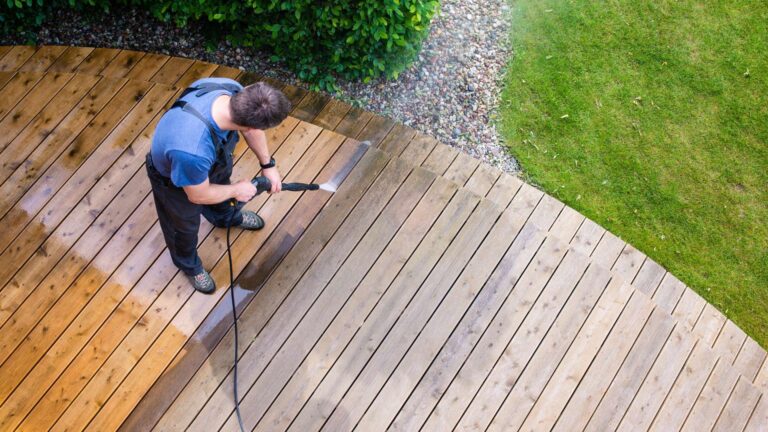
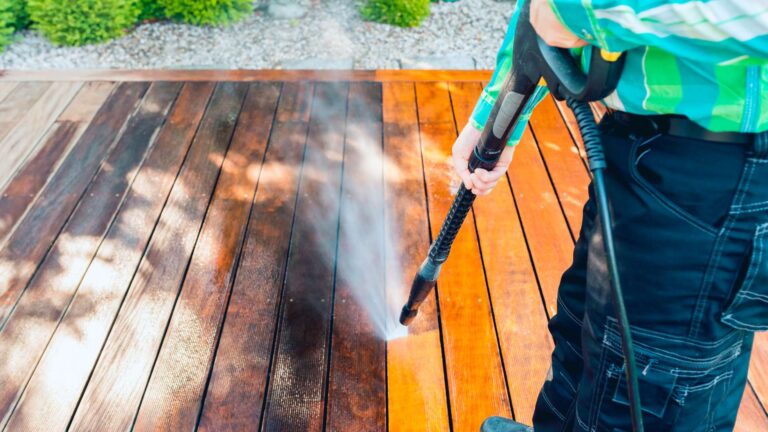
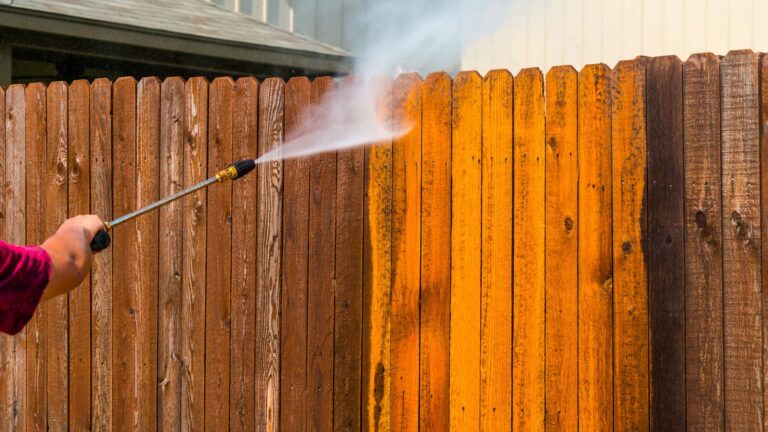
A typical annual visit runs a few hours and a fixed sequence. The walk first: crew and homeowner circle the property, noting anything unusual since last year — a leaning section, a new stain, a gate dragging. Then protection: plantings pre-wetted and shielded, furniture staged, pets settled inside. The wash itself runs fence line, then deck, then overhead structures, growth-treated areas dwelling in solution while pressure work proceeds elsewhere. The close matters most: a rinse-down of everything, furniture returned, and the two-minute condition report — where finishes still bead, where they are thinning, what next year’s visit should expect. Households on the rhythm barely think about it, which is the point: the visit is boring, the results are visible, and the expensive alternatives stay hypothetical.
The Wash as Annual Physical
The under-appreciated benefit: a professional wash is the property’s honest yearly inspection. Clean wood shows its true condition — where finish still beads water, where it has thinned, where gray is starting, which boards want attention. A wood-safe fence washing plus deck cleaning in one visit delivers both the maintenance and the diagnosis, and the diagnosis is what keeps the maintenance schedule honest. Households that keep the short yearly notes — beading here, thinning there — end up with the rarest document in homeownership: an actual maintenance history for their exterior wood, which pays for itself the day a warranty question, an insurance claim, or a sale disclosure asks for one.
What the Rhythm Protects Beyond the Wood
The annual wash’s beneficiaries extend past the boards themselves. Finishes last to their full rated life over clean wood, which stretches every staining dollar already spent. Safety rides along: algae-slick deck boards and stair treads are the yard’s quietest hazard, and the wash resets them every year. The property’s photographic record stays honest — insurance documentation, rental listings, and eventual sale photos all inherit clean surfaces. Even neighbor relations get a small dividend, since shared fence lines maintained on a rhythm never become the conversation nobody wants to have. And the diagnostic value compounds annually: year-over-year, the condition report becomes a genuine maintenance history, the kind that lets decisions get made on trends instead of surprises. One boring appointment, a season’s worth of quiet returns.
Timing the Annual Visit
Spring after the pollen drop is Austin’s most satisfying slot — the winter-and-pollen load comes off just before the outdoor season begins. Fall works equally well as preparation for the damp months, especially paired with any staining the bead test says is due. The only wrong schedule is none: wood on an annual rhythm ages on its finish’s terms; wood without one ages on the weather’s.
One overhead note: the pergola belongs in the annual visit precisely because nobody looks at it between visits — rafter tops carry the heaviest year-load on the property. Gates earn a mention for the opposite reason: they are touched daily, so their grime is noticed constantly even when the fence’s is not, and a washed gate resets the impression every hand-on-latch interaction makes.
The Compounding Math
One number worth holding: finishes over regularly washed wood reach the far end of their expected life, while finishes under a permanent buildup load fail early — and early finish failure is what turns a routine re-coat into brightening, restoration, and sometimes board replacement. The annual wash is priced like a chore and behaves like insurance: every year it runs, the expensive versions of every other wood project move further away. Skipped years run the same math in reverse, quietly.
The Pattern We See on Skipped Years
The properties that skip a year or three follow a recognizable arc. Year one skipped: nothing visible — buildup is quiet, and the finish underneath keeps working. Year two: the shaded runs green up, the fence reads dull, and the bead test starts failing in the sunniest sections — protection ending under a coat of grime nobody could see it through. Year three and beyond: the wash that finally happens reveals thinned finish and started gray, and the visit that should have been maintenance becomes a diagnosis — brightening here, a re-coat there, occasionally a full restoration conversation. The arithmetic is consistent every time we see it: the skipped visits saved a little; the recovery costs multiples of it. Annual is not an upsell interval — it is the speed the climate works at.
FAQs
Is annual washing really necessary if the wood looks fine?
Looking fine is what gradual buildup always looks like. The bead test and a hand wiped across a board tell the truth the eye adjusts away from.
Can the annual wash damage the finish?
Maintenance washing at wood-safe pressure preserves sound finishes — it is aggressive rental-machine cleaning that strips and gouges.
What does the visit cover?
Typically the fence line, deck, and pergola in one mobilization, with plantings protected and everything rinsed clean. Add-ons like gates and playsets ride along.
Is this instead of re-staining?
It is what stretches re-staining to its full interval — finishes over clean wood last longer, and the wash tells you honestly when the re-coat year has arrived.
Best month to book?
April or May, after the oak drop, or October ahead of the damp season. Annual means the same slot next year, which we are happy to hold.
Can the annual wash and a re-coat happen in the same visit?
The wash yes, the re-coat after drying days — so they book as a pair within the same week when the bead test says it is re-coat year.
Does new construction need the annual rhythm immediately?
Start it the year after the first finish goes on. New wood’s first year is about the finish timing; every year after belongs to the rhythm.