Oil-Based vs. Water-Based Fence Stain: Which for Texas?
Walk the stain aisle and the first fork in the road is the base: oil or water. Both make excellent fences; both make bad ones when mismatched to the wood, the exposure, or the maintenance rhythm behind them. Here is how each actually behaves on a Central Texas fence, without the brand-war noise.
How Oil-Based Stains Work
Oil-based stains are penetrants in the classic sense: their carriers soak deep into wood fibers, conditioning the wood as they place pigment and resins well below the surface. That depth is their signature virtue — the finish wears from within, gradually and evenly, without a film to peel. Oil suits dry, thirsty, and older wood especially well, because dried-out fibers drink the conditioning oils and stabilize. The trade-offs: longer cure times (and stronger odor while curing), more sensitivity to damp wood at application, and a tendency to darken and amber over the years, which reads as richness on some fences and as color drift on others.
How Water-Based Stains Work
Modern water-based stains solved their early-generation reputation problems and brought real advantages: excellent UV resistance that holds color truer for longer, faster drying that fits Texas weather windows more forgivingly, low odor, easy cleanup, and better breathability — vapor escapes the wood rather than being trapped. They sit slightly nearer the surface than oil, which historically meant less depth, though today’s hybrid resins penetrate far better than the products that earned the old stereotype. The trade-offs: they are less forgiving over marginal prep, wanting genuinely clean, open grain to bond well, and they can raise grain slightly on some woods, asking for a light knockdown on smooth-planed surfaces.
The Hybrid Middle Nobody Mentions
The aisle hides a third answer: modern hybrid and alkyd-emulsion stains that suspend oil-type resins in water carriers, aiming for oil’s penetration with water’s drying speed, UV hold, and cleanup. On the right wood they deliver a genuine best-of-both — deep conditioning without the long odor-heavy cure — and they have quietly become many professional crews’ default for mixed-condition properties where one product must serve several woods and exposures. Their limits are inherited from both parents: they still want honest prep like any water-carried product, and their penetration, while strong, tops out below a true oil soaking into desert-dry boards. For the homeowner, the practical note is simply that the binary is softer than the aisle implies, and the label’s chemistry matters less than whether the product family matches the fence in front of it.
The Texas Climate Test
Run both bases through what a fence here actually endures. Brutal UV load: advantage water-based, whose pigment systems fade slower under the sun that defines this climate. Dried-out August wood: advantage oil, which conditions as it penetrates. Sudden humidity swings and storm cycles: water-based dries fast enough to duck between weather windows, while oil wants longer settled stretches. Re-coat reality: oil recoats over itself easily; water-based recoats over itself easily; crossing between them mid-life is where complications live. The honest scoreboard is a tie that resolves per fence, not per ideology — which is exactly how professional fence staining chooses product, matching base to the board in front of it.
Which Fence Wants Which
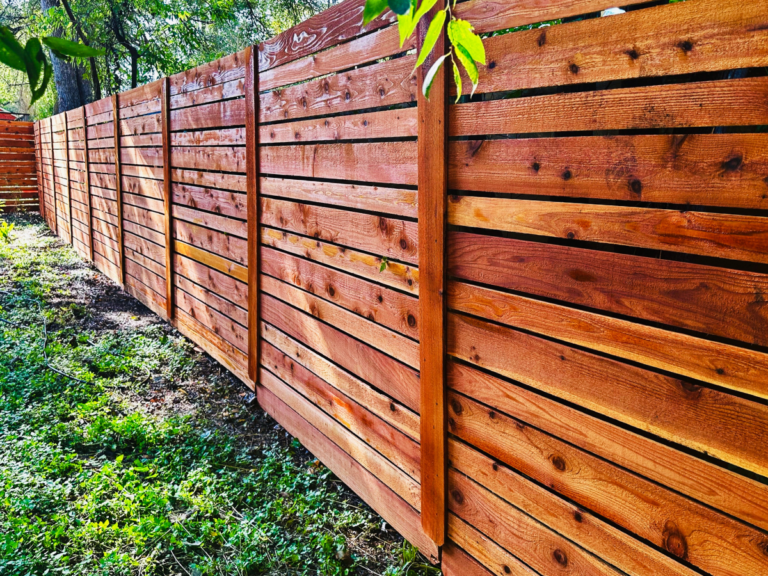
Older, never-maintained, or freshly restored cedar and pine — thirsty wood with open grain — leans oil: the conditioning penetration is what that wood is missing. Newer fences with tight, healthy grain in hard sun lean water-based: UV hold matters more than deep conditioning on wood that is not yet thirsty. Fences under heavy tree cover, where breathability and mildew resistance matter, lean modern water-based systems. Fences with an existing finish lean whatever that finish was, because compatibility beats theory. And the semi-transparent question runs on its own track — transparency is a separate decision from base chemistry, though the two get chosen together.
The Questions That Decide It On-Site
A finisher standing at your fence resolves the debate with observations, not preferences. How does the wood drink a splash of water — instantly (thirsty, oil-friendly), slowly (tight grain, either base), or not at all (existing finish rules)? What is the exposure — full western sun argues UV-forward water-based pigment loads. What finished this fence last time, if anything? What maintenance rhythm will realistically happen — because oil’s aging curve rewards attentive re-coats while quality water-based systems forgive a stretched interval more gracefully? And what does the calendar allow — a narrow dry window favors the fast-drying base. Five questions, one fence-specific answer.
Application Differences Worth Knowing
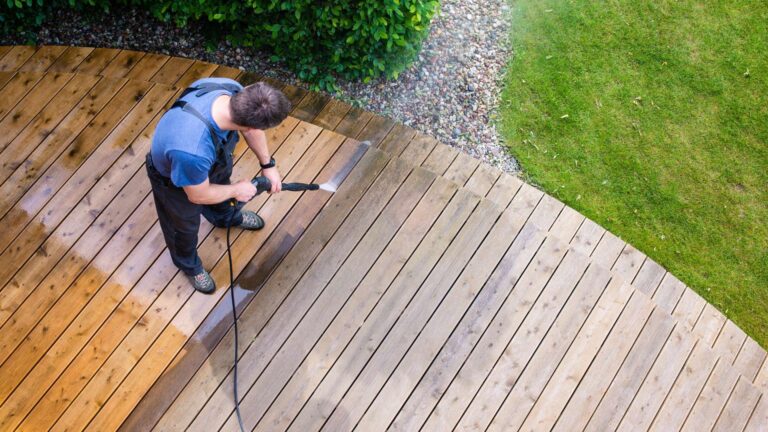
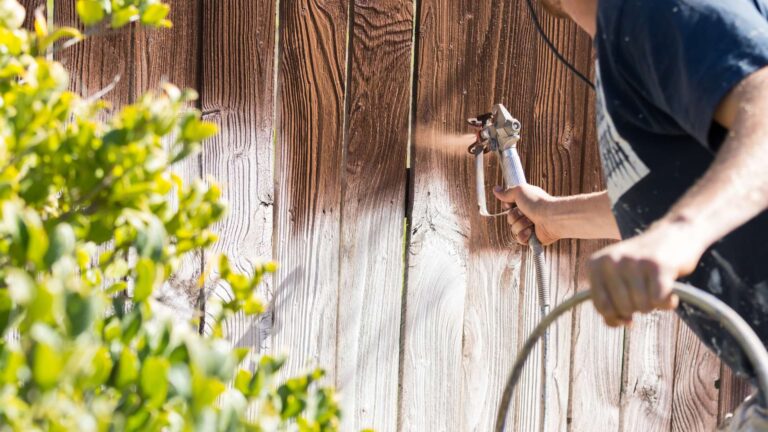
The two bases also apply differently, which matters on staining day. Oil offers a long, forgiving wet edge — sections blend easily, lap marks are rare, and slow absorption lets the applicator work deliberately; the price is cure patience and real dry-weather requirements afterward. Water-based moves fast: it can tack up mid-section on warm days, which demands smaller working areas and disciplined wet edges, but it recoats within hours and shrugs off an evening dew that would blush a fresh oil finish. Cleanup diverges completely — solvents for oil, soap and water for water-based — and so does storage safety, where oil-soaked rags demand genuine care against spontaneous combustion. None of this changes which base your fence wants; all of it changes how the day of application should be planned. One more field note: temperature tolerance differs at the margins. Oil handles cool application days better; water-based handles warm ones. In a climate that offers both extremes in the same month, the forecast on staining day is allowed a small vote in the base decision too.
What Matters More Than the Base
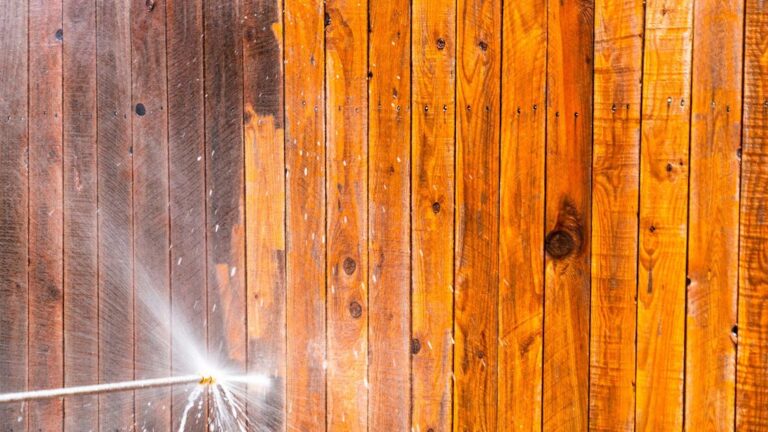
A quiet truth from the field: the oil-versus-water decision, done reasonably, matters less than three things done well. Preparation — either base fails over grime and gray, and how long any stain lasts traces to prep more than chemistry. Moisture timing — oil especially punishes damp wood, but neither base forgives it. And application discipline — thin coats, wet edges, end grain attention. Choose the sensible base for your wood, then spend your care on those three, and either chemistry will make the fence you were hoping for. The reverse is equally true and worth hearing plainly: no base rescues skipped fundamentals. The internet is full of brand debates conducted over fences that failed for reasons no product could have prevented — damp boards, gray fiber never brightened away, thick flooded coats. Win the fundamentals and the base debate becomes what it should be: a fine-tuning choice between two good answers.
FAQs
Which lasts longer in Texas, oil or water-based?
Well-matched and well-applied, their lifespans overlap heavily — roughly the standard three-to-five-year fence cycle. Mismatched to the wood or applied over poor prep, either fails early. The base is a smaller variable than the workmanship.
Can I put water-based stain over an old oil-based finish?
Often yes, once the old finish has weathered and the surface is thoroughly cleaned — but adhesion testing on a small area first is non-negotiable. The reverse, oil over water-based, is generally more forgiving.
Which looks better on cedar?
Oil ambers into a warm, traditional cedar richness; quality water-based holds the color you chose with less drift. It is an aesthetic preference — samples on your own boards settle it best.
Is one base more environmentally friendly?
Water-based products generally carry lower VOCs, milder cleanup, and easier disposal — the practical choice for eco-minded households, and modern formulations concede little protection for it.
Does one handle Austin humidity better?
Water-based dries fast enough to fit between humid spells more easily. Oil wants longer settled windows, which mostly means scheduling patience rather than a performance gap.
Do they cost differently?
Comparable ranges at comparable quality tiers; the project’s cost is driven far more by prep needs and fence size than by base chemistry.
Can different bases go on different parts of the same property?
Yes, and it is common — a thirsty old fence in oil and a new pergola in water-based, each matched to its wood. Consistency matters within a structure, not across the whole yard.