
Why Pergolas Gray Faster Than Fences
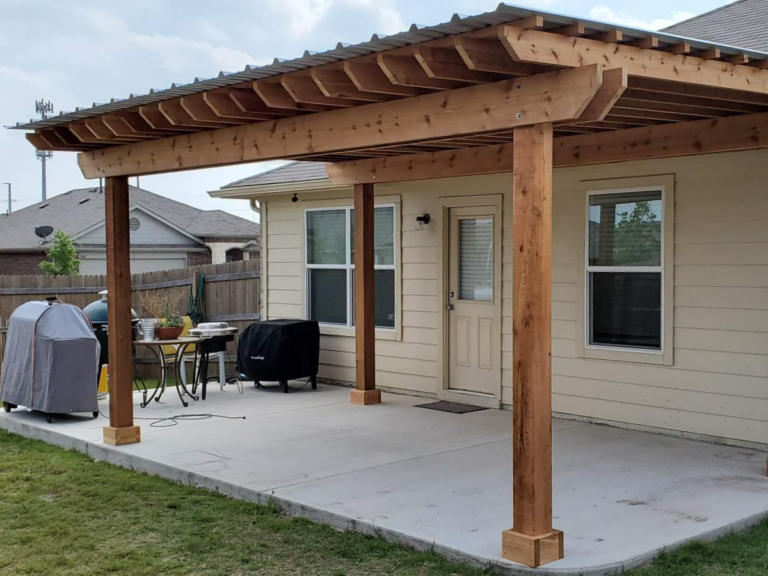
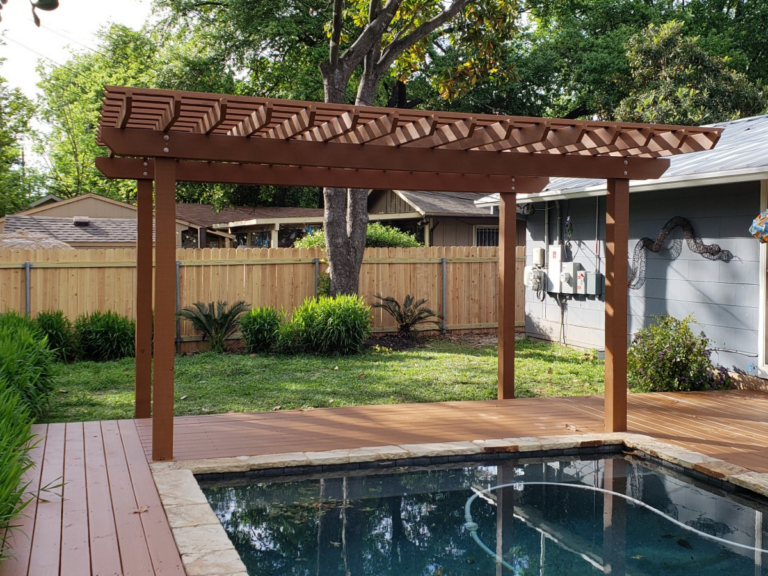
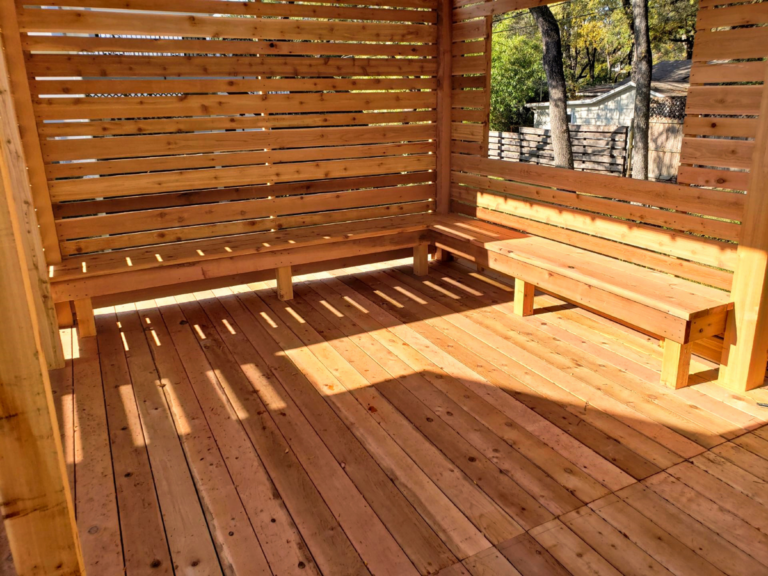
Walk a backyard where the fence and pergola went up the same season, built from the same cedar by the same crew, and one thing is usually obvious: the pergola is further along. Grayer on top, drier at the ends, ahead of the fence by what looks like years. It is not the wood and it is not the builder. It is geometry, and understanding it changes how the structure gets maintained.
The Sun Angle Problem
This is the dominant factor and it is pure physics. A fence board stands vertical, so sunlight strikes it at an angle for most of the day — energy spread across the surface, intensity diluted. A pergola rafter’s top face lies horizontal, catching sun near-perpendicular through the middle hours when UV is strongest. Perpendicular strike means maximum energy per square inch, and UV degradation scales with dose. The rafter top is receiving something closer to the full solar load while the fence six feet away receives a fraction of it. Same day, same yard, dramatically different exposure — which is why pergola tops are, measurably, the most UV-punished wood on most Austin properties.
Water Sits Instead of Running Off
The second geometry problem compounds the first. Rain hits a fence and runs down and off within minutes; the boards are wet briefly and dry quickly. Rain hits a pergola’s horizontal members and pools — in the shallow dish that a slightly cupped rafter forms, in the joints where members cross, along beam tops. Standing water means extended wet time, and extended wet time means moisture penetration, mildew opportunity, and the swelling-shrinking cycle that opens checks. Pergolas therefore take both the heaviest UV dose and the longest moisture exposure of any structure on the property, which is an unusually punishing combination for wood.
Debris Collects Where Nobody Looks
Pergola tops function as shelves. Leaves, oak catkins, seed pods, dust, and windblown organic matter land on horizontal surfaces and stay there, sometimes for years. That layer traps moisture against the wood long after rain would have dried, feeds mildew directly, and holds a damp compress on the exact surfaces already taking the worst UV. Fences shed all of this by shape. The problem is compounded by invisibility — nobody sees a pergola’s top surfaces from patio level, so the debris load builds without prompting anyone to act, which is why the first serious look at a five-year-old pergola’s rafter tops is often a surprise to its owner.
End Grain, Everywhere
Pergolas are built from members that terminate in the open: rafter tails, beam ends, post tops, the decorative cuts that give the structure its character. End grain absorbs moisture at many times the rate of face grain — it is the wood’s straw ends — and it releases finish faster too. A fence has relatively little exposed end grain; a pergola is composed of it. Those cut ends are where graying starts visibly, where checking runs deepest, and where finish depletes first. Any honest pergola maintenance approach treats end grain as its own category deserving a deliberate extra pass, because it is where the structure’s weathering story begins.
The Maintenance Blind Spot
Physics explains most of the gap; human behavior explains the rest. Fences are inspected constantly without anyone meaning to — they are at eye level, in every yard view, framing every window. Pergolas live overhead, and the surfaces that fail first are the ones nobody can see without a ladder or a phone held up at arm’s length. So the fence gets noticed at the first hint of dullness while the pergola’s tops gray unobserved through several seasons. When the water-bead test finally runs on a pergola, it frequently reveals that protection ended a year or two earlier. Neglect is not indifference here; it is architecture.
What This Means for the Maintenance Schedule
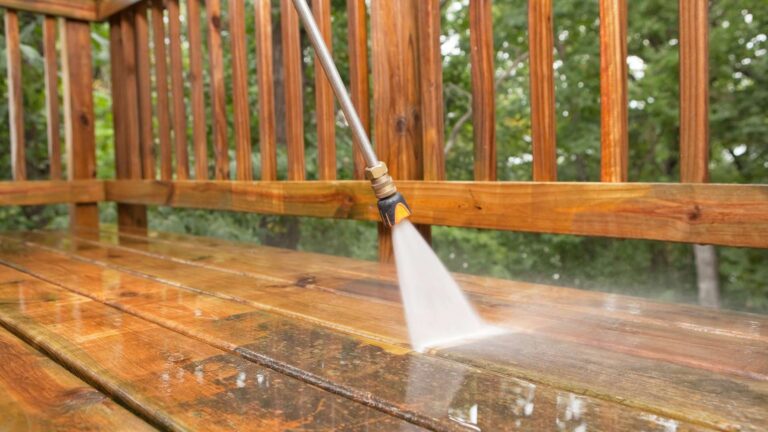
The practical conclusion is that pergolas should not share the fence’s calendar. Three adjustments follow. First, run the bead test on rafter tops specifically, not on posts at hand height — the tops are the structure’s true clock and will fail well before the rest. Second, expect the tops to want finishing on a shorter interval than the fence, and accept that finishing the tops alone is legitimate maintenance rather than a partial job. Third, put debris clearing on the annual list, since it directly extends finish life on the surfaces that need it most. Regular pergola washing handles the debris and mildew load, and staining timed to the structure’s own clock handles the rest.
Thermal Cycling: The Factor Nobody Counts
There is a fourth physical stressor specific to horizontal overhead members, and it is the one that rarely gets mentioned. A rafter top in Austin sun reaches surface temperatures far above the air reading — well past a hundred and thirty degrees on summer afternoons — while its underside, shaded by the same board, sits twenty or thirty degrees cooler at the same moment. That gradient runs through a single piece of wood, every sunny day, for months. Wood expands and contracts with temperature and the moisture changes that follow it, so the top face is in a constant slow argument with the bottom face. Over years this differential drives cupping, deepens checking on the exposed faces, and works finish loose at the surface faster than uniform exposure would. Fences experience nothing comparable — both faces of a picket run within a few degrees of each other. It is one more way the pergola’s geometry, not its wood, writes its maintenance schedule.
Catching Up on a Pergola That’s Already Gray
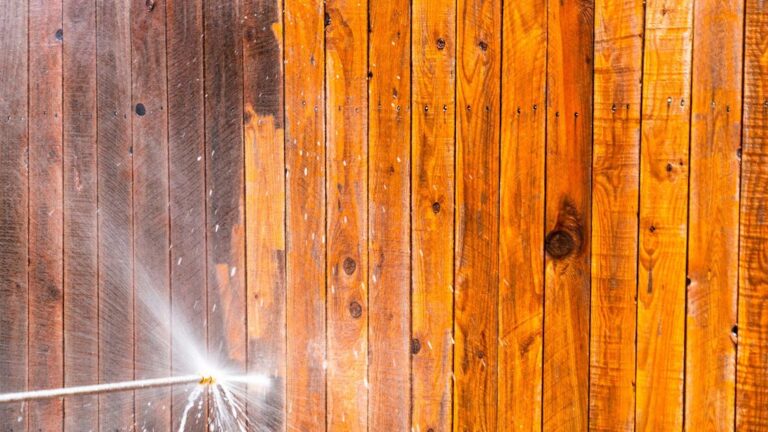
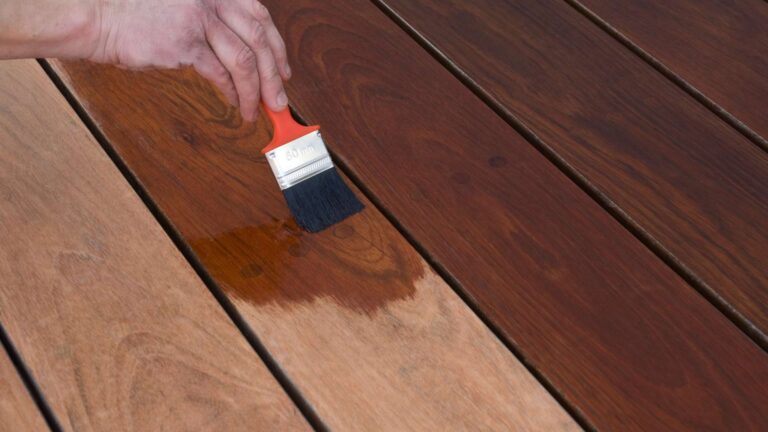
A pergola that has grayed ahead of its fence is entirely recoverable, and the process is the standard restoration sequence adapted for overhead work: wash at the gentlest calibration on the property, brighten to reverse the oxidized surface, dry fully, then finish with real pigment and deliberate attention to end grain and top faces. The differences from fence restoration are practical rather than chemical — access, drip control, and the fact that overhead application rewards experience — but the wood responds identically. Cedar that looks finished at year seven is almost always just weathered at year seven, and the structure that comes back is frequently better protected than it was originally, because the restoration finally puts pigment where the sun has been aiming all along.
FAQs
Is a grayed pergola structurally damaged?
Usually not — gray is surface oxidation, not decay. Probe the rafter tails and post tops for softness; sound wood under gray is a finishing project, not a rebuild.
How much faster do pergolas actually gray?
Commonly a year or two ahead of a same-age fence in the same yard, sometimes more on unshaded structures. The tops lead; the posts and undersides track closer to fence pace.
\Should I finish just the tops if only they’re failing?
Yes — that is efficient maintenance rather than a shortcut. The tops run their own clock, and refreshing them on schedule keeps the whole structure out of restoration territory.
Does a shade cloth or cover help?
Meaningfully, by cutting the UV dose on the tops. It adds its own considerations — trapped debris underneath, moisture retention — so it trades one problem for a smaller one.
Why do the rafter ends look worse than the middles?
End grain absorbs moisture and loses finish far faster than face grain. Those cut ends deserve an extra pass at every application.
Do painted or composite pergolas avoid this?
They change the failure mode rather than escaping the exposure — films crack under the same UV and thermal cycling, and composites fade. The geometry is the constant.
How often should a pergola be washed?
Annually at minimum in Austin, with debris clearing from top surfaces at the same visit. Under heavy tree cover, twice a year is not excessive.