What Affects Fence Restoration Cost?
Restoration quotes for two fences that look similar can differ substantially, and the reason is almost never the company’s margin — it is that fence restoration prices condition and access, not square footage alone. Understanding what actually drives the number lets you read an estimate intelligently, compare bids on equal terms, and often reduce the figure through decisions made before anyone quotes.
Scale: Length, Height, and Sides
The obvious factor first. Linear feet sets the baseline, fence height multiplies it, and the number of sides being finished can nearly double it — a fence stained on both faces is two projects sharing a structure. Most Austin residential restorations involve some mix: the street-facing run finished both sides, the neighbor-shared runs finished on your side only. Gates count disproportionately for their size, since hardware, edges, and hand-scale work slow everything down. When comparing estimates, confirm every bid assumes the same sides and includes the same gates — this single mismatch explains a large share of confusing quote differences.
Condition: The Biggest Swing Factor
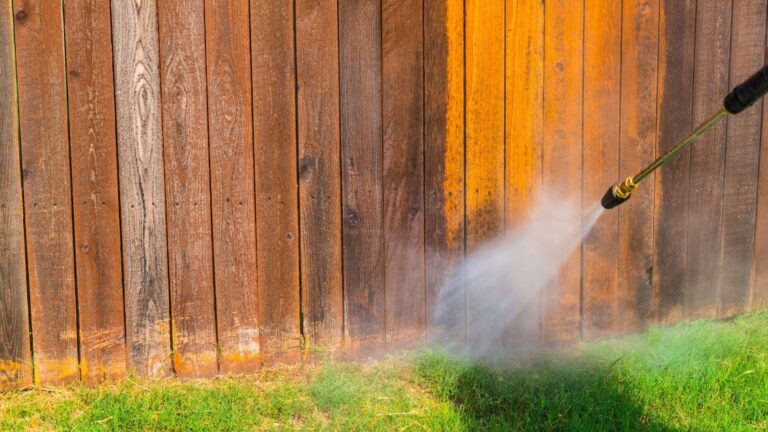
Two fences of identical length can differ enormously in prep requirement, and prep is where restoration labor concentrates. A fence with light graying and intact structure needs wash, brighten, dry, finish. A fence with heavy mildew, deep tannin staining, years of accumulated grime, and failed old finish needs multiple cleaning passes, thorough brightening, possible spot sanding, and more product to satisfy thirsty wood. Board replacements add materials and carpentry time. This is why an honest assessment walks the fence rather than measuring it from the driveway, and why the restore-or-replace inspection and the restoration quote naturally happen in the same visit.
Access and Site Conditions
Cost tracks how hard the fence is to reach and work around. Clear, level runs with open access are fastest. Landscaping tight against the boards requires protection, careful maneuvering, and sometimes hand application where equipment would be faster. Slopes and hillside lots — common through West Austin and the Hill Country suburbs — slow everything. Narrow side yards, locked neighbor access on shared runs, pools requiring extra containment, and pets requiring scheduling coordination all add real time. None of this is padding; it is the difference between a crew working freely and a crew working carefully, and careful is slower everywhere it applies.
Product and Transparency Choices
Finish selection moves the number modestly but genuinely. Higher-pigment products cost more per gallon and often cover slightly less area. Thirsty restored wood absorbs substantially more product than maintained wood — a fence coming back from full gray can drink noticeably more than the same fence at its next maintenance coat. Two-coat applications, where the wood or the look calls for it, add both material and labor. The counterintuitive note: the pricier, heavier-pigment choice often costs less per year of service, since solid and deeper tones run longer intervals than lighter ones. Quote comparisons should specify product and coat count, not just a color name.
What Lowers the Number
Several levers are genuinely in the homeowner’s hands. Timing: booking outside the fall rush, when calendars are open, tends to price and schedule better than chasing the October window everyone wants. Scope bundling: a fence, deck, and pergola done in one mobilization costs meaningfully less than three separate visits. Neighborhood coordination: cohort fences on the same street done together share setup efficiency, and Austin’s builder-fence neighborhoods make this practical more often than people realize. Access preparation: moving planters, trimming shrubs off the boards, and clearing the run before the crew arrives converts billable careful-work time into straightforward production time. And condition itself — a fence caught before it fully grays needs a maintenance coat rather than a restoration, which is the largest saving available anywhere on this list.
Reading and Comparing Estimates
Fair comparison requires the bids to describe the same work, which they frequently do not. Check five things on each: sides and gates included; prep specified — does it name washing, brightening, and drying time, or just say ‘prep’; board replacement handled as included, excluded, or priced per board; product named with transparency and coat count; and whether reindexing of scope changes is handled by written change order. A quote that omits brightening on a gray fence is either cutting a necessary step or leaving it to be added later, and brightening is not optional on weathered wood. The cheapest bid that skips prep is the most expensive one on a five-year view, which is the framing worth carrying into the comparison.
Where the Labor Hours Actually Go
It surprises most homeowners that finishing is the smallest part of a restoration’s labor. On a typical gray fence, roughly half the crew hours go to preparation — washing thoroughly, treating growth, brightening, rinsing, and protecting the surroundings while all of it happens. Setup and containment take another meaningful slice: shielding plantings, moving what can be moved, masking hardware and adjacent surfaces, managing runoff. Drying days consume calendar time without consuming labor, which is why a two-day project spans a week. The actual application of finish, the part everyone pictures, is often the shortest phase. Understanding this distribution explains two things that otherwise look odd on a quote: why a fence in rough condition costs so much more than a clean one of identical length, and why the bids that come in dramatically low are almost always the ones planning to compress the half of the project that decides how long the result lasts.
Restoration Versus the Alternatives, Financially
Context helps the number land. Industry-wide, restoration commonly runs a fraction of replacement cost — a quarter to a half is the range cited most often — while extending a structurally sound fence’s service life by many years and leaving landscaping, hardscape, and property lines undisturbed. Against doing nothing, restoration’s case is that unprotected wood keeps degrading, and every additional gray season adds prep depth to the eventual project. Against a simple maintenance coat, restoration is the more expensive path taken because the lighter one was missed. That hierarchy is the real cost lesson: the cheapest fence care is early fence care, and every step of postponement moves the project up a tier. Worth stating the corollary plainly, since it is the most actionable sentence in this article: the households that ask what restoration costs are usually a maintenance cycle past the point where the question would have been cheaper to answer.
FAQs
Why won’t companies quote restoration over the phone?
Because condition drives the price more than length does, and condition cannot be assessed remotely. A phone number is a guess; a walked fence is a quote.
Is restoration priced per linear foot or per hour?
Most estimates build from linear footage and then adjust for condition, access, sides, and product — so the final figure reflects far more than a foot rate.
Does a badly weathered fence cost more than a moderately weathered one?
Yes, materially — more cleaning passes, more brightening, more product absorbed, and often more board replacements. Waiting adds cost in a fairly predictable way.
Are board replacements usually included?
Varies by company, which is why it belongs on the comparison checklist. Some include a small allowance; others price per board as found.
Can I do the prep myself and hire out the finishing?
Some homeowners do. Be aware the finishing company inherits the prep’s quality, so most will want to inspect and may re-run steps they cannot verify.
Does staining both sides really double the cost?
Not quite double — mobilization and setup are shared — but it is close enough that the sides question should be settled before comparing any bids.
Is there a season when restoration costs less?
Rates are fairly stable; availability is not. Booking outside the fall rush usually buys better scheduling and sometimes better pricing on flexible timing.