How Long Does Fence Stain Last in Texas?
The straight answer first: in Central Texas, a properly applied fence stain protects for roughly three to five years before wanting a maintenance coat. The more useful answer is why your fence might sit at either end of that range — or outside it — because the clock is not set at the store. It is set by exposure, preparation, product, and what happens in the years between.
Where Three-to-Five Comes From
Stain fails by depletion, not by date. UV steadily breaks down the pigments and resins doing the protective work; rain and sprinkler cycles leach the water repellency; and the wood’s own movement — swelling, shrinking, checking — opens microscopic paths that weather exploits. In this climate, that depletion arithmetic lands most quality finishes in the three-to-five-year window. The range is honest precisely because it is wide: a shaded north fence in Hyde Park and a west-facing run in an open Leander lot are living different chemical lives under the same calendar.
The Factors That Set Your Fence’s Clock
Exposure leads by a wide margin: the western and southern faces of any fence take the year’s harshest UV and age first, sometimes years ahead of their shaded siblings on the same property. Product transparency runs second — pigment is the sunscreen, so solid stains outlast semi-transparent in raw longevity, with clear finishes shortest of all. Preparation quality is the silent multiplier: stain bonded to clean, open, dry grain reaches its rated life, while stain over grime or moisture fails on its own early schedule regardless of label promises. Wood condition matters — thirsty old boards and dense new ones hold finish differently — and so does application: thin, worked-in coats outlast thick flooded ones every time.
A Realistic Timeline, Year by Year
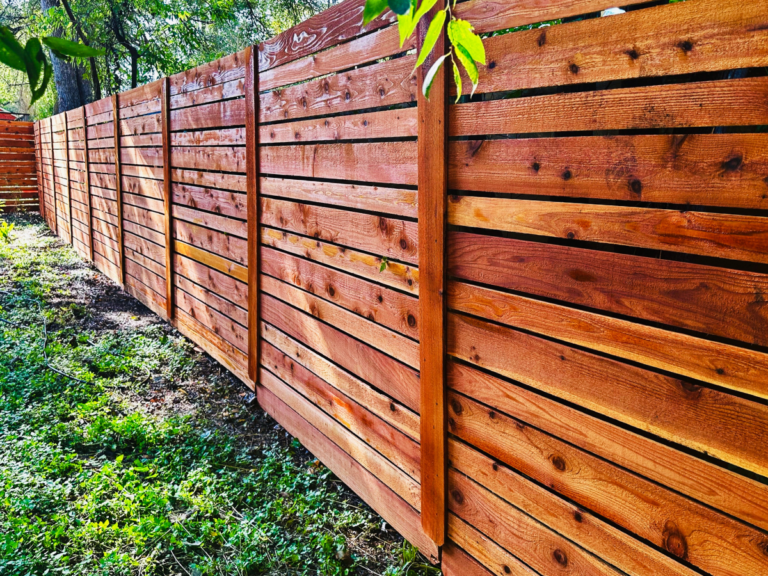
Here is the typical arc of a well-applied semi-transparent stain on an Austin fence with mixed exposure. Year one: the finish looks freshly done all year; water beads everywhere; nothing to do but an annual wash. Year two: still strong; the west face’s color has moved a shade; beading holds. Year three: the sun-facing runs flatten noticeably and the bead test starts hesitating there, while shaded sections look barely a year old — this is the classic maintenance-coat window opening. Year four: exposed faces fail the bead test outright; gray wants to start at board tops; the maintenance coat is now due rather than optional. Year five and beyond, untreated: depletion compounds — the fence is visibly two-toned by exposure, and the project ahead has grown from a coat into prep-plus-coat. Solid stains stretch each stage roughly a year further; clear finishes compress the whole arc. The pattern to internalize is that fences fail by face, not as a whole, and the sunniest face is the fence’s true clock. Photograph that face once a year from the same spot, and the depletion arc becomes visible in a way daily eyes never catch — the two-minute habit that turns re-coat timing from guesswork into a before-and-after you can see coming.
Reading the Signals Instead of the Calendar
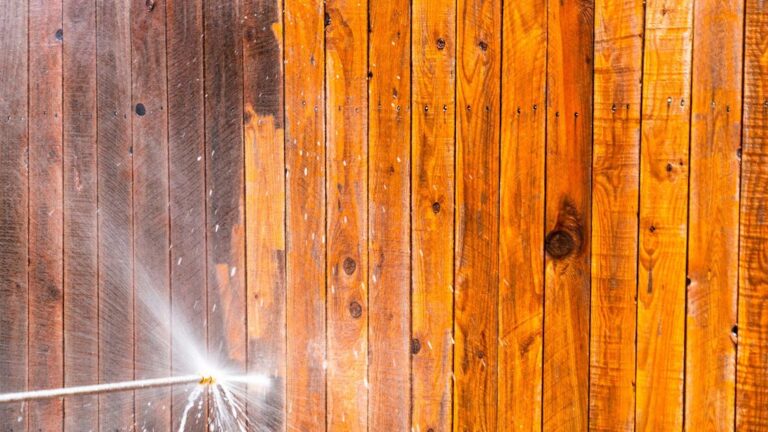
Your fence reports its own status, and two tests read it in minutes. The bead test: splash water on the sunniest section — beading means active protection; darkening wood means the repellency is spent, whatever the calendar says. The color check: compare the sun-blasted faces to the sheltered ones — flattening color on the exposed runs is pigment depletion announcing itself. Secondary signals: a dry, rough feel where the surface used to feel finished, and gray beginning at board tops and end grain. The fence that fails these tests at year three needs its coat at year three; the fence still passing at year five has earned its extension.
How Maintenance Stretches the Clock
The interval is not fixed — it is managed. An annual wash keeps the buildup load off the finish, and finishes under clean conditions reach the far end of their range. A maintenance coat applied at the first failed bead test is a light project that resets the clock fully; the same fence pushed two more years slides into brightening-and-restoration territory, where bringing the wood back costs real multiples of the coat that was skipped. The economics compress to one sentence: re-coating a fence that still looks acceptable is the cheapest staining you will ever buy, and re-coating one that looks bad is the most expensive. There is a scheduling dividend hiding in this math too: maintenance coats are quick, flexible bookings that slot into any decent weather window, while restoration projects need multi-day dry stretches and fuller calendars. Staying on the light side of the line keeps you on the easy side of the scheduling season as well.
The Two-Interval Strategy Sharp Owners Use
Because faces age at different speeds, the most cost-effective maintenance rhythm treats one fence as two zones. The hard-exposure zone — west and south faces, board tops, the gate — gets its maintenance coat on the early clock, often a full one to two years ahead of the rest. The sheltered zone rides the long clock, re-coated when its own tests say so. The result is a fence that never shows the two-toned depletion stage at all, materials spent exactly where the sun spends itself, and total cost over a decade meaningfully below the re-coat-everything-early alternative. It does require record-keeping — which face got what, when — which is exactly the kind of maintenance history a professional crew keeps for you and a clipboard in the garage keeps for the committed DIY household.
When the First Application Sets the Whole Curve
A fence’s longest-lasting stain is almost always its first properly done one, because everything afterward inherits that foundation. First finishes timed to the wood’s moisture reading, over genuinely prepared surfaces, establish the deep penetration that every future re-coat tops up. Rushed first finishes — stained too green, over mill glaze, before drying — underperform for the life of the fence, no matter how good later maintenance is. It is the argument for treating the first application as the one to do professionally even for households that plan to maintain it themselves after: the foundation coat is the one that cannot be redone cheaply. It also sets the record straight for every future decision: a documented first application — product, transparency, date — makes each later re-coat a known-compatibility top-up instead of an archaeology project, and fences with a paper trail simply get maintained better over their lives.
FAQs
Can a fence stain really last ten years like some cans claim?
On a vertical, shaded, solid-stained surface in a gentler climate — conceivably. On a Texas fence in real sun, plan the three-to-five rhythm and treat anything longer as a bonus the bead test has to certify.
Does staining both sides make it last longer?
It protects both faces, which slows the moisture cycling that stresses the finish from behind. Where you own and can access both sides, finishing both is the durability play.
My stain looks fine but it has been six years. Am I overdue?
Run the tests rather than the math: beading water and held color mean the finish is still working. Fail either test and the calendar was right after all.
Do darker stain colors last longer?
Generally yes at the same transparency — more pigment, more UV absorption. The gap is modest; transparency class matters far more than shade within it.
How long does stain last on new wood versus old?
Properly timed, first finishes on new wood penetrate deeply and perform at the top of the range. Old wood restored and stained performs nearly as well; old wood stained without restoration underperforms from day one.
Does the fence’s stain age the same as the gate’s?
Gates work harder — handling, slamming, edge wear — and typically want attention a season or two ahead of the fence line. Checking the gate first is a fair early-warning habit.
What happens if I just never re-stain?
The finish depletes, the wood grays and dries, cracks open, and the fence begins the weathering arc that ends in restoration or replacement. The stain was never decoration; it was the fence’s sunscreen and raincoat.