Arbor and Gazebo Care: The Forgotten Structures
Every yard has them and nobody maintains them: the garden arbor over the side gate, the gazebo at the back of the lot, the trellis on the fence line, the arched entry into the vegetable garden. They are among the hardest-exposed wood on the property and the least likely to receive attention, which is a combination that produces a lot of unnecessary replacements. Here is what these structures actually need.
Why They Age Faster Than Anything
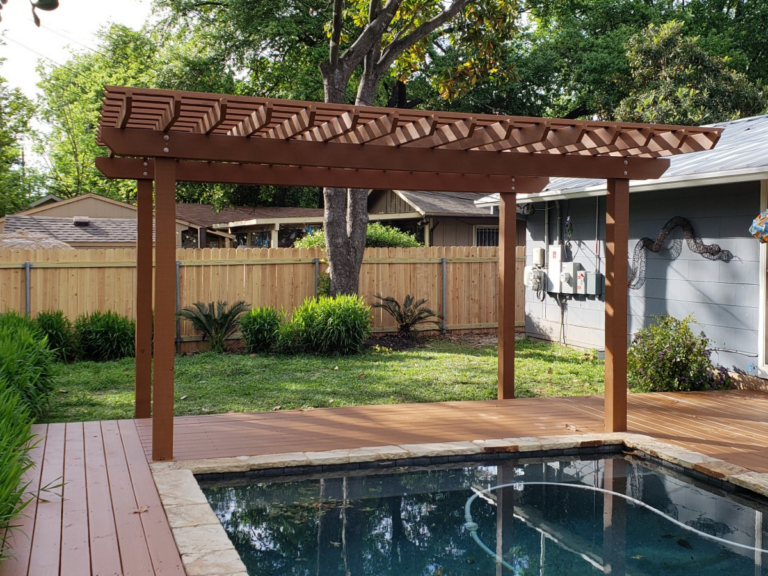
Small shade structures collect every disadvantage at once. Their horizontal members take perpendicular sun and hold standing water, exactly like pergola rafters. They are built almost entirely from small-dimension lumber, which has less material to spare as weathering thins the surface. They carry enormous amounts of exposed end grain — every lattice piece, every rafter tail, every decorative cut — and end grain absorbs moisture at many times the rate of face grain. Many sit in ground contact or near it. And climbing plants, which are usually the point of an arbor, hold moisture directly against the wood indefinitely.
The Vine Problem, Honestly
Climbing roses, wisteria, jasmine, and star jasmine are why arbors exist, and they are also the leading cause of arbor failure in Austin. Vines trap moisture against wood, block airflow so surfaces never dry, drop organic debris into every joint, and physically hold water in the leaf mass after every rain. Mature wisteria can also exert real structural force. None of this argues for removing the plants — it argues for building the maintenance around them. The practical approach: choose structures and finishes knowing vines will be there, finish thoroughly before planting where possible, and plan on periodic vine management so the wood underneath can be inspected and reached every few years.
Where These Structures Actually Fail
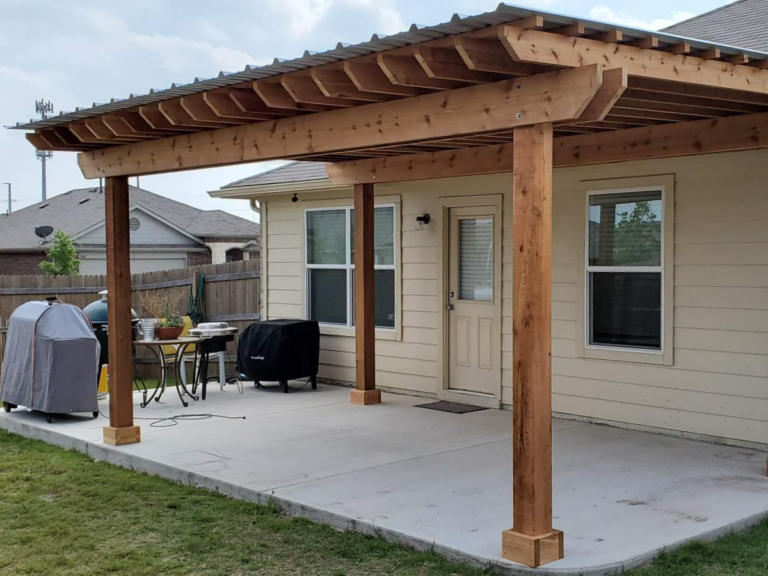
The failure points are predictable and worth checking directly. Post bases at or below grade rot first, especially where mulch, soil, or dense planting has been piled against them — probe here before anything else. Joint connections where members cross collect water and debris, and lattice attachment points work loose as wood moves. Top surfaces gray and check well ahead of vertical faces. End grain everywhere splits and drinks. And on gazebos with roofing, the junction where roof meets structure is a moisture trap. A five-minute inspection covering those five zones tells you almost everything about a small structure’s condition.
Cleaning Without Damaging
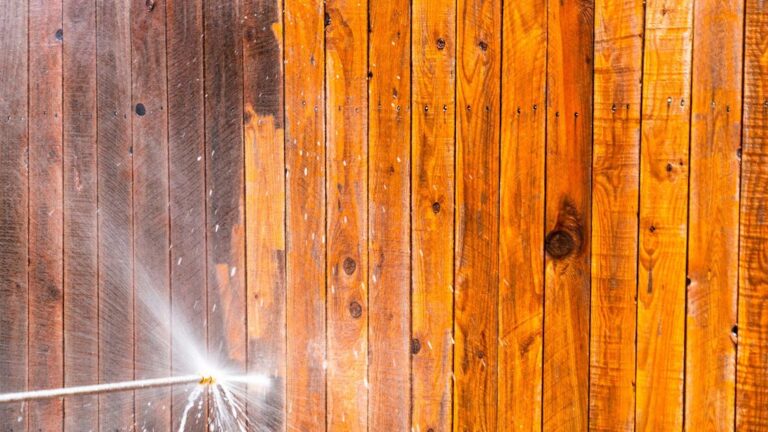
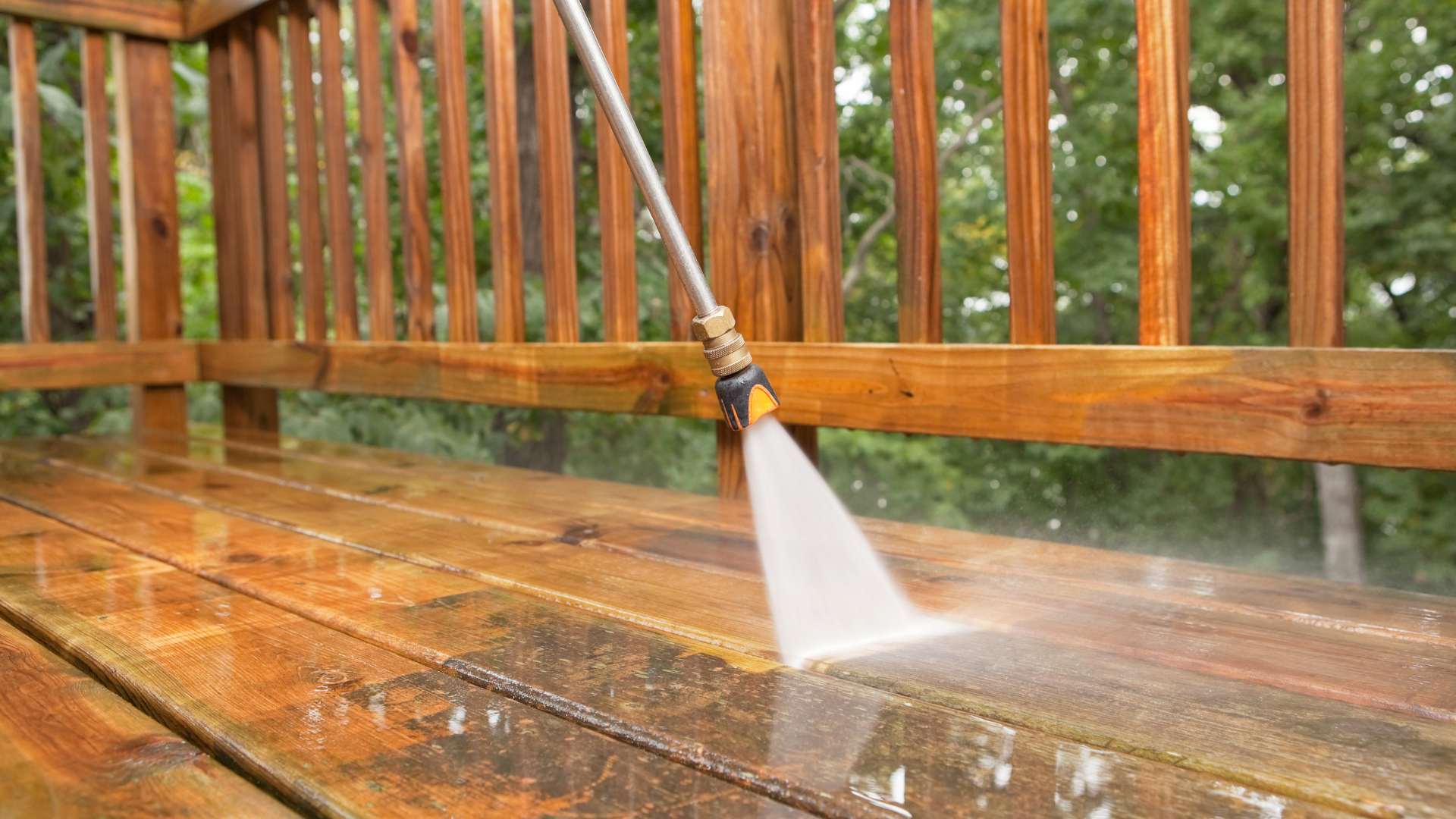
These structures demand the gentlest washing on the property, for practical reasons. Small-dimension lumber, lattice, and decorative details cannot take the pressure a fence board shrugs off — thin members flex, lattice can break, and joints loosen. The approach is chemistry-forward and pressure-minimal: wood cleaner applied by pump sprayer, real dwell time, soft brushing on the stubborn spots, and a gentle rinse. Where vines are present, work around them, protecting foliage and rinsing thoroughly. Much of this work is genuinely hand-scale, which is slower per square foot than fence washing but involves far less square footage.
Finishing Small Structures
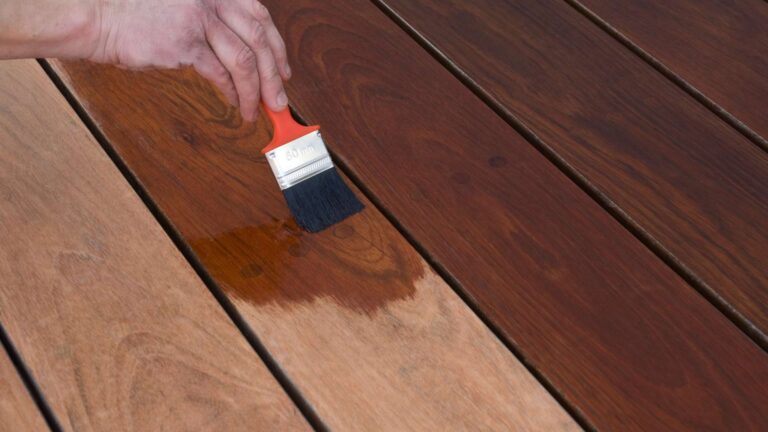
Application on arbors and gazebos is fiddly rather than difficult, and a few habits make the difference. Brush and pad work beats spraying on lattice and detailed members, where overspray goes everywhere and coverage is uneven. Thin coats matter more than usual, since finish pools readily in joints and corners on complex geometry, curing glossy and uneven where it collects. End grain deserves a deliberate second pass everywhere it appears — which on these structures is nearly everywhere. And the tops of horizontal members, the surfaces nobody sees, are the ones that need the most pigment, so the temptation to focus on the visible faces should be actively resisted. Pigmented finishes are the honest choice here given the exposure.
The Maintenance Rhythm
These structures want a shorter cycle than the fence and a longer memory than most households give them. Annual: a gentle wash, debris clearing from joints and tops, and a walk-around inspection of the five failure zones. Seasonally, or whenever you are already out there: a hand on the horizontal members to check for roughness. Every few years, or whenever the bead test on the top surfaces fails: refinish, with the extra attention to end grain and tops described above. Where vines are heavy, plan a fuller access cycle — cutting back enough to reach the structure properly — every few years rather than never. Small structures respond very well to modest attention; what they cannot survive is being forgotten for a decade.
Gazebos: The Extra Considerations
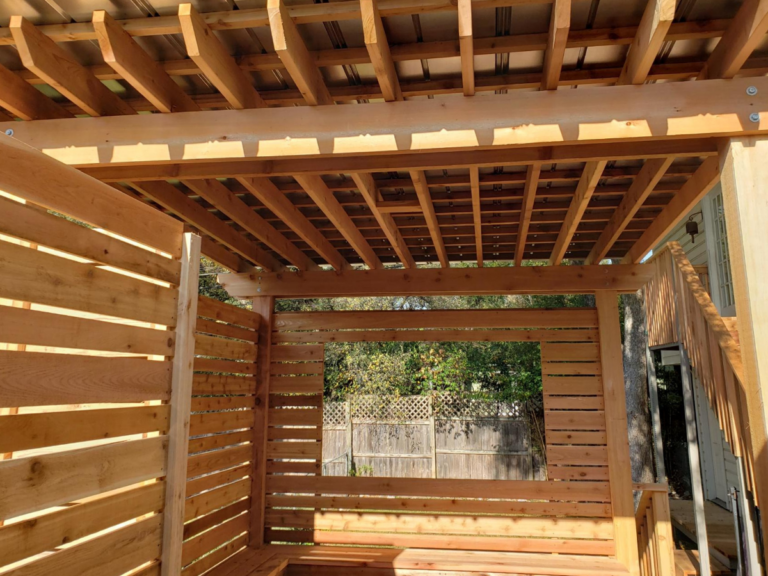
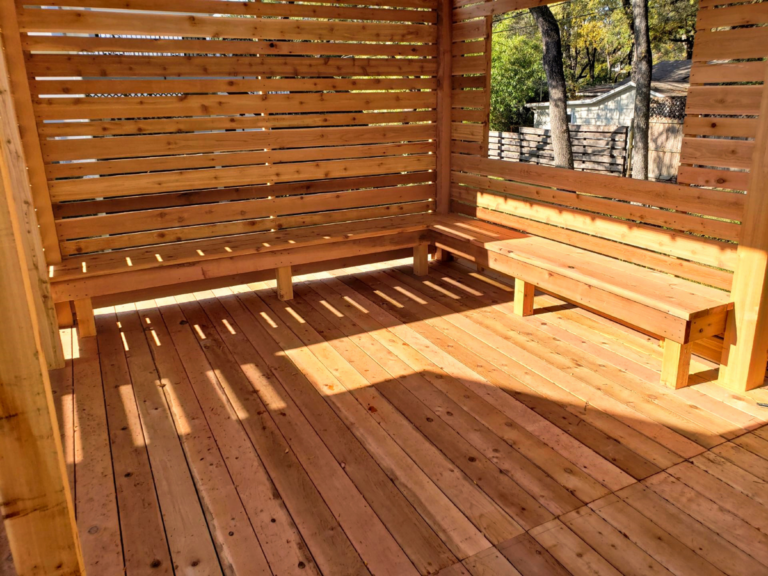
Gazebos carry complications the smaller structures do not, mostly because they have roofs and floors. The roof junction — where roofing material meets the wood structure — is the single most important inspection point, since water finding its way in there rots framing from the inside while everything looks fine from the yard. Shingled or metal roofs also deposit runoff in concentrated places, so the wood beneath drip lines ages faster than its neighbors. Floors, where present, behave like small decks: horizontal, walked on, and subject to the same splintering cycle, which means they want a foot-traffic-rated finish rather than whatever went on the posts. Built-in benches contact skin directly and deserve the smoothness standard a deck railing would get. And screening or lattice infill, common on gazebos, adds the same access problems arbors have. The upshot is that a gazebo is really three maintenance jobs sharing a footprint — a roof, a small deck, and a shade structure — and treating it as one uniform surface is how parts of it get missed.
Restoring One That’s Been Forgotten
Most arbors and gazebos in Austin are already well past their first neglect cycle, and the honest assessment separates two situations. Where the structure is gray, rough, and checked but probes solid — including at post bases — restoration works exactly as it does elsewhere: gentle wash, brighten, dry, finish, with replacement of individual lattice or trim pieces as needed. Where post bases probe soft, the calculation shifts, since these structures are small enough that post replacement is often a significant fraction of rebuild cost. The general rule mirrors the fence version of this decision: surface conditions restore, structural failure at the posts usually does not, and a probe test settles which conversation you are having.
FAQs
Do I need to remove vines before staining an arbor?
Enough to reach the wood, yes — thorough finishing requires access. Many vines tolerate a hard cutback well; timing it with the plant’s dormant season minimizes stress.
How often should an arbor be refinished?
More often than the fence, given the exposure and end grain. Watch the top surfaces and refinish when they fail the bead test rather than on a fixed calendar.
Can a gazebo be pressure washed?
Only at the gentlest calibration, and much of it is better done by hand. Lattice and small members do not tolerate the pressure a fence board would.
My arbor posts are soft at the bottom. Can that be fixed?
Single posts can sometimes be replaced or sistered, but on small structures the labor often approaches rebuild cost. Price both paths before committing.
What finish works best on lattice?
A pigmented penetrating stain applied by brush or pad. Spraying wastes product and coats inconsistently on lattice geometry.
Should these match the fence color?
Coordination reads better than contrast in most yards, though a deliberate accent tone on a feature arbor can work. Sample it in place before deciding.
Is it worth maintaining an old, inexpensive arbor?
Usually yes — the wood is small in quantity, the work is modest, and replacement means losing whatever the vines have spent years establishing on it.