Staining One Side of a Fence vs. Both Sides
Nearly every fence project in Austin runs into this question, usually at quoting time when the price shifts depending on the answer. It is treated as a budget decision, and it partly is — but it is also a durability decision, a neighbor-relations decision, and occasionally a decision that is not entirely yours to make. Here is the whole picture.
What Finishing Both Sides Actually Buys
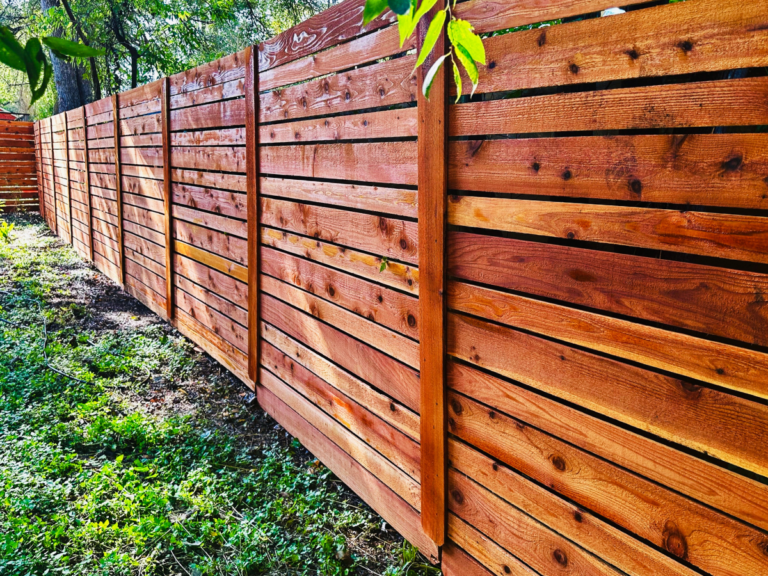
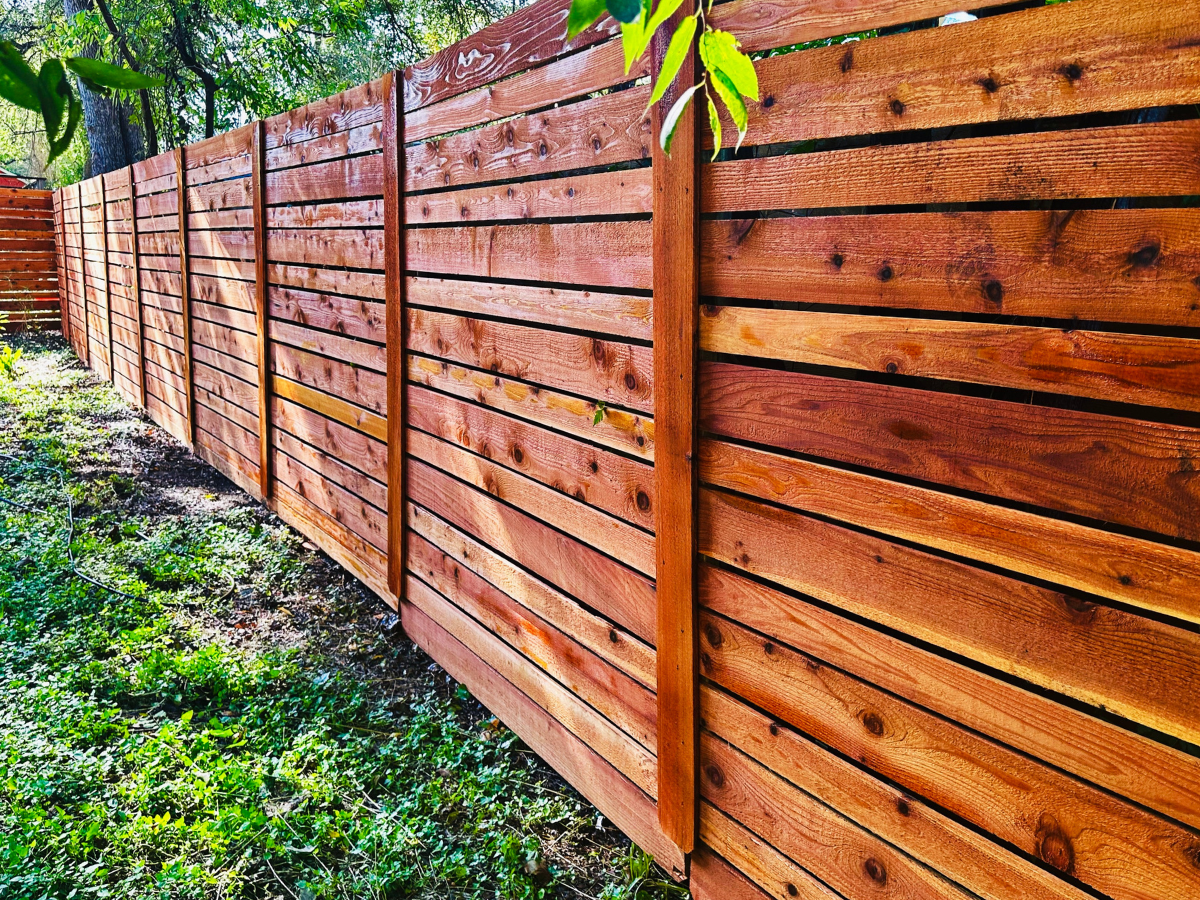
The protection argument is real and worth stating precisely. A fence board finished on one face only still absorbs and releases moisture freely through the unfinished face, which means the swelling-and-shrinking cycle continues largely unrestrained. That cycling is what cups boards, opens checks, and works fasteners loose over the years. Finishing both faces slows moisture movement from both directions, so the board moves less and stays flatter. It also protects the unfinished face from its own UV exposure — the neighbor’s side of your fence gets sun too, and it grays on the same schedule yours would. Both-sides finishing is not cosmetic completeness; it is a materially longer-lived fence.
When One Side Is Genuinely Enough
That said, one-sided finishing is the norm on most Austin residential projects, and often the correct call. Where the far side faces an alley, a greenbelt, a drainage easement, or an unmaintained lot, nobody is looking at it and the marginal durability gain rarely justifies doubling the finishing cost. Where budget is genuinely constrained, one well-prepared, well-finished face beats two rushed ones every time. And where access to the far side is blocked — a neighbor’s dense landscaping, a locked yard, a retaining wall — one side may be the only practical option. The honest framing: both sides is better, one side is fine, and no sides is the only choice that actually costs you.
The Shared-Fence Complication
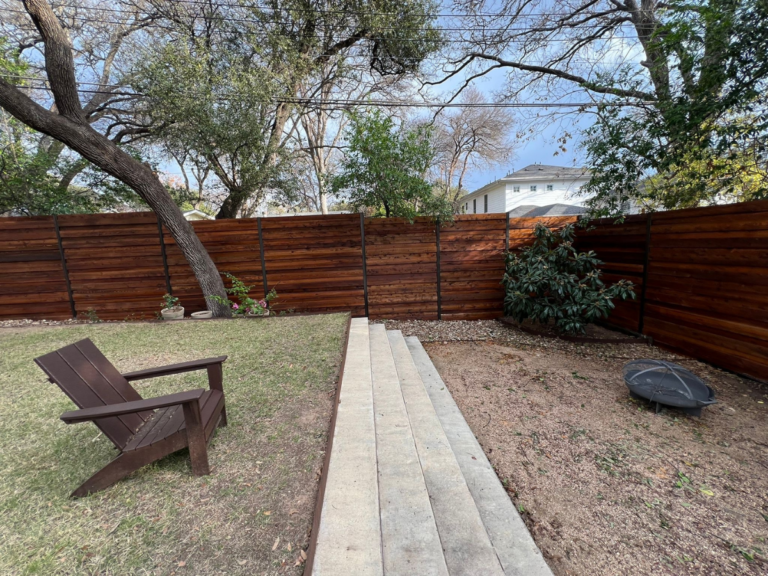
Most Austin residential fences are shared, which introduces a wrinkle no product decision can solve. Legally and practically, you generally finish your side; the other face belongs to the neighbor’s yard even when the fence is jointly owned. That creates the familiar two-tone fence — one side richly stained, the other silver — visible to everyone but the household that paid. It also creates a maintenance asymmetry: your finished face sheds water while their unfinished face drinks it, so the boards still cycle and the fence still ages faster than a fully protected one would. None of this is a reason to skip finishing; it is a reason to have a conversation before the crew is scheduled rather than after.
The Neighbor Conversation, Practically
The version of this that works is specific and early. Approach before booking, not while a crew waits in the street. Bring the actual proposal — color sample, timing, and what access would be needed — because abstract questions get abstract answers while concrete ones get decisions. Offer the options plainly: they can split the cost of finishing their face, pay for their side outright at the crew’s efficient rate (which is far cheaper than mobilizing separately later), or simply grant access while you cover it, which some households choose purely for the durability benefit. Confirm access logistics — gates, pets, and the day. Where the fence is genuinely shared property, some neighbors will want a say in color; discovering that after the stain is on is the outcome to avoid.
The Cost Math Is Not Double
Worth correcting a common assumption: finishing both sides costs meaningfully more but not twice as much. Mobilization, setup, containment, prep planning, and cleanup are shared across both faces — the crew is already there, the equipment is already staged, the plantings are already protected. The incremental cost is largely labor and material for the second face. That efficiency is exactly why doing the second side later, as a separate project, costs substantially more than doing it during the original visit, and it is the strongest practical argument for settling the neighbor question before the first visit rather than after.
Which Side Gets Priority When You Pick One
If one face it is, choose deliberately rather than by default. The higher-exposure face — usually west or south — benefits most from pigment, since that is where UV is doing its work; protecting it slows the graying process where it runs fastest. The more visible face carries the curb-appeal return, which for street-facing runs is usually decisive. And the face you actually see from inside the house carries the daily-enjoyment return. Where those three point in different directions, most households finish the face they see, which is a legitimate priority — a fence’s value is partly emotional, and the one you look at every morning is the one that matters.
HOAs, Rentals, and the Cases With Rules
A few situations remove the discretion. Some HOAs specify which side of a perimeter fence must be finished, what color, or that street-facing fences be maintained to a standard regardless of who owns them — worth checking the covenants before quoting rather than after finishing. Corner lots often carry the heaviest requirements, since two faces are street-visible. Rental properties add a different wrinkle: landlords finishing for curb appeal and tenant satisfaction generally want the visible faces done, while long-term asset protection argues for both, and the two calculations reach different answers depending on hold period. And properties backing onto commercial lots, schools, or shared amenities sometimes find the far side is nobody’s clear responsibility, which usually means it goes unfinished indefinitely unless the owner takes it on. In each case the rule or the arrangement should be identified before scheduling, because scope discovered mid-project is the most expensive kind.
Sequencing With Restoration Work
One detail worth planning around: if the fence is being restored rather than simply re-coated, the washing and brightening happen on whichever faces will be finished — and prepping one side while leaving the other gray produces the most dramatic version of the two-tone effect. Some households who intended one-sided finishing change their minds at exactly this point, when the contrast becomes visible mid-project. It is easier to decide before the wash than to add scope mid-visit, so the both-sides question belongs in the same conversation as the restore-or-replace assessment, not after it. A related timing note worth raising early: households expecting to sell within a few years often finish only the visible faces, reasonably, while households settling in long-term more often find the durability argument persuasive. The right answer genuinely depends on how long you intend to own the fence.
FAQs
Do I legally have to finish my neighbor’s side?
Generally no — absent an HOA rule or a written agreement, you finish what you pay for. Access to their yard, however, requires their permission.
Will a one-sided finish look bad from my yard?
Not at all — your face reads as fully finished. The two-tone effect is only visible to someone who sees both sides.
How much does the second side add?
Meaningfully less than double, since setup and prep planning are shared. Ask any bid to price both options so the comparison is real.
Can I finish the neighbor’s side without asking?
No — entering their property requires permission, and finishing a shared fence’s far side without agreement is a genuine dispute risk. Ask first, always.
Does one-sided finishing void anything or cause problems?
No problems beyond somewhat faster overall aging from continued moisture cycling. It is standard practice on the majority of residential fences.
What if my neighbor wants a different color?
On a shared fence, that conversation belongs before the work. Different colors on opposite faces is possible and reasonably common where neighbors disagree.
Is both sides worth it on an alley-facing fence?
Usually not for appearance, sometimes yes for durability if the alley face takes hard sun. Weigh the exposure, not the audience.